
This is Part 12 of our 13-part Angkor series. Read Part 11: The Apsara of Angkor
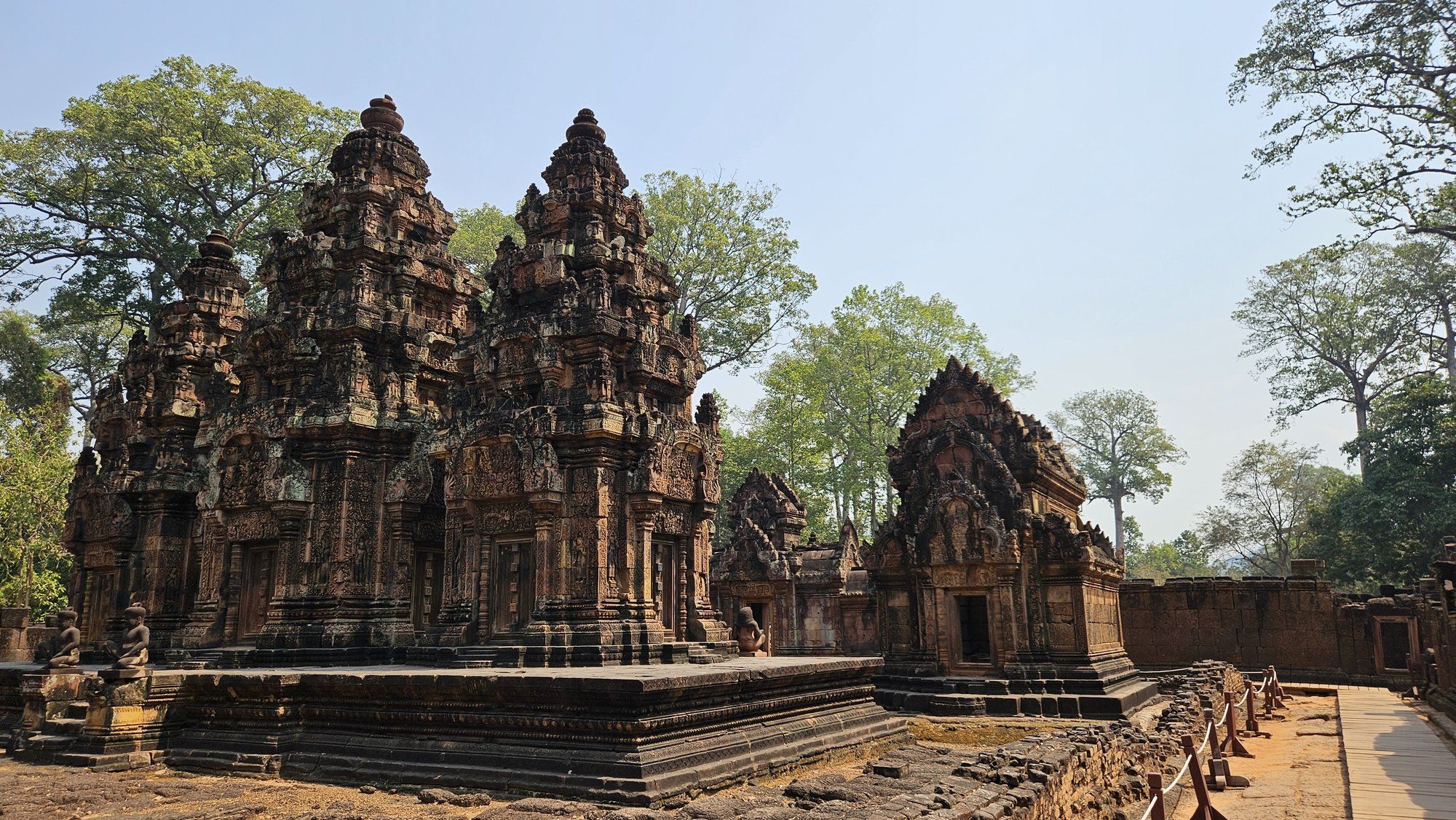
Angkor Wat and Angkor Thom are the headliners. The temples inside the city walls are the main course. But the best carving in all of Angkor, the one that makes everyone say “this is my favourite,” sits 25 kilometres northeast, in a small pink-sandstone temple named Banteay Srei. Beyond it lie a riverbed carved with a thousand stone linga and the holy mountain where the Khmer Empire began.
This is the outer loop. Most visitors run out of time for it. Make time.
Banteay Srei: Khmer art at its most refined
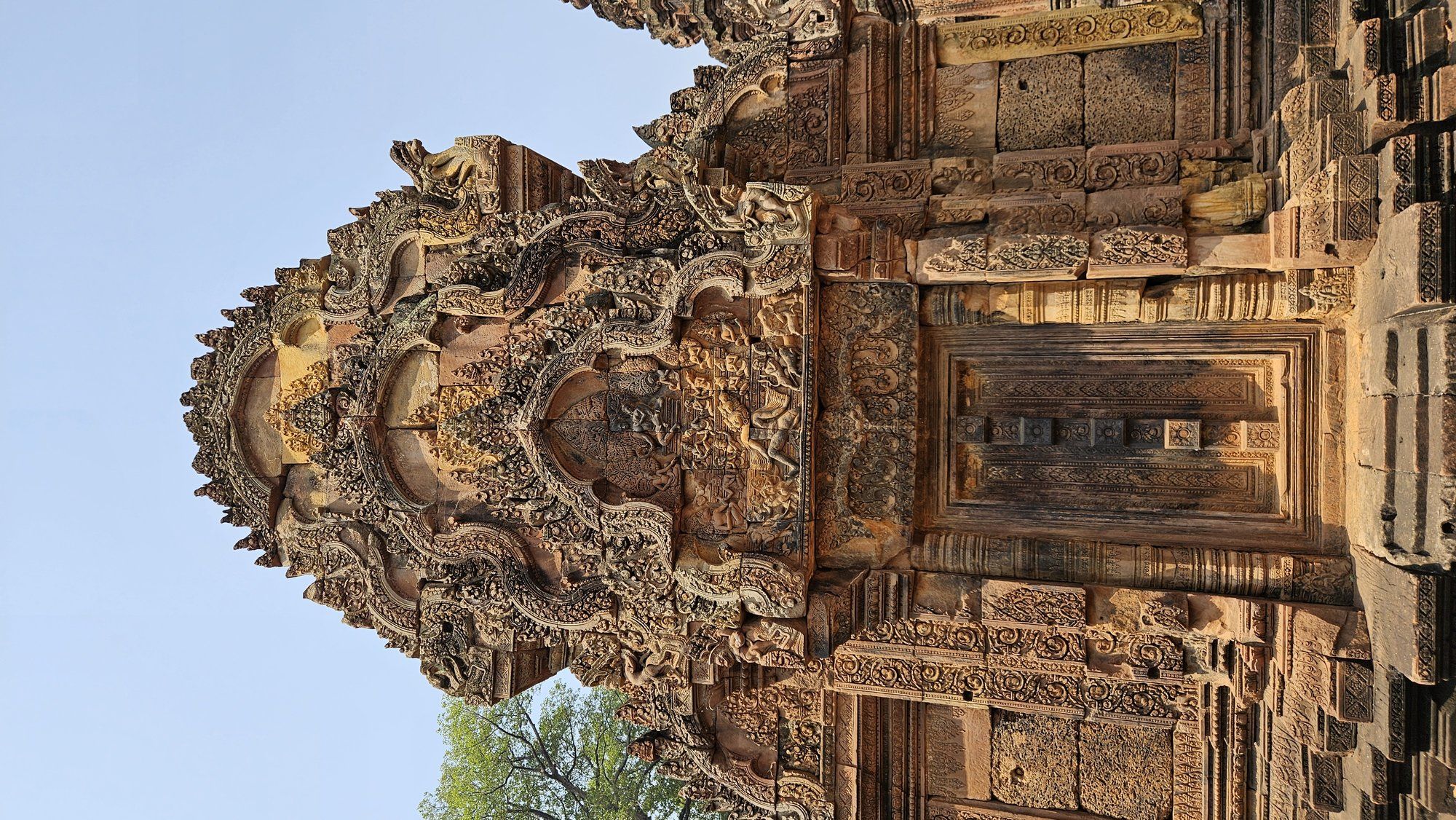
Banteay Srei means “Citadel of Women” in Khmer, and the name reflects the delicacy of its carving. It is not a royal temple. It was built by a court priest, Yajnavaraha, in the late 10th century, dedicated to Shiva. The absence of a king’s ego in the design may explain the obsessive finish.
Aditya visited Banteay Srei on his second day, the morning after his first Angkor Wat sunrise. “One fascinating temple,” he said. “One of the early temples of Yashodharapura depicting Shiva. It is one very good and well maintained temple, smaller in scale and felt very serene and calm.”
The stone is pinkish red sandstone, the only temple at Angkor built from this material. It was quarried from the Kulen hills nearby, and the colour is unlike anything else in the park. In the late afternoon, when the sun catches the stone, the entire temple glows.
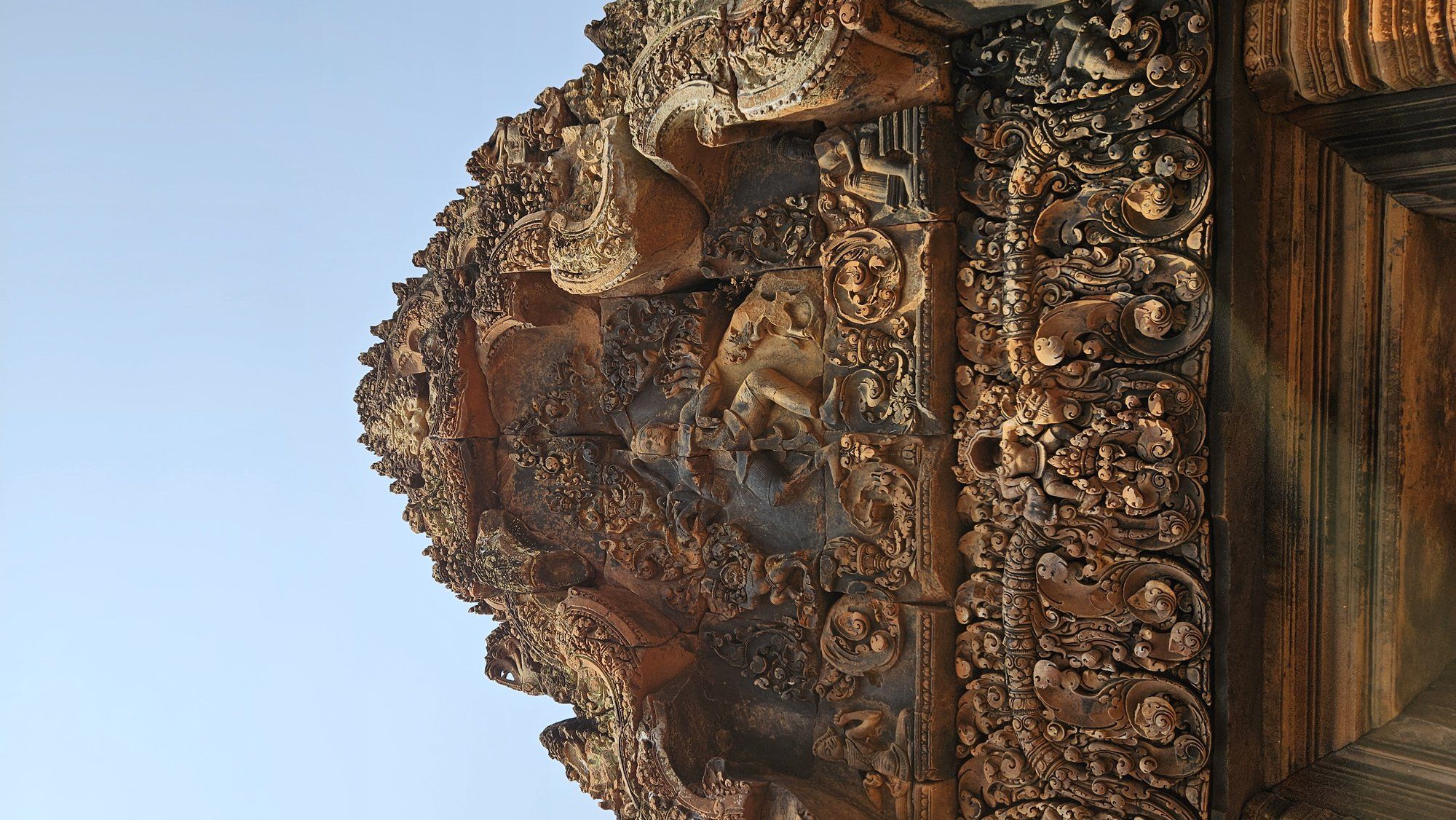
“The one temple made of red sandstone, clearly stands out,” Aditya said. The carving is what makes Banteay Srei exceptional. The detail is refined to the point of embroidery: the curls of the deity’s hair, the texture of the fabric, the petals of the lotus flowers. The lintels over the doorways are considered the masterpieces of Khmer art: the scene of the demon Ravana shaking Mount Kailash, with Shiva pinning the mountain down with his toe, is the most photographed lintel in Southeast Asia.
The temple is smaller than any of the major Angkor monuments. You can see everything in forty-five minutes. But you will want to stay for longer, sitting in the shade, watching the stone change colour as the morning passes.
Banteay Samre: the quiet neighbour
A few kilometres from Banteay Srei stands Banteay Samre, a smaller contemporary temple built in the same period. It is quieter, less visited, and almost as finely carved. The outer enclosure is in good condition, and the central sanctuary retains its original lintel carvings. Most people skip it on the way back from Banteay Srei. Do not.
Kbal Spean: the river of a thousand linga
Another thirty minutes beyond Banteay Srei, Kbal Spean is not a temple. It is a riverbed, a stretch of the Stung Kbal Spean river where the sandstone has been carved into a dense concentration of linga, deities, and religious scenes.
The walk is a 30–40 minute uphill hike through jungle, past bamboo groves and over limestone boulders. The river at the top runs over a wide sandstone shelf where the carvings lie. Linga by the hundreds, arranged in neat rows, worn smooth by nine centuries of flowing water. A reclining Vishnu. A scene of the Churning of the Ocean of Milk. The river runs over everything, polishing the stone, making the carvings gleam.
Aditya did not go to Kbal Spean. It is on his list for next time. “Give more days, go to outlying temples like Phnom Kulen and Kbal Spean,” he said. “Go deeper into the temples and get a feel.”
The carvings date to the 11th and 12th centuries, the same period as Banteay Srei and Angkor Wat. They represent a different kind of religious art — not architecture but landscape blessing, transforming a river into a sacred space.
Phnom Kulen: the holy mountain
Phnom Kulen is the most sacred mountain in Cambodia. It was here that King Jayavarman II declared Cambodia’s independence from Java in 802 CE and proclaimed himself a universal monarch (chakravartin), founding the Khmer Empire. Every Khmer king after him traced his legitimacy back to this mountain.
The mountain rises 487 metres above the plain. At the top, accessible by a steep road that requires a 4x4, you will find:
- The river of a thousand linga — the Kbal Spean carvings are on the lower slope of Phnom Kulen. Higher up, the river continues with even denser carvings.
- The giant reclining Buddha — a 16th-century Buddha carved into the top of a sandstone boulder. The original carving was of a reclining Vishnu, later converted to Buddha, preserving the Angkor template of one religion layering over another.
- The waterfall — a cascade about 20 metres high, popular with Cambodian families for picnics and swimming. If you want to see Angkor as Cambodians see it, Phnom Kulen on a weekend is the place.
The mountain requires a separate entry ticket ($20, paid at the checkpoint). The road is rough and the journey takes a full day from Siem Reap (about 45 minutes each way, plus several hours at the top).
The Shiva connection
Banteay Srei depicts Shiva. Phnom Kulen was the site of Shiva worship. Kbal Spean’s linga are symbols of Shiva. Together, the outer loop tells the story of the Hindu god who preceded Vishnu and Buddha as the dominant deity of the Khmer Empire.
“Banteay Srei, Phnom Bakheng, Baphuon show Shiva and the main deity at some point of Khmer dynasty,” Aditya noted. “Then Vishnu became prominent followed by Buddhism.” The outer loop is a journey into Cambodia’s oldest layer of belief.
How to do the outer loop
- Start early. Leave Siem Reap by 7 AM. The temples heat up by 10 AM and the Kbal Spean hike is best in the cool morning.
- First stop: Banteay Srei (45 minutes to an hour).
- Second stop: Banteay Samre (20 minutes, optional).
- Third stop: Kbal Spean (45-minute hike, 30 minutes at the riverbed).
- Lunch: Bring a packed meal or eat at a basic restaurant near Banteay Srei.
- Afternoon (if you have the energy): Phnom Kulen (need a 4x4, separate ticket, at least 2–3 hours).
- Return: Back to Siem Reap by late afternoon. This is a full-day commitment.
Aditya’s advice: “Give more days. Go to outlying temples like Phnom Kulen, Kbal Spean, etc.” The outer loop is not an afternoon add-on. It is a day of its own.
Next, the final post in the series: Cambodia’s Story — from the Naga princess legend through the Khmer Empire to the genocide and the country’s quiet revival, anchored by Angkor throughout.
Let Tripcuro Plan Your Angkor Journey
Tripcuro designs your Cambodia journey end to end, from flights out of your city to the Banteay Srei loop with a driver who knows the road. We add the outer temples that most itineraries skip, and handle every detail. Tell us your dates and we will build a bespoke itinerary around them.