
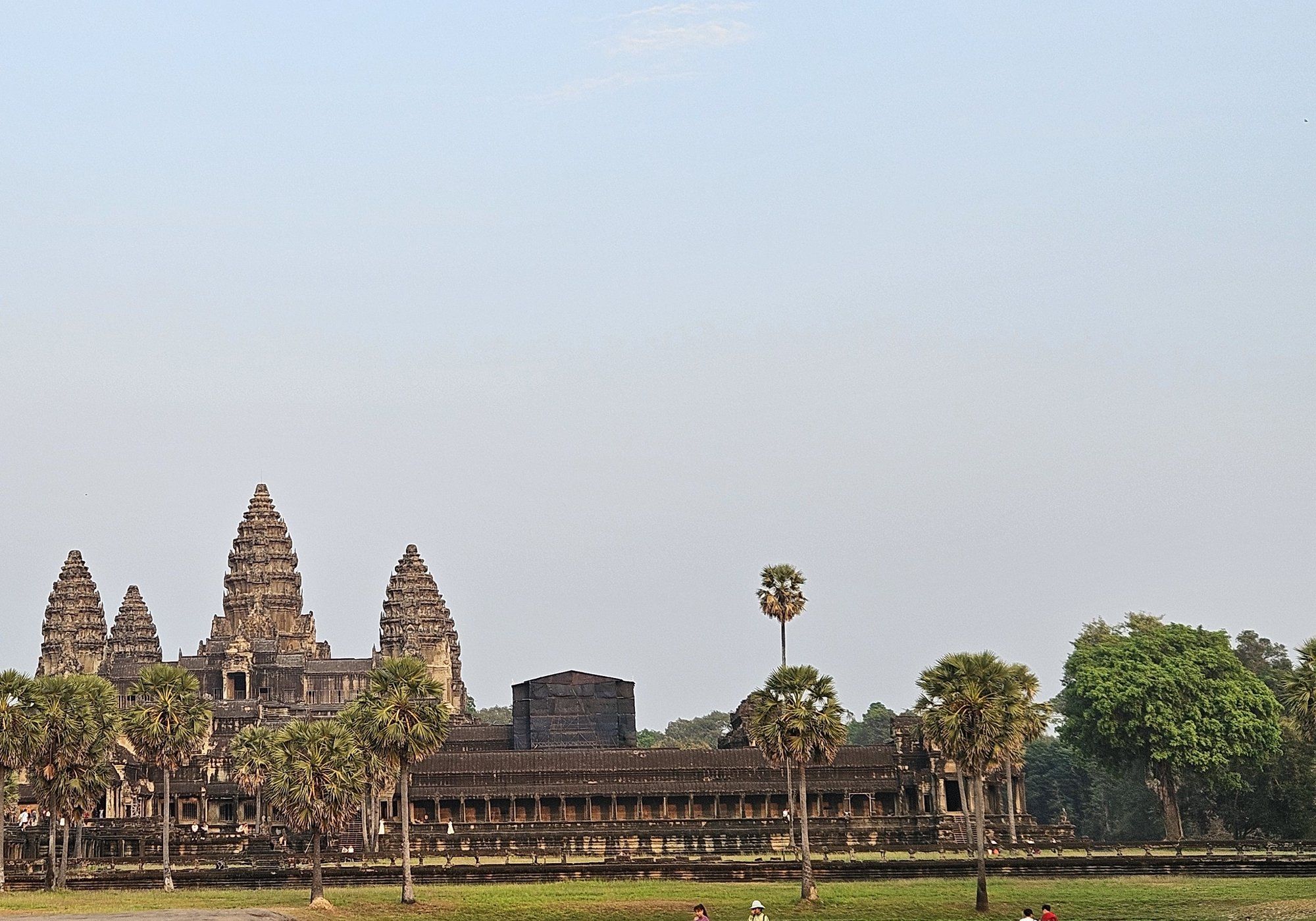
This is Part 10 of our 13-part Angkor series. Read Part 9: Siem Reap: Gateway to Angkor
Angkor is one of the easiest “big” trips for an Indian traveller. The flights are short, the visa is straightforward, the rupee holds its ground, and the temples are connected to Indian culture in ways that will surprise you. Aditya visited in February 2025 and documented the experience end to end. Here is everything you need to know.
Getting there: the routes
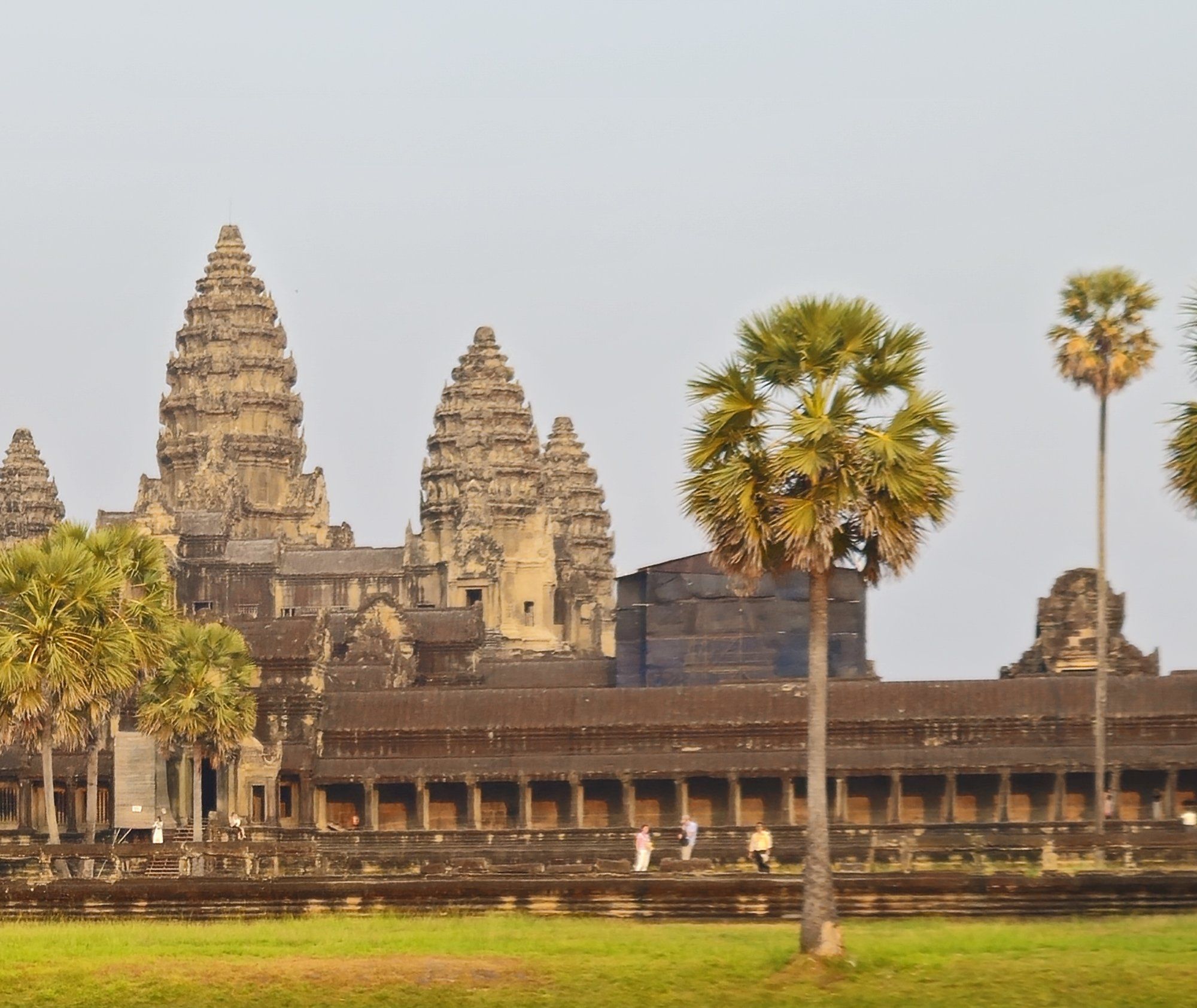
There are no direct flights from India to Siem Reap, but the connections are short and frequent.
Via Bangkok: The most common route. Fly from Delhi, Mumbai, Bengaluru, Kolkata or Chennai to Bangkok (4–5 hours from Delhi/Mumbai), then Bangkok to Siem Reap (1 hour 10 minutes). Thai AirAsia, Bangkok Airways, and Thai VietJet run the hop.
Via Kuala Lumpur: Aditya flew this route: Jaipur to Kuala Lumpur with a stopover, then KL to Siem Reap. AirAsia connects both legs.
Other hubs: Ho Chi Minh City (SGN) and Singapore (SIN) are good alternatives. Kolkata to Siem Reap has a direct Indigo flight (CCU to SAI), the shortest route on this list.
Aditya’s route: Jaipur → Kuala Lumpur (stopover) → Siem Reap-Angkor International Airport. The new airport, which opened in 2023, is about 40–50 minutes from the town centre.
Visa: e-Visa vs Visa on Arrival
Indian passport holders need a visa. The process is simple either way.
Visa on Arrival (VOA): Available at Siem Reap-Angkor International Airport and Phnom Penh. Fill the form at the counter, pay the fee (USD), get the stamp. Aditya used VOA and said it was “pretty smooth.”
E-Visa: Apply at the official Cambodian e-Visa website. “The e-visa website was also decent, I could have applied there too,” Aditya noted. Valid for 30 days from the date of issue, single entry. Print the approval and carry it.
Arrival card: Every traveller now fills an online arrival card via an app or website. Aditya said both are “highly optimised.”
One honest caution: “Immigration and VOA staff lack English knowledge, so be prepared,” Aditya said. The process is not difficult, but it helps to have your forms filled in advance and your documents ready.
A more serious warning about immigration:
Solo travellers from developing and underdeveloped nations — specifically brown and Black travellers — sometimes face issues while entering Cambodia. The immigration can be racist. Aditya experienced the environment and offered two specific tips:
- Carry $500 per person. It is a soft criteria used by Cambodia immigration, not written anywhere but a known requirement. Having it in cash makes entry smoother.
- Do not try to enter Cambodia via road. If you still want to do so, use Poi Pet from Thailand or Bavet from Vietnam. Poi Pet has been closed since the outbreak of hostilities in the region.
This is not a reason to avoid Cambodia. It is a reason to arrive at the airport with cash, a printed e-Visa or VOA form, and your completed arrival card. The process at the new airport is professional and efficient when you have the paperwork ready.
Best time to go from India
February is the ideal month. Aditya chose it and the conditions were perfect: dry, warm days (28–32°C), cool mornings for sunrise, manageable crowds, and mango season. November to March is the best window overall. April and May are punishingly hot. The wet season (June to October) means greener landscapes and fewer crowds, with afternoon downpours that clear the temples.
Currency and money
Cambodia runs on US dollars. The Cambodian riel exists for small change ($1 = roughly 4,100 riel). Carry small USD notes ($1, $5, $10, $20) and use them for everything. Cards work at hotels, better restaurants, and the ticket office. Cash rules at markets, tuk-tuks, and street food.
The rupee stretches well here. Daily costs for a mid-range traveller (hotel, food, entry, transport) run $60–$100 per person per day depending on how many temple passes and massages you buy.
Where to stay: the Tier 1 hotels with perks
Four Siem Reap hotels offer exclusive benefits when booked through Tripcuro’s partner programs:
Raffles Grand Hotel d’Angkor (Raffles / Accor, 5-star) — The grand dame of Siem Reap. Built in 1932, colonial elegance, sprawling grounds, a legendary pool. Five minutes from the temples.
- Daily complimentary breakfast for 2, per room
- VIP welcome
- $100 USD property credit (conditions at check-in)
- Early check-in and late check-out (on availability)
- Upgrade at check-in (on availability)
Sofitel Angkor Phokeethra Golf & Spa Resort (Sofitel / Accor, 5-star) — French elegance with a massive free-form pool and a spa that justifies a day off from temples.
- Daily complimentary breakfast for 2, per room
- VIP welcome
- $100 USD property credit (conditions at check-in)
- Early check-in and late check-out (on availability)
- Upgrade at check-in (on availability)
Anantara Angkor Resort (Minor Hotels, 5-star) — Intimate, design-led, tucked away from the main strip. Known for exceptional service and locally inspired decor.
- Unique local experience at each hotel
- 24-hour check-in and check-out (on availability)
- Destination-specific gift in the room
- General Manager meet-and-greet upon arrival
- VIP status and welcome amenities
- Upgrade on arrival (on availability)
Zannier Phum Baitang (Zannier, 5-star) — A “village of palm trees” — private villas on stilts set in rice paddies, five minutes from the temples and absolute silence at night.
- Upgrade to next room category (on availability)
- Complimentary welcome drink per guest (max 2)
- Welcome fruit plate and welcome gift in room on arrival
- Complimentary breakfast included in the rate
Aditya stayed at Apsara Centrepole, a solid 3-star for $25–$50/night, and found it comfortable. The luxury choices above are for travellers who want the full Siem Reap experience with the best value-adding benefits.
What to eat as a vegetarian
“Vegetarian food is easily available,” Aditya said. The Khmer diet uses fish sauce and prahok (fermented fish paste) heavily, but tourist-focused restaurants in Siem Reap are accustomed to vegetarian requests.
For dedicated Indian vegetarian: Modiji’s Indian Restaurant is the go-to. Aditya recommended it specifically. North Indian food, clear labelling of vegetarian options, staff who understand dietary restrictions.
Other safe bets: tofu amok (the local curry, easily made vegetarian), fresh spring rolls, green mango salad, vegetable rice, coconut pancakes, and the legendary Cambodian fruit, especially mangoes.
The Ramayana recognition
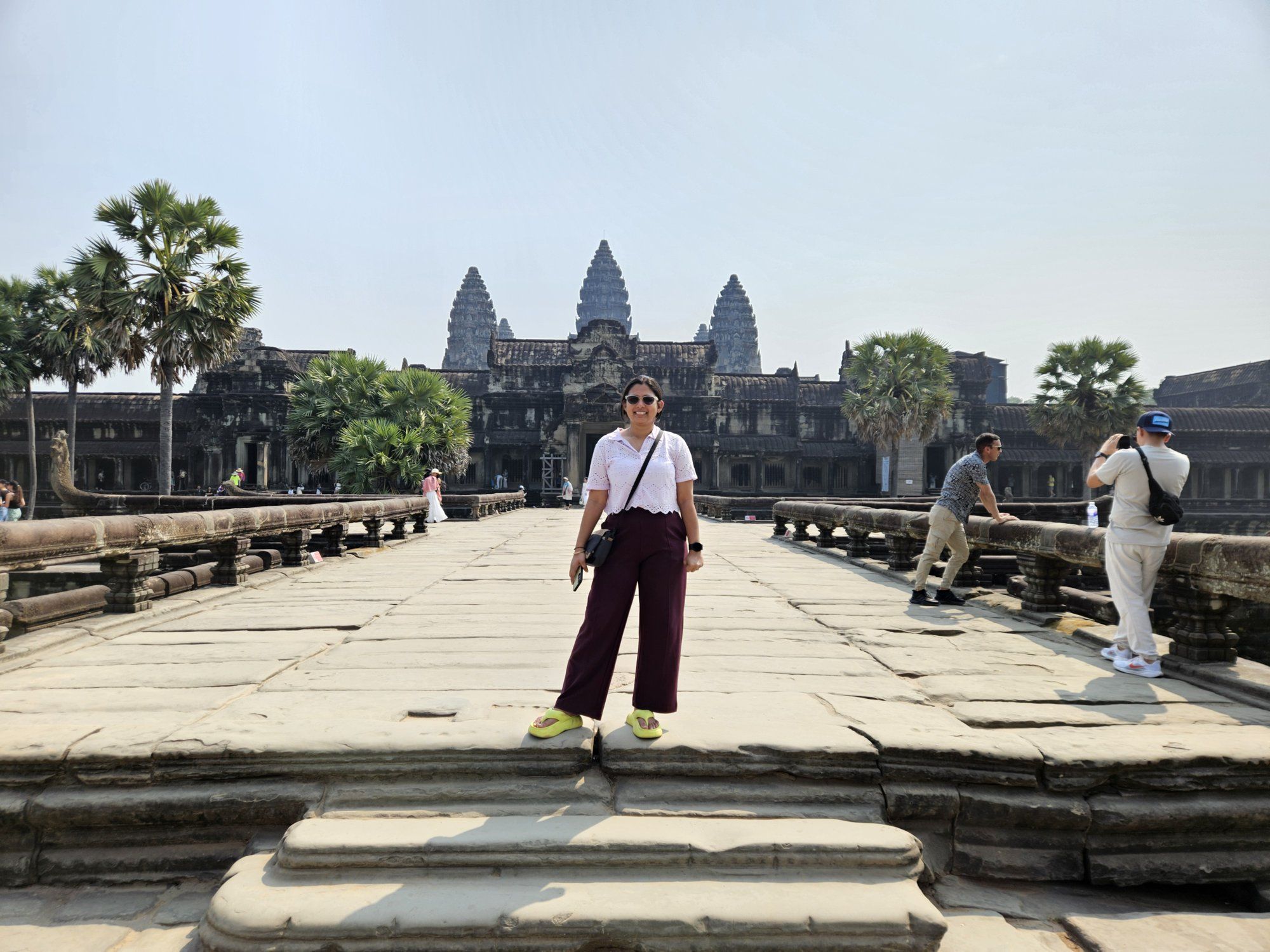
The single most affecting moment for an Indian traveller at Angkor is the recognition. The walls of Angkor Wat tell the Ramayana and the Mahabharata. The Churning of the Ocean of Milk is there, clearly labelled by the carvers. The apsaras are there. The stories are yours, carved in stone by Khmer hands nine hundred years ago, three thousand kilometres from home.
Aditya felt it. “I could totally understand Ramayana and Mahabharata with the characters depicted,” he said. No other destination in Southeast Asia offers this specific recognition. It is not the only reason to visit Angkor. But it is the reason that stays with you.
Let Tripcuro Plan Your Angkor Trip
Tripcuro designs your Cambodia journey end to end — from flights out of your city and the right visa to a Siem Reap stay with exclusive perks at Raffles, Sofitel, Anantara or Zannier. We handle the vegetarian dining, guide you through the epics carved in stone, and build an itinerary that fits how you travel. Tell us your dates and we will build a bespoke itinerary around them.