
Luganville
Sanma, Vanuatu
Why visit Luganville?
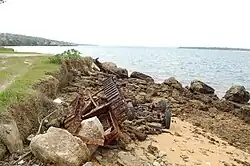
Luganville — also known simply as Santo or Kanal — is the largest town on Espiritu Santo and, with around 16,000 residents, the second-largest urban centre in Vanuatu after Port Vila. The town stretches in a narrow ribbon along the southern coast of Espiritu Santo, facing the Segond Channel and the offshore green hump of Aore Island. Its present-day character was shaped almost entirely by the Second World War: at its peak, more than 100,000 American servicemen were stationed here, and the town was one of the largest US military bases in the South Pacific. The legacy is everywhere — straight wide streets laid out by Seabees, surplus Quonset huts, weathered concrete piers, and offshore the world-famous wreck of the SS President Coolidge, sunk by friendly mines in 1942 and now one of the most accessible large-ship dives on earth.
Don't come to Luganville expecting an attractive town in its own right. It's utilitarian, dusty, and dominated by Chinese-run trade stores selling imported goods to the surrounding villages. The reason to come is what surrounds it: the Coolidge, the blue holes, Champagne Beach, and the wider expanses of Espiritu Santo. Use Luganville as a base — somewhere to sleep, eat, refuel, and organise — rather than as a destination in itself.
The climate is hot and humid year-round, with daytime highs of 27–30 °C and nights rarely below 21 °C. Annual rainfall is around 3,000 mm. The wet season runs roughly November to April (also cyclone season), with January and February the wettest. The dry season, July to September, is cooler, less humid, and coincides with peak diving conditions and peak bookings — reserve well ahead.
Planning Luganville? Tell us your dates and we’ll tailor the trip.
Ask on WhatsAppHow do you get there?
By Plane
Santo–Pekoa International Airport (SON) lies about 6 km east of central Luganville. It's the second international gateway to Vanuatu after Port Vila.
- Air Vanuatu operates the only scheduled international service, from Brisbane (BNE) in Australia, plus regular domestic flights from Port Vila (VLI) and smaller airstrips around the archipelago (Malekula, Ambae, Pentecost, Gaua, Sola).
- Taxi to town is around 700 vatu (~US$7); journey takes 10–15 minutes.
- Mini-bus (shared minivan) costs around 150 vatu but is infrequent and you may wait until the driver fills the vehicle or detours via other passengers' destinations.
- Most hotels and resorts will arrange a complimentary or paid airport pickup if you book in advance — worth asking, especially if arriving after dark.
By Car / Road
Luganville is on Espiritu Santo, an island, so there are no road connections from other countries or other Vanuatuan islands. Within Santo, the Main Road (sealed) runs east from town towards Pekoa airport and on toward the East Coast Road; another sealed stretch climbs north past the hospital toward the Road to Port Olry. Almost all other roads are dirt or crumbling WWII-era American concrete and become difficult after heavy rain — a 4WD is strongly recommended for any trip beyond the immediate town and main coastal route.
For inter-island travel, inter-island cargo ships and small passenger boats call at Luganville's wharf from Port Vila and other islands; schedules are irregular and conditions basic. Most travellers fly.
Luganville is tiny and walkable — the central commercial strip along the Main Road can be covered end-to-end on foot in 20 minutes. The big exceptions are the climb up the "Big Hill" on the western edge of town and trips out to the airport, Aore wharf, or Champagne Beach.
- Mini-buses are the workhorse of local transport: flat fare of 100 vatu anywhere within town, slightly more for longer runs (e.g. 150 vatu to the airport area). Flag them down anywhere on the Main Road; tell the driver your destination as you board.
- Taxis are plentiful, particularly near the market and major hotels. Short hops in town are around 300–500 vatu; airport runs about 700 vatu. Negotiate or confirm the fare before getting in — meters are not used.
- Ride-hailing apps are not available.
- Car/scooter hire is possible through a handful of operators in town and the larger resorts; useful if you plan to explore Santo independently. Expect from around 6,000–8,000 vatu/day for a small car.
- Roads are largely unnamed, so directions are given by landmark (e.g. "opposite the Unity Shell station", "next to LCM"). Locals are helpful — just ask.
Watch for: very limited street lighting after dark; loose dogs; rough verges. Drive (and walk) with care, especially in rain.
What are the things to do?
Luganville's own sights are modest — most "seeing" happens on day trips out of town (see Go Next). In town itself:
Open-air market — Open 24 hours a day except Sunday nights. Heaped with organically grown produce brought in from village gardens: papaya, pineapple, taro, kumara, island cabbage, coconuts, pawpaw, and tropical greens you won't recognise. Excellent quality, very cheap. Also a window into daily Ni-Vanuatu life.
Outdoor produce market (western end of town) — A second, smaller market focused on fresh fruit and vegetables. Worth a wander even if you're not buying.
View from the Big Hill — A short uphill walk on the western edge of town gives a sweeping view over the Segond Channel and across to Aore Island. Best in late afternoon.
Million Dollar Point — A few kilometres east of town, where US forces dumped vast quantities of military equipment (jeeps, bulldozers, cranes, Coca-Cola bottles) into the sea at war's end after the French and British colonial administrations refused to buy them at a token price. Still visible from shore at low tide and a popular shore-snorkel/dive site. Small landowner fee, typically 500–1,000 vatu.
WWII relics around town — Concrete bunkers, Quonset huts, and the old American wharves are scattered along the coast either side of Luganville. Easy to spot from the Main Road.
Dive the SS President Coolidge — The reason most travellers come to Santo. The 199 m converted luxury liner-turned-troop carrier sank in 1942 after striking American mines at the entrance to Segond Channel. The wreck lies on its port side in 21–70 m of water, making it one of the largest accessible shipwreck dives in the world. Highlights include "The Lady" (a porcelain relief in the first-class smoking room), the cargo holds full of jeeps and rifles, the chapel, and the swimming pool. Multiple dives needed to see it properly. Operators in Luganville include Allan Power Dive Tours and Aquamarine Santo (opposite the Unity Shell station). Expect around 8,000–11,000 vatu per dive including gear; PADI courses available.
Snorkel/dive Million Dollar Point — Easy shore entry, shallow enough for snorkellers, with coral now growing over jeeps, trucks and forklifts.
Aore Island day trip — Short ferry from Luganville's wharf (~10 minutes; resort transfer or local boat). White-sand beaches, reef snorkelling, kayaking, sportfishing, and additional wreck dives including the MV Henry Bonneaud and the SS Tucker. Aore Island Resort runs day passes including lunch.
Blue holes — Inland from the East Coast Road north of Luganville, freshwater springs well up through limestone to form vivid turquoise pools shaded by jungle. Nanda (Jackie's) Blue Hole, Matevulu Blue Hole and Riri Blue Hole are the most visited. Each charges a small landowner fee (200–500 vatu). Bring a rope swing-friendly attitude and waterproof shoes.
Champagne Beach — see Go Next.
Santo Golf Club — A 9-hole course on the outskirts of town; very informal, frequented by local expats. Asking around at Hotel Santo or Deco Stop is the best way to find out current playing days and arrange clubs.
Drink kava at a nakamal — A cultural experience as much as a beverage one. See Drink below.
Custom village visits — Several villages on Santo welcome respectful visitors for traditional dance, kastom storytelling, and bush walks; arrange through your hotel or a local guide rather than turning up unannounced.
Planning Luganville? Want these on a customised itinerary?
Ask on WhatsAppWhere to eat?
Eating in Luganville splits cleanly between very cheap market stalls catering to locals and a handful of sit-down restaurants aimed at divers, expats, and visitors. Local cuisine is built around root vegetables (yam, taro, manioc, kumara), island cabbage, coconut, fresh reef fish, and increasingly Santo beef — pasture-raised, grass-fed, and excellent. The signature dish is lap lap, a baked pudding of grated root vegetables wrapped in banana leaves, often with chicken, beef or fish. Watch for coconut crab on menus — delicious but increasingly restricted to protect the species; eat sparingly and only when in season.
- Outdoor produce market food stalls (budget) — Several vendors at the market serve hot plates of beef stew, fish, "steak", or omelette-style eggs over rice for around 400 vatu, often with fresh lime juice and a piece of fruit. Filling and authentic.
- Natangora Cafe (budget–mid) — Centrally located, popular for breakfast and lunch. Excellent burgers and milkshakes made from local ingredients, plus proper espresso, cappuccinos, and fresh juices.
- Hotel Santo restaurant (mid) — On the Main Street; reliable food in a comfortable setting and reputedly the only pizza in town (order a day ahead). Lively bar attached.
- Deco Stop Lodge restaurant (mid–upper) — Halfway up the Big Hill; the food is good and the view over Segond Channel is the best of any restaurant in town. Popular with the diving crowd.
- Coral Quays (upper, Rue San Michel, off the western end of the Main Road) — Known for locally raised Santo eye fillet with green peppercorn sauce and from-scratch dessert soufflés. Probably the best beef on the island.
- Nemo Restaurant (upper) — French-run; widely considered the best fine-dining option in Luganville. Small menu, fresh seafood, French technique.
- Chinese restaurants — Several along the Main Road; one near Aquamarine serves more authentic Cantonese-style food and may offer coconut crab and bush pigeon seasonally.
Vegetarian options are limited but possible — most menus accommodate with rice, vegetables and tofu or eggs on request. Halal and gluten-free specifics are not commonly catered to; communicate clearly when ordering.
Where to drink?
Tap water in Luganville is generally considered safe to drink, though bottled water is widely available if you prefer. After heavy rain, treat or boil water as a precaution.
- Tusker — The local lager, brewed in Vanuatu; refreshing and ubiquitous. Around 200 vatu a bottle from any small store. There's no real volume discount on cases. Vanuatu Bitter is a darker stablemate worth trying.
- Hotel Santo Bar — The most reliable bar in town for a beer or cocktail in proper surroundings; mix of expats, divers, and visiting yachties.
- Deco Stop Lodge Bar — Sunset drinks with the channel view.
- Sports bar in town — Functional but dingy; only worth it if you want to watch rugby with locals.
- Nemo Nakamal area — Buy a Tusker from a nearby store and sit on the shore. Casual and pleasant.
Kava
Kava is the social drink of Vanuatu, and Santo's nakamals serve some of the strongest kava in the country. Made from the pounded root of the Piper methysticum plant, it tastes earthy and muddy, and produces a numbing of the lips and tongue followed by relaxed, sociable mellowness — not intoxication in the alcoholic sense.
- Where: Nakamals are open-sided thatched shelters, usually marked at dusk by a single coloured light bulb (red, blue or green). Several are scattered through Luganville's residential lanes; Nemo Nakamal is one of the easiest to find.
- How much: Kava is sold by the shell (a half-coconut bowl) — typically 50, 100 or 150 vatu. First-timers should start with a 100-vatu shell and wait 20 minutes before considering another. Do not exceed 200 vatu's worth on your first session.
- How to drink it: In one swift gulp, then spit (politely, off to the side) and chase with water or a snack. Quiet, low conversation is the norm — nakamals are calm spaces.
- Getting home: Plenty of taxis circulate near the main nakamals; you should not drive yourself.
Alcohol is not part of traditional Ni-Vanuatu social life, so dedicated drinking establishments are few — kava is the night out.
Planning Luganville? We’ll book the stays and dining for you.
Ask on WhatsAppWhere to stay?
Booking ahead is strongly recommended in dry season (June–September), when divers fill most beds.
Budget
- Unity Park Motel — Simple, central rooms a short walk from the market and main strip. From around 5,000–7,000 vatu/night.
- Lonnoc Beach Bungalows (out of town, Hog Harbour area, ~50 min north) — Basic beachside bungalows close to Champagne Beach. From around 4,500 vatu/night.
Mid-range
- Hotel Santo (Main Street) — The most central hotel in Luganville, with restaurant, bar, pool, and easy access to dive shops and shops. From around 9,000–13,000 vatu/night.
- Deco Stop Lodge (halfway up the Big Hill, +678 36175) — Long-time favourite of the diving community; comfortable rooms, excellent restaurant, and the best in-town view. From around 12,000–16,000 vatu/night.
Upscale / boutique
- Coral Quays Fish & Dive Resort (Rue San Michel, +678 36257, [email protected]) — Beachfront on the western edge of town, geared to divers and anglers, with one of Luganville's best restaurants. From around 18,000–25,000 vatu/night.
- Barrier Beach Resort (formerly Moyyan House by the Sea; off the East Coast Road, +678 7105360, [email protected]) — Modern boutique resort on a long white-sand beach looking across to Aese Island; excellent snorkelling on the surrounding reefs. Boutique villas from around 30,000–45,000 vatu/night.
- Aore Island Resort (across the Segond Channel; ~10 min ferry) — Over-water and beachfront bungalows on a tranquil offshore island, included transfers, full dive operation. From around 22,000–35,000 vatu/night.
What should you buy?
Luganville is not a shopping destination. The main strip is dominated by Chinese-run trade stores stocking imported groceries, hardware, plastic homewares and clothing — all at a slight premium because Vanuatu, despite being duty-free on alcohol and tobacco, imports almost everything else.
- Open-air market — By far the best buy in town: tropical fruit and vegetables for a few hundred vatu, plus woven baskets, pandanus mats, and small carvings.
- Local craft stores along the Main Road carry wood carvings, tamtam slit-drums (small souvenir versions), shell jewellery, and WWII memorabilia ranging from genuine Coca-Cola bottles dredged up at Million Dollar Point to dog tags and uniform buttons.
- LCM Supermarket (centre of town, Main Road) — The best-stocked general store for Western groceries, toiletries, and basics. Stock up here before heading out to remote parts of Santo.
- Liquor and beer store in town stocks imported wines and spirits, but expect to pay heavily for anything imported.
Bargaining is not customary in shops or at the produce market — prices are fixed and already low. For crafts and carvings, polite negotiation is acceptable but should be modest. Cash (vatu) is essential; very few outlets take cards, and ATMs are limited to a couple of branches in town (ANZ, BSP).
Where to go next?
- SS President Coolidge and Million Dollar Point (offshore, immediately east of Luganville) — Even if you're not a diver, snorkelling Million Dollar Point or watching the dive boats depart is a worthwhile half-day.
- Aore Island (~10 min by ferry) — Diving, fishing, kayaking, and an easy lunch escape across the channel.
- Champagne Beach (~50 km, 1–1.25 hr by road) — One of the South Pacific's most famous beaches: silky white silica sand, turquoise water, fringing coconut palms. Small landowner fee (typically 1,000–2,000 vatu per person).
- Port Olry (~55 km north, ~1.25 hr) — A picture-perfect French-Catholic fishing village on a long white-sand bay, with a handful of beachside restaurants serving fresh-caught lobster and coconut crab. Often combined with Champagne Beach.
- Blue holes (Matevulu, Riri, Nanda/Jackie's) (20–40 km north of town along the East Coast Road) — Vivid turquoise freshwater springs; most have rope swings, small landowner fees, and a couple of food stalls. Easily combined with a Champagne Beach run.
- Millennium Cave (~1.5 hr drive plus jungle trek; full-day guided tour) — Vanuatu's most spectacular adventure trip: river canyoning through a vast cave, jungle hike, village lunch, and bamboo-raft float back. Book through a Luganville operator (e.g. through your hotel); around 10,000–12,000 vatu including transfers, guide and lunch.
- Port Vila (~45 min by Air Vanuatu) — Vanuatu's capital, on Efate; useful onward connection or a contrast in pace if you want a more developed base.
Nearby in Sanma
More places to explore around Luganville.
Guide content as of May 2026. Portions adapted from Wikivoyage, CC BY-SA 4.0.

Contact Us
Get in touch with us.
Get in touch
Contact Us
Tell us where you'd like to go and how you like to travel. A real Tripcuro planner — not a bot — will craft an itinerary around you.
- Personalised, hassle-free planning end-to-end
- Transparent pricing, no hidden costs
- 24/7 support for complete peace of mind