
Phangnga
Thailand · Province · 9 destinations with guides
Photography coming soonWhy visit?
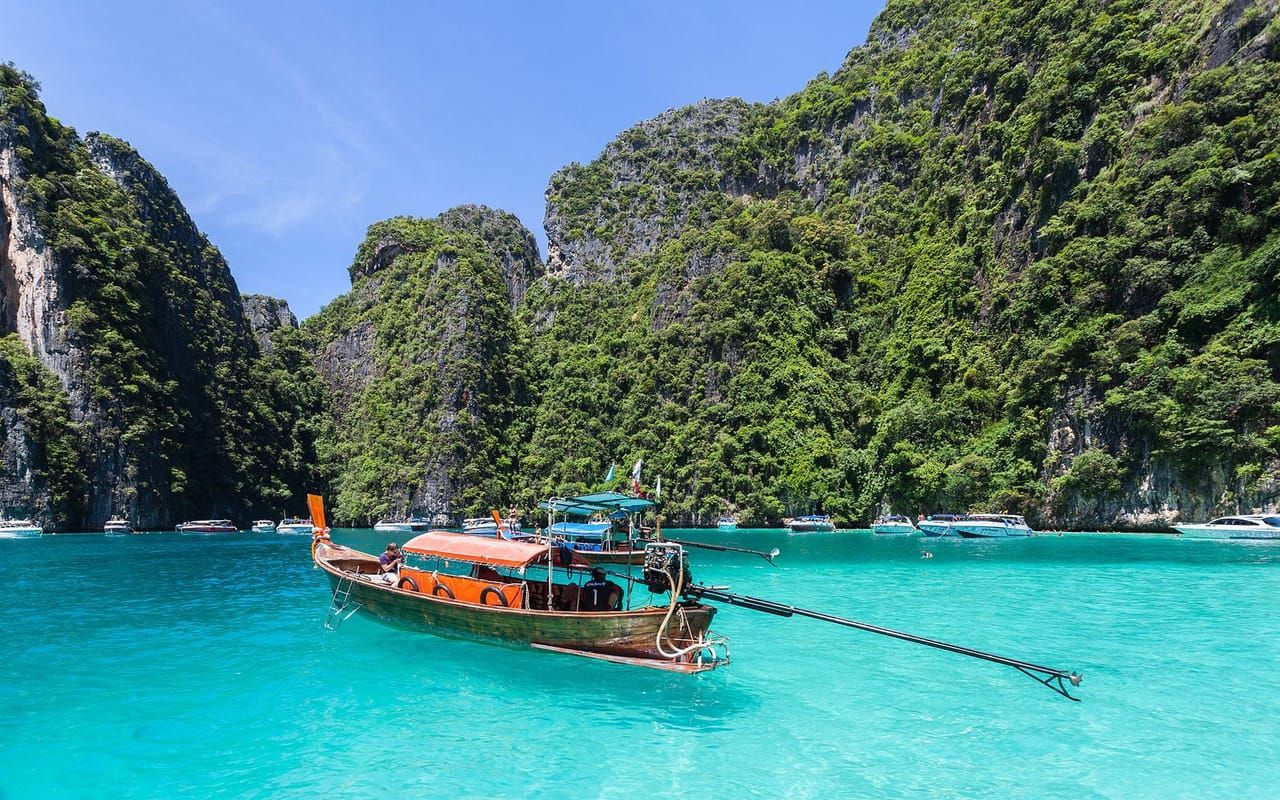
Phangnga is a province on Thailand's Andaman coast, wedged between Phuket to the south and Ranong to the north. It is best known for Phang Nga Bay, the breathtaking expanse of jade-green water studded with hundreds of vertical limestone karst islands, sea caves and hidden lagoons. The provincial capital, Phang Nga Town, is a small, low-key place at the foot of jungle-clad cliffs, far quieter than the resort towns of its famous neighbours.
The province has a striking dual geography. The eastern side faces the sheltered, island-dotted Phang Nga Bay and its mangrove forests; the western side opens onto the open Andaman Sea, with long sandy beaches at Khao Lak, Natai and Thai Mueang, and the offshore wilderness of the Similan and Surin island groups — among the finest dive destinations in the world. Inland rise rainforest mountains and national parks.
What defines Phangnga as a destination is its blend of dramatic scenery and relative calm. Khao Lak has grown into a relaxed, family- and diver-oriented resort area without the intensity of Phuket; Phang Nga Bay offers some of Thailand's most iconic boat scenery; and the Similan and Surin islands deliver world-class underwater experiences. It rewards travellers who want natural beauty over nightlife.
When is the best time to visit?
Phangnga lies on the Andaman coast, so it follows the southwest monsoon. The high season runs roughly November to April, with calm seas, reliable sunshine and the clearest water — the best time for Phang Nga Bay tours, beaches and diving. Crucially, the Similan and Surin National Parks are open only from mid-October to mid-May and close entirely during the monsoon, so a Similan trip must fall within the dry season.
The southwest monsoon (May to October) brings heavy rain, rough seas and reduced boat services, with September and October the wettest months. Khao Lak's beaches are largely off-limits for swimming in the monsoon's peak. Temperatures stay warm year-round at 27-33°C. The annual commemorations of the 2004 Indian Ocean tsunami take place around 26 December in Khao Lak, and local vegetarian-festival observances occur in October.
Tell us your dates and we'll shape a Phangnga route around them.
WhatsAppHow do you get around?
Phangnga has no commercial airport of its own; most visitors arrive via Phuket International Airport, about 30 km from the southern end of the province and roughly 80 km from Khao Lak. Airport minivans and taxis serve Khao Lak directly (around 800-1,200 baht / USD 24-36 by taxi).
By road, Highway 4 (Phetkasem Road) is the main artery, running the length of the province and linking Phuket, Takua Pa, Khao Lak and on toward Ranong. Frequent buses and minivans connect Phang Nga Town, Takua Pa and Khao Lak with Phuket, Krabi and Surat Thani. Distances to note: Phang Nga Town to Khao Lak is about 60 km, Khao Lak to Phuket airport about 80 km, and Phang Nga Town to Phuket roughly 90 km. Within towns and along the Khao Lak strip, songthaews, motorbike taxis, tuk-tuks and rented scooters cover short trips.
The bay islands and offshore parks are reached by boat. Longtail and speedboat tours of Phang Nga Bay depart from piers such as Tha Dan and Surakul near Phang Nga Town, while Similan and Surin liveaboards and day-trip speedboats leave mainly from Thap Lamu and Khura Buri piers.
Where should you go?
- Khao Lak — the province's main resort area, relaxed and dive-focused, with long Andaman beaches.
- Phang Nga Town — the quiet provincial capital, gateway to bay tours and surrounded by jungle cliffs.
- Phang Nga Bay — the iconic karst-island seascape, including James Bond Island and the stilt village of Ko Panyi.
- Similan Islands — a protected archipelago renowned for world-class diving and snorkelling.
- Surin Islands — remote, pristine islands with vibrant reefs and a Moken sea-gypsy community.
- Ko Yao Noi & Ko Yao Yai — tranquil, traditional islands in the middle of the bay, ideal for slow travel.
- Takua Pa Old Town — a historic Sino-Portuguese tin-mining town with atmospheric shophouse streets.
Want the scenic legs and stays booked for you? Just ask.
WhatsAppWhat should you eat?
Phangnga's food is southern Thai — fiery, fragrant and seafood-forward, with a notable Thai-Muslim and Hokkien-Chinese influence inherited from its tin-mining past. Fresh Andaman seafood is the highlight: grilled rock lobster, crab, prawns, squid and whole fish, often served with a sharp seafood dipping sauce. Signature southern dishes include kaeng tai pla (pungent fermented-fish curry), kua kling (dry-fried turmeric-chilli minced meat) and kaeng som (sour curry with fish).
The Takua Pa area is known for Hokkien-style noodle dishes and dim-sum breakfasts reflecting the old town's Chinese heritage, while Thai-Muslim communities contribute roti, satay and rich massaman curry. A common morning meal is khanom jeen, fermented rice noodles with curry and fresh vegetables. Khao Lak's restaurants offer plenty of seafood and international options for tourists; expect Thai mains from 60-150 baht (about USD 1.80-4.50) and grilled-seafood platters from 250-600 baht. Vegetarians can rely on rice-and-curry shops and the October Vegetarian Festival, when meat-free food is widely available.
What is the culture like?
Phangnga's culture is shaped by three strands: southern Thai Buddhist, Thai-Muslim, and the legacy of Chinese tin miners. Takua Pa Old Town preserves this mix in its Sino-Portuguese shophouses, where a weekend walking-street market and heritage festivals revive the town's trading-era atmosphere.
The province observes the October Vegetarian Festival (Tesagan Gin Je) with the same yellow-flagged, meat-free fervour seen in neighbouring Phuket. The most solemn date is 26 December, when memorial ceremonies in Khao Lak honour the tens of thousands lost in the 2004 Indian Ocean tsunami; the International Tsunami Museum and memorials such as the beached patrol boat T.813 keep the memory alive. Out on the Surin Islands, the Moken (Chao Lay) sea-gypsy community maintains a distinct culture of boat-based living, animist beliefs and the annual Loy Rua boat-floating ceremony. Local crafts include batik, pearl and shell jewellery, and traditional longtail boat building.
Travelling during a festival? We'll plan around the crowds.
WhatsAppWhat are the standout experiences?
- Phang Nga Bay boat tour — cruise or kayak among the limestone karsts to James Bond Island (Khao Tapu), the sea caves of Ko Hong, and the Muslim stilt village of Ko Panyi.
- Diving the Similan Islands — explore granite-boulder seascapes and coral gardens on day trips or liveaboards from Thap Lamu (October to May only).
- Snorkelling the Surin Islands — drift over some of Thailand's healthiest shallow reefs and visit the Moken village in Bon Bay.
- Khao Lak beaches and tsunami memorials — relax on long, low-key Andaman sands and reflect at the Tsunami Museum and the inland-stranded patrol boat memorial.
- Sea-kayaking sea caves and lagoons — paddle into the hidden hong (room-like collapsed caverns) of the bay's karst islands, accessible only at the right tide.
Top Destinations
Every destination in Phangnga with a guide — tap a place for the full guide.
Ao Phang Nga National Park
Ao Phang Nga National Park (Phang Nga Bay Marine National Park) is…
Khao Lak
Khao Lak (Thai: เขาหลัก) is a 20 km long strip of coastal resorts…
Khao Lak-Lam Ru National Park
Khao Lak-Lam Ru National Park (Thai: อุทยานแห่งชาติเขาหลัก–ลำรู่) is…
Ko Yao Noi
Ko Yao Noi ("Small Long Island", Thai: เกาะยาวน้อย) is part of the Ko…
Ko Yao Yai
Ko Yao Yai ("Big Long Island", Thai: เกาะยาวใหญ่) is the larger…
Mu Ko Similan National Park
Mu Ko Similan National Park (Thai: หมู่เกาะสิมิลัน), known…
Mu Ko Surin National Park
Mu Ko Surin National Park (Thai: หมู่เกาะสุรินทร์) is a protected…
Phangnga
Phangnga is the capital of Phangnga Province (TH-82) in Southern…
Takua Pa
Takua Pa is a market town and district administrative centre in Phang…
Sample itinerary
See how a trip to Phangnga comes together — a real Tripcuro plan, day by day.
Pair the highlights of Phangnga into one easy trip — we'll plan the route.
WhatsApp
Contact Us
Get in touch with us.
Get in touch
Contact Us
Tell us where you'd like to go and how you like to travel. A real Tripcuro planner — not a bot — will craft an itinerary around you.
- Personalised, hassle-free planning end-to-end
- Transparent pricing, no hidden costs
- 24/7 support for complete peace of mind