
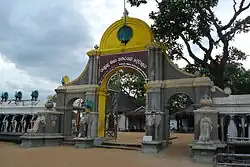
Kataragama
Uva Province, Sri Lanka
Why visit Kataragama?
Kataragama is one of South Asia's most extraordinary pilgrimage towns — a small settlement on the southeastern edge of Uva Province where four religious traditions converge on a single sacred precinct. Buddhists revere it as a place blessed by the Buddha; Hindus worship the war-god Skanda (known here as Kataragama Deviyo or Murugan); Muslims maintain the Kebilitta mosque and shrine within the compound; and the indigenous Vedda people regard the deity as their own guardian. The result is a town where saffron-robed monks, ash-smeared Hindu devotees, and Muslim pilgrims share the same dusty lanes leading to the Menik Ganga river.
For most of the year Kataragama is sleepy and unhurried, its shrines drawing a steady but modest trickle of worshippers. That changes dramatically during the Esala festival in July–August, when the town swells with tens of thousands of pilgrims, many having walked the gruelling Pada Yatra trail from the far north. The festival features fire-walking, hook-hanging penances, and a nightly perahera (procession) of elephants and drummers. If you want quiet contemplation, avoid these weeks; if you want spectacle, plan well ahead because every bed for miles is booked.
The town is compact and easily walked. The sacred zone sits on the north bank of the Menik Ganga, reached by a footbridge from the bazaar area where buses arrive and most guesthouses cluster. The climate is hot and dry for much of the year, hovering in the low 30s°C; the inter-monsoon rains around October–November and again April can bring afternoon downpours. Early morning and late afternoon are the most comfortable — and the most atmospheric — times to visit the temples.
Planning Kataragama? Tell us your dates and we’ll tailor the trip.
Ask on WhatsAppHow do you get there?
By Plane
The nearest airport with scheduled service is Mattala Rajapaksa International Airport (HRI) near Hambantota, roughly 70 km southwest, though flight options there are very limited. Most travellers arrive via Bandaranaike International Airport (CMB) in Colombo, about 280 km away — a 5–6 hour drive. Domestic seaplane and light-aircraft charters occasionally serve the south coast; arrange these through a tour operator.
By Train
Kataragama has no railway station. The closest railheads are at Matara on the southern coastal line, with onward bus or taxi connections taking around 3 hours, or further afield at Ella on the hill-country line.
By Car / Road
Kataragama is well connected by road. From Tissamaharama it is a straightforward 20 km, roughly 30–40 minutes by car or local bus. Ella, in the cool hills, lies about 3 hours away via a scenic descent. Colombo is 5–6 hours via the Southern Expressway to Mattala and then inland. Buses run frequently from Tissamaharama (the main regional hub) to the Kataragama bus stand on Depot Road; long-distance buses also connect from Colombo, Matara and Monaragala. Roads in the area are generally good and paved.
Kataragama's centre is small enough to cover entirely on foot — the bus stand, bazaar, guesthouses and the footbridge to the sacred precinct are all within a 15-minute walk. Tuk-tuks wait near the bus stand for trips to outlying hotels on the Tissamaharama road or to nearby attractions; agree the fare before setting off, as metered tuk-tuks are uncommon here. The ride-hailing app PickMe operates patchily this far from major cities, so cash and negotiation are the norm. Within the temple complex itself everyone walks; dress modestly (covered shoulders and knees) and be prepared to remove footwear before entering shrine areas.
What are the things to do?
Temples and shrines
Kataragama Temple Complex (Ruhunu Maha Kataragama Devalaya) — the heart of the town and the reason most visitors come. The whitewashed Maha Devale enshrines the yantra of Kataragama Deviyo; alongside it stand Buddhist, Hindu and Muslim places of worship. Puja (offering) ceremonies are held roughly three times daily — typically early morning, midday and evening — and the evening puja is the most atmospheric, with oil lamps, drumming and crowds of devotees. Entry is free; offerings of fruit and flowers are bought at the bazaar stalls.
Kiri Vehera — a large white dagoba (stupa) a short walk beyond the main devale, said to date back over two millennia and traditionally linked to a visit by the Buddha. A peaceful counterpoint to the busy devale; free to enter.
Sella Kataragama — a smaller, atmospheric shrine cluster about 4 km outside town, dedicated to the elephant-headed Ganesha and considered a stop pilgrims make before the main shrine. Worth the short tuk-tuk ride.
The bazaar puja stalls — not a "sight" in the formal sense, but the rows of stalls selling marigold garlands, lotus buds, incense, camphor and fruit platters form a vivid, colourful market that is itself part of the Kataragama experience.
Witness a puja ceremony. Timing your visit to the evening puja at the Maha Devale is the single most rewarding thing to do here — arrive early to find a spot.
Bathe in the Menik Ganga. Pilgrims ritually wash in the "Gem River" before approaching the shrines. The shallow, clear water beside the footbridge is a lively, communal scene, especially at dawn.
Walk the sacred precinct at first light. Before the heat and the crowds, the tree-shaded avenues between the shrines are tranquil and photogenic.
Attend the Esala festival (July–August). If you visit during the festival, the fire-walking ceremony, the nightly perahera and the kavadi dancers are unforgettable — but expect dense crowds and book accommodation months in advance.
Day-trip to Yala National Park. Kataragama sits close to the eastern entrances of Yala; jeep safaris in search of leopards, elephants and sloth bears are easily arranged through guesthouses (see Go Next).
Planning Kataragama? Want these on a customised itinerary?
Ask on WhatsAppWhere to eat?
Kataragama's food scene is simple and largely vegetarian, in keeping with its pilgrimage character; many eateries serve no meat at all, and alcohol is generally absent near the sacred zone. The staple is rice and curry, alongside short eats (snacks) such as vadai, rotti and string hoppers.
- Bazaar rice-and-curry shops — a cluster of inexpensive local canteens near the bus stand serve generous vegetarian rice-and-curry plates and hoppers for very little; busy at lunchtime and reliably fresh.
- Hotel Sunils restaurant (Tissa–Kataragama Road) — a clean, well-regarded dining room serving Sri Lankan and a few Western dishes; a good mid-range choice if you want a comfortable sit-down meal.
- Mandara Rosen (57 Detagamuwa, on the Tissamaharama road) — the restaurant of this larger hotel offers buffet and à la carte dining at the upper end of the local range, convenient if you are staying outside the centre.
Vegetarian options are abundant everywhere; observant travellers should note that food close to the shrines is typically prepared without meat, and that fasting and dietary restraint are part of the pilgrimage tradition.
Where to drink?
Kataragama is, for the most part, a "dry" town in spirit — the sacred precinct and the immediate bazaar discourage alcohol, and pilgrims often abstain. Larger hotels on the Tissamaharama road, such as Mandara Rosen, may serve beer and spirits to guests, but do not expect bars in the town centre. Non-alcoholic drinks are the mainstay: fresh king-coconut water (thambili) sold from carts is the perfect antidote to the heat, along with sweet milky tea, lime sodas and bottled soft drinks. Tap water is not safe to drink — stick to sealed bottled water, which is sold cheaply throughout the bazaar.
Planning Kataragama? We’ll book the stays and dining for you.
Ask on WhatsAppWhere to stay?
- Budget — Simple guesthouses and pilgrim lodges cluster around the bazaar and along the Tissamaharama road, with basic rooms typically in the lower budget range; Hotel Sunils (Tissa–Kataragama Road) is a clean, friendly option praised for its dining. Pilgrims' rest houses (madams) near the temple offer the most basic accommodation, often free or by donation but very simple.
- Mid-range — Hotel Clauria (118, Thissamaharama Road) and Hotel Okrin (110 Detagamuwa) offer comfortable air-conditioned rooms at moderate rates, both an easy tuk-tuk ride from the sacred precinct.
- Upscale — Mandara Rosen (57 Detagamuwa, on the road to Tissamaharama) is the most polished property in the area, with a pool, restaurant and well-appointed rooms; it is the natural choice for travellers wanting comfort near the shrines. For a wilderness alternative, Mahoora Tented Safari Camp near Yala National Park offers a high-end glamping experience within reach of Kataragama.
What should you buy?
Kataragama is a place of devotion rather than commerce, and most "shopping" revolves around religious offerings — marigold and lotus garlands, joss sticks, camphor, coconuts and fruit baskets sold at the puja stalls lining the approach to the temple. These have broadly fixed, modest prices; bargaining is not really expected for offerings. The town bazaar also sells everyday goods, simple devotional souvenirs, prayer beads and small brass lamps. For a wider choice of crafts, textiles or quality souvenirs, shop in Tissamaharama or save it for the south-coast towns. Where bargaining does apply — at general souvenir stalls — it is gentle and good-natured.
Where to go next?
- Tissamaharama (~20 km, 30–40 min) — ancient tank-side town with dagobas and the gateway to Yala safaris.
- Yala National Park (~25 km to the eastern entrances) — Sri Lanka's premier wildlife park, famed for its dense leopard population.
- Bundala National Park (~50 km) — a coastal wetland and birdwatcher's paradise, much quieter than Yala.
- Ella (~3 hr by road) — hill-country town with tea estates, waterfalls and the iconic Nine Arch Bridge.
- Mirissa / Tangalle (south coast, ~2–2.5 hr) — palm-fringed beaches, surf and whale-watching.
- Buttala and the Yudaganawa stupa (~1 hr) — a colossal ancient dagoba on the route inland toward Monaragala.
Nearby in Uva Province
More places to explore around Kataragama.
Guide content as of May 2026. Portions adapted from Wikivoyage, CC BY-SA 4.0.

Contact Us
Get in touch with us.
Get in touch
Contact Us
Tell us where you'd like to go and how you like to travel. A real Tripcuro planner — not a bot — will craft an itinerary around you.
- Personalised, hassle-free planning end-to-end
- Transparent pricing, no hidden costs
- 24/7 support for complete peace of mind