
Sinharaja Forest Reserve
Sabaragamuwa Province, Sri Lanka
Why visit Sinharaja Forest Reserve?
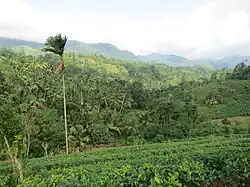
Sinharaja Forest Reserve is Sri Lanka's last substantial stretch of primary lowland tropical rainforest, draped over a ridged terrain of steep hills and narrow valleys in the island's wet southwestern interior. Its international significance is unambiguous: UNESCO has designated it both a Biosphere Reserve and a World Heritage Site. The name translates roughly as "Lion Kingdom", and the forest's value lies less in single dramatic sights than in sheer biodiversity — a dense, dripping, layered ecosystem where a very high proportion of the trees, birds, amphibians and insects are found nowhere else on Earth.
The reserve covers an area of around 89 km², a long, relatively narrow band of forest. It is home to over 30 endemic bird species, and Sinharaja is famous as the one place where, with patience and a good guide, a visitor can hope to see all of Sri Lanka's endemic birds. Among its sought-after residents are the Sri Lankan bay owl and the rare Serendib scops owl; reptiles including the green pit viper are common, and the forest also shelters purple-faced langurs, giant squirrels and a host of amphibians. The classic Sinharaja spectacle is the mixed-species feeding flock — dozens of birds of many species moving and foraging together through the canopy.
The forest's notorious smaller residents are leeches, which thrive in the perpetually damp leaf litter; long clothing and a leech repellent containing picaridin (icaridin) or DEET are strongly recommended. The best times to visit are roughly December to early April and again August to September, when rain is least disruptive; that said, this is a rainforest, and showers should be expected in any month. Sinharaja is reached through three entrances — Kudawa, the main and most-used gateway in the northwest; Pitadeniya in the south; and the remote, little-used Morning Side entrance in the east.
Planning Sinharaja Forest Reserve? Tell us your dates and we’ll tailor the trip.
Ask on WhatsAppHow do you get there?
By Plane
The nearest international gateway is Bandaranaike International Airport (CMB) at Katunayake, north of Colombo, around 150 km from the Kudawa entrance by road — typically a 4–5 hour drive. There is no direct transport from the airport to the reserve; visitors arrange a private car/transfer or travel via Colombo and continue by a chain of buses or a hired vehicle.
By Car / Road
Sinharaja is one of Sri Lanka's more remote destinations, and approaches are slow along narrow, winding hill roads — but a car with driver is much the easiest way in. For the main Kudawa entrance, the usual route runs via Ratnapura and Kalawana to the village of Kudawa; for the Pitadeniya and Deniyaya side, access is from the south via Deniyaya. Allow generous time, as the final stretches are rough in places.
By public transport to Kudawa, the classic chain of buses is: from Hatton to Avissawella (about 2½ hours, roughly Rs 100); Avissawella to Ratnapura (about 1 hour, roughly Rs 60); Ratnapura to Kalawana (roughly Rs 70); and Kalawana to Kudawa village (roughly Rs 60). From Kudawa it is about a half-mile, slightly uphill walk to the northern (Kudawa) entrance. Check schedules carefully, as services to the smaller villages are infrequent. Hire your guide at Kudawa or Weddagala, both en route from Kalawana.
There is no getting around Sinharaja except on foot — the rainforest is not suitable for vehicle tours, and exploration means walking its network of forest trails. Wear sturdy boots and long trousers to protect against leeches and snakes, and carry a stick for the narrow, sometimes slippery paths. A guide is effectively mandatory: it is required practice, it greatly improves wildlife sightings, and it is a safety measure in a forest large enough to lose your way in. Within the surrounding villages, tuk-tuks handle short transfers between guesthouses and the entrances.
What are the things to do?
Sinharaja's "sights" are living rather than built — the rewards are in observation, so bring binoculars and a camera, and expect to use both constantly.
Endemic birdlife — The forest's headline attraction: over 30 endemic bird species, including the Sri Lanka blue magpie, red-faced malkoha, Sri Lanka spurfowl and the rare Serendib scops owl and Sri Lankan bay owl. Mixed-species feeding flocks are a particular highlight.
Forest trails and viewpoints — Trails of varying length lead from the Kudawa entrance through old-growth forest to streams, small waterfalls and ridge viewpoints; guides tailor routes to fitness and interest.
Flora — Towering dipterocarp trees, a tangle of lianas, ferns, orchids and endemic plants form a dense, multi-layered canopy that is itself the spectacle.
Reptiles and amphibians — Green pit vipers, lizards, endemic frogs and the occasional snake are regularly encountered along the paths.
Birdwatching — The defining activity. Sinharaja is renowned as the one place to find all of Sri Lanka's endemic birds; dedicated dawn birding walks with an expert guide give the best chances.
Guided rainforest treks — Half- and full-day walks from the Kudawa, Pitadeniya or Morning Side entrances, ranging from gentle to demanding.
Wildlife and photography walks — Slow-paced trails focused on reptiles, amphibians, butterflies, endemic mammals and macro photography.
Stream visits — Some routes reach forest streams and small falls; only bathe where your guide confirms it is safe.
What to wear: sturdy, comfortable hiking boots; long, thick socks; long trousers; a long-sleeved shirt; and a cap or hat.
What to take: insect repellent containing DEET or icaridin (picaridin), a charged mobile phone, your own food, plenty of water in a reusable bottle, binoculars and a camera.
Planning Sinharaja Forest Reserve? Want these on a customised itinerary?
Ask on WhatsAppWhere to eat?
There is no restaurant or shop inside the forest, so bring all the food and water you need for your walk. Eating inside the reserve is permitted only in the designated rest huts, and you must carry out all your rubbish; picking fruit from trees and bringing in disposable food packaging that may end up as litter are prohibited. For proper meals, rely on your guesthouse or lodge in the villages around the entrances — Kudawa, Weddagala and especially Deniyaya — where home-style Sri Lankan rice and curry, hoppers and string hoppers are the standard fare. Vegetarian meals are easy to arrange; flag halal or strictly gluten-free needs with your accommodation in advance, as choice is limited.
Where to drink?
Drinks may only be carried into the reserve in a reusable bottle — disposable soft-drink ("temporary") bottles are not allowed — so bring plenty of water in a sturdy refillable container. In the surrounding villages, the usual Sri Lankan drinks apply: strong sweet Ceylon tea, fresh king-coconut water and fruit juices, with arrack and beer available at some guesthouses but no real bar scene. Do not assume any tap water or stream water is safe; carry treated or bottled water, and do not drink from forest streams.
Planning Sinharaja Forest Reserve? We’ll book the stays and dining for you.
Ask on WhatsAppWhere to stay?
Accommodation clusters in the villages around the reserve's entrances rather than inside it; book ahead, as options near Sinharaja are limited.
- Budget: Simple guesthouses and homestays in and around Kudawa, Weddagala and Deniyaya offer basic rooms with home-cooked meals, roughly Rs 3,000–7,000 (about US$10–25) per night, and most can arrange a forest guide.
- Mid-range: Eco Villa - Sinharaja (Temple Road, Deniyaya; tel +94 41 2273367) — a bed-and-breakfast with a tour guide available, with check-in from 6AM and check-out by 11PM, around US$30. Several comparable small lodges operate near the Kudawa and Deniyaya sides.
- Upscale / heritage: A small number of rainforest eco-lodges and nature retreats around the reserve cater to birdwatchers and naturalists, typically from around US$60–100 upward, often with resident guides and birding packages.
Staying safe: Sinharaja is a very large rainforest with genuine hazards: both leopard and elephant have been recorded inside, and a wild elephant attacked a village near the reserve in 2019. Go with a guide and stay with them at all times. Several species of venomous snake are present — wear boots for protection and carry a stick when walking the narrow paths. Do not bathe in any stream unless your guide confirms it is safe. Leeches are abundant but harmless; treat them as a nuisance rather than a danger, and use repellent.
What should you buy?
There is little shopping at Sinharaja itself. A small shop at the main (Kudawa) entrance sells drinks, snacks and insect repellent — useful if you have forgotten leech protection — but stock is basic. For supplies, gear and souvenirs, buy in Ratnapura, Kalawana or Deniyaya before arriving. There is no craft market within the reserve, and prices at the entrance shop are essentially fixed.
Where to go next?
- Ratnapura (~50–60 km from Kudawa) — The "City of Gems", with gem mines, markets and waterfalls.
- Deniyaya (adjacent to the southern entrance) — Tea-country town and the gateway for the Pitadeniya side of the reserve.
- Udawalawe National Park (~70–90 km) — Open grassland park famous for large herds of wild elephants.
- Galle (~90–100 km south) — Historic colonial fort city and the southern coast.
- Adam's Peak / Sri Pada (~80 km) — Sacred mountain with a famous pilgrim climb.
- Kitulgala (~90–100 km) — White-water rafting town on the Kelani River.
Nearby in Sabaragamuwa Province
More places to explore around Sinharaja Forest Reserve.
Guide content as of May 2026. Portions adapted from Wikivoyage, CC BY-SA 4.0.

Contact Us
Get in touch with us.
Get in touch
Contact Us
Tell us where you'd like to go and how you like to travel. A real Tripcuro planner — not a bot — will craft an itinerary around you.
- Personalised, hassle-free planning end-to-end
- Transparent pricing, no hidden costs
- 24/7 support for complete peace of mind