

Enryaku-ji
Shiga, Japan
Why visit Enryaku-ji?
Enryaku-ji (延暦寺) is the great Tendai Buddhist monastery spread across the slopes of Mount Hiei, on the border of Shiga and Kyoto prefectures above the western shore of Lake Biwa. Founded in 788 by the monk Saicho, who had studied Tendai teachings in China, it grew over the following centuries into one of the most powerful religious institutions in Japan. Many of the founders of later Japanese Buddhist movements — including Honen, Shinran, Eisai, Dogen and Nichiren — trained on this mountain, which is why Enryaku-ji is sometimes called the "mother mountain" of Japanese Buddhism. It is inscribed on the UNESCO World Heritage list as part of the Historic Monuments of Ancient Kyoto.
The complex is not a single building but a scattered monastic landscape, with halls, pagodas and sub-temples set among towering cedar forest. It is divided into three main precincts: Todo (東塔, the eastern and central area, founded first and home to the principal hall), Saito (西塔, the western precinct), and the more remote Yokawa (横川) to the north. Forest paths connect them, so a full visit is as much a walk through ancient woodland as it is a temple tour. The monastery's long history is not entirely peaceful — its warrior monks were a political force until 1571, when the warlord Oda Nobunaga burned the complex to the ground; what stands today is the result of later rebuilding, though the spiritual atmosphere is undiminished.
Autumn, when the maples blaze, is the most popular season, and late spring is also lovely. Summer on the mountain is noticeably cooler than the city below, a relief from Kyoto's humidity. Winter is cold with possible snow, and some access services run reduced schedules — always check timetables, as the last cable car and bus departures are early.
Planning Enryaku-ji? Tell us your dates and we’ll tailor the trip.
Ask on WhatsAppHow do you get there?
By Train
There is no railway station at the monastery itself. From Kyoto, take the Eizan Electric Railway to Yase-Hieizanguchi Station, then the Eizan Cable Car and Ropeway up Mount Hiei. From the Lake Biwa (Shiga) side, take the Keihan Ishiyama Sakamoto Line to Sakamoto-Hieizanguchi Station, then ride the Sakamoto Cable Car, one of Japan's longest funicular lines, which climbs close to the Todo precinct.
By Car / Road
The Hieizan Driveway and Okuhiei Driveway toll roads lead up to and across the mountain from both the Kyoto and Otsu sides. Driving from central Kyoto or Otsu takes roughly 30–45 minutes, with parking near the precincts.
The three precincts of Enryaku-ji are linked by forest walking trails and, in season, by a shuttle bus running along the driveway. Walking between Todo, Saito and Yokawa takes a couple of hours over hilly terrain; sturdy shoes are advisable. There are no taxis or ride-hailing options on the mountain, so plan your day around the cable car, ropeway and shuttle timetables, which all stop well before dark.
What are the things to do?
The monastery's highlights are grouped by precinct:
- Konpon Chu-do (根本中堂, Todo precinct) — The principal hall of Enryaku-ji and the spiritual heart of the entire mountain. An "eternal flame" said to have burned since Saicho's time is kept here. A National Treasure.
- Daikodo (大講堂, Todo precinct) — The great lecture hall, where monks study and debate Tendai doctrine.
- Kaidan-in (戒壇院, Todo precinct) — The ordination hall, central to the monastery's role in training monks.
- Shaka-do (釈迦堂, Saito precinct) — The main hall of the western precinct, and one of the oldest surviving buildings on the mountain.
- Ninai-do (にない堂, Saito precinct) — Twin halls linked by a connecting corridor, associated with strict ascetic practice.
- Yokawa Chu-do (横川中堂, Yokawa precinct) — The striking central hall of the remote northern precinct, set among quiet forest.
The defining experience is to walk the forest trails linking Todo, Saito and Yokawa, treating the visit as a slow pilgrimage rather than a quick sightseeing stop — allow most of a day. The Todo precinct alone, with the Konpon Chu-do and its eternal flame, rewards an unhurried hour or more. Riding the cable car and ropeway up the mountain is an experience in itself. Combine the monastery with the nearby Garden Museum Hiei and summit viewpoints for a full mountain day, or with the temple town of Sakamoto at the foot of Mount Hiei.
Planning Enryaku-ji? Want these on a customised itinerary?
Ask on WhatsAppWhere to eat?
The traditional cuisine associated with the monastery is shojin-ryori, the vegetarian Buddhist food eaten by the monks, which suits vegetarian and many vegan diets. A small number of restaurants and tea houses near the precincts and cable car stations also serve simple Japanese fare such as soba and udon. Choices are limited on the mountain, so many visitors eat down in Kyoto, Otsu or Sakamoto.
Where to drink?
Tea houses near the halls serve green tea, coffee and seasonal soft drinks. Souvenir shops may stock local Shiga sake. Tap water in the area is safe to drink; carrying water is sensible if you plan to walk between the precincts.
Planning Enryaku-ji? We’ll book the stays and dining for you.
Ask on WhatsAppWhere to stay?
Most travellers visit Enryaku-ji as a day trip from Kyoto or Otsu, where accommodation is abundant in every price tier.
What should you buy?
Shops near the main halls and cable car stations sell Buddhist amulets and charms, incense, prayer beads and pilgrimage goods, alongside local sweets and souvenirs. Prices are fixed and bargaining is not practised anywhere in Japan.
Where to go next?
- Hieizan (Mount Hiei) — The mountain itself, with the Garden Museum Hiei and summit viewpoints over Lake Biwa and Kyoto.
- Sakamoto — At the foot of the mountain on the Shiga side; a temple town famed for its Anō stone walls and Hiyoshi Taisha shrine.
- Otsu — About 30 minutes away on Lake Biwa; the prefectural capital of Shiga, with lakeside sights.
- Kyoto — On the western side of the mountain, around 30–45 minutes down; Japan's cultural capital.
- Kurama and Kibune — North of Kyoto; mountain villages with shrines, hiking trails and riverside dining.
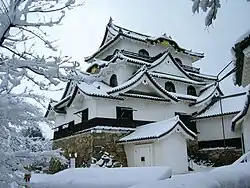
- Hikone — Around Lake Biwa to the northeast; home to one of Japan's original castle keeps.
Nearby in Shiga
More places to explore around Enryaku-ji.
Guide content as of May 2026. Portions adapted from Wikivoyage, CC BY-SA 4.0.

Contact Us
Get in touch with us.
Get in touch
Contact Us
Tell us where you'd like to go and how you like to travel. A real Tripcuro planner — not a bot — will craft an itinerary around you.
- Personalised, hassle-free planning end-to-end
- Transparent pricing, no hidden costs
- 24/7 support for complete peace of mind