
Khangchendzonga National Park
Sikkim, India
Why visit Khangchendzonga National Park?
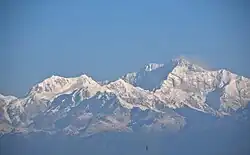
Khangchendzonga National Park is a vast high-mountain protected area in northwestern Sikkim, India, and a UNESCO World Heritage Site — inscribed in 2016 as a rare "mixed" site recognised for both its natural grandeur and the cultural and spiritual significance it holds for the people of Sikkim. It is named for Khangchendzonga (8,586 m), India's highest peak and the world's third highest, which until the mid-19th century was believed to be the tallest mountain on Earth.
The park's landscape is one of extraordinary altitude range, from subtropical forested valleys to glaciers and ice peaks — including the 26 km-long Zemu Glacier, one of the largest in the eastern Himalaya. Within its boundaries are caves, rushing rivers, glacial lakes and some of the widest spread of elevations of any protected area in the world. For Sikkimese Buddhists and the indigenous Lepcha people, the mountain is a sacred guardian deity, and the park overlays a hidden sacred landscape woven with monasteries, caves and pilgrimage routes.
Its forests and alpine zones shelter rare wildlife — snow leopard, musk deer, Himalayan tahr, red panda, blue sheep and Himalayan black bear — alongside rich birdlife and many endemic plants. The best seasons to visit are spring (March–May), when rhododendrons bloom, and autumn (October–November), when skies are clearest. The monsoon (June–September) brings heavy rain, leeches and landslide risk, and high winter is bitterly cold with heavy snow closing the upper trails.
Planning Khangchendzonga National Park? Tell us your dates and we’ll tailor the trip.
Ask on WhatsAppHow do you get there?
By Plane
The nearest airport is Bagdogra (IXB), near Siliguri in West Bengal, roughly 150–170 km from the western trailheads. Pakyong Airport (PYG) near Gangtok is closer in distance but has very limited flight service. From either airport, travel is by private taxi or shared jeep to gateway villages such as Yuksom; allow most of a day for the journey.
By Train
The nearest railhead is New Jalpaiguri (NJP) at Siliguri, well connected to Kolkata, Delhi and other major cities. From NJP, hire a taxi or take shared jeeps via Jorethang toward Yuksom and other gateway villages; the road journey takes around 6–7 hours, so set out early.
By Car / Road
The park has no road inside it — access is on foot from gateway villages reached by mountain road. Yuksom in West Sikkim is the main trailhead for the famous Dzongri–Goechala route; it is reached by shared or private jeep (no buses) from Jorethang (3–4 hours) and Geyzing (2–3 hours). Other approaches exist in North Sikkim. Roads are narrow, winding and slow; landslides can disrupt travel during and after the monsoon.
There is no motorised transport within the park. Movement is entirely on foot along designated trekking routes, with porters, pack animals (yaks and dzos at altitude) and guides carrying loads and supporting camps. Distances are measured in trekking days, not kilometres of road. All visitors must travel with a registered guide and an organised support crew arranged through a recognised trekking agency; independent solo trekking is not permitted in the core area.
What are the things to do?
- Khangchendzonga (Kanchenjunga). India's highest mountain at 8,586 m and the world's third highest — the centrepiece of the park and a sacred peak that Sikkim's expeditioners traditionally leave unsummited out of respect. It is best viewed from the high meadows of Dzongri and the Goechala viewpoint.
- Goechala viewpoint (around 4,940–5,000 m). The classic trek's high point, delivering a dramatic close-up panorama of Kangchenjunga's southeast face and the spire of Mount Pandim.
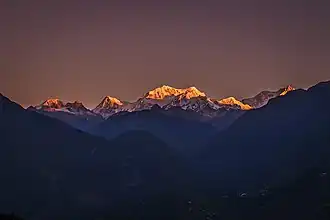
- Dzongri (around 4,030 m). A high meadow camp with a celebrated sunrise viewpoint (Dzongri Top) sweeping across Kabru, Rathong, Koktang, Pandim and the Singalila Ridge dividing Sikkim from Nepal.
- Samiti Lake. A serene high glacial lake on the approach to Goechala, ringed by moraine and reflecting the surrounding peaks.
- Zemu Glacier. One of the eastern Himalaya's largest glaciers, fed by the slopes of Kangchenjunga, in the park's northern reaches.
- Rhododendron and alpine forests. The lower trails pass through dense magnolia and rhododendron forest that bursts into colour in spring.
The park is, above all, a destination for serious Himalayan trekking.
- Dzongri Trek (about 4–5 days from Yuksom). The shorter route, ascending via Bakkhim, Tshoka and Phedang to the meadows of Dzongri, rated easy to moderate.
- Dzongri–Goechala Trek (about 8 days from Yuksom). The signature trek of Sikkim — climbing through forest to Tshoka and Dzongri, then on via Thansing and Samiti Lake to the Goechala viewpoint, with an acclimatisation rest day at Dzongri. Rated moderate to challenging.
- Wildlife and birdwatching. The forested approaches offer chances to spot red panda, Himalayan tahr, deer and a wealth of Himalayan birds; snow leopards inhabit the high zones but are extremely elusive.
- Photography and mountain viewing. Sunrise from Dzongri Top and the Goechala panorama are among the great mountain spectacles of the Himalaya.
Permits are required for all treks into the park and are arranged through registered agencies, which also handle guides, porters, camping gear and food. Proper acclimatisation, warm gear and reasonable fitness are essential.
Planning Khangchendzonga National Park? Want these on a customised itinerary?
Ask on WhatsAppWhere to eat?
There are no restaurants inside the park. On organised treks, meals are prepared by the crew's cook at each campsite — typically hearty, carbohydrate-rich vegetarian fare designed for high altitude: dal, rice, vegetables, noodles, soups, porridge, eggs and plenty of hot tea. Simple trekkers' huts and rest houses at Tshoka and Bakkhim may offer basic food in season, but trekkers should not rely on them.
Before and after the trek, gateway villages such as Yuksom serve homely Sikkimese, Nepali and North Indian dishes — momos, thukpa, gundruk soup and dal-bhat thalis — at homestays and small cafés. Vegetarian food is the norm and easy to arrange; specialised diets should be flagged to the agency in advance.
Where to drink?
On the trail, the staple drink is hot tea, served generously by the trek crew, along with hot lemon, ginger-honey drinks and soup to keep warm and hydrated at altitude. All drinking water must be boiled or treated — even the cold, clear glacial streams should be purified with tablets or a filter. In gateway villages, look for the local warming brew tongba (hot fermented millet beer sipped through a bamboo straw) and chhang. There is no nightlife in or near the park; evenings on trek are early and quiet.
Planning Khangchendzonga National Park? We’ll book the stays and dining for you.
Ask on WhatsAppWhere to stay?
Accommodation inside the park is limited to camping and a few basic huts on the trekking routes.
Budget
- Trekkers' huts and rest houses at Tshoka and Bakkhim — very basic shared shelters, used mainly as fallback or in poor weather; rates are nominal.
Mid-range
- Organised camping along the route (Tshoka, Dzongri, Thansing, Samiti Lake) — tents, sleeping arrangements and meals provided as part of a trekking package; cost is bundled into the per-person trek price.
Upscale
What should you buy?
There are no shops, markets or commercial outlets inside the park. All trekking gear, provisions, snacks and supplies must be bought beforehand — gateway villages such as Yuksom have small general stores and outfitters where basic equipment can be bought or hired, while larger towns like Pelling, Geyzing and Gangtok offer fuller stocks. Trekking agencies typically supply tents, kitchen equipment and group provisions as part of an organised package. Pick up Sikkimese souvenirs — cardamom, local tea, handicrafts — in the towns rather than the park.
Where to go next?
- Yuksom (the main trailhead) — Sikkim's first capital, with the historic coronation throne and old monasteries.
- Pelling (~2 hours from Yuksom) — West Sikkim's premier mountain-view town, near Pemayangtse Monastery and the Rabdentse ruins.
- Khecheopalri Lake — the sacred forest-ringed "wishing lake," a serene pilgrimage site.
- Tashiding — home to Tashiding Monastery, the most sacred monastery in Sikkim.
- Ravangla (a few hours away) — a relaxed hill town with Buddha Park and Greater Himalayan panoramas.
- Gangtok — Sikkim's lively capital and main hub for onward travel and trek logistics.
Nearby in Sikkim
More places to explore around Khangchendzonga National Park.
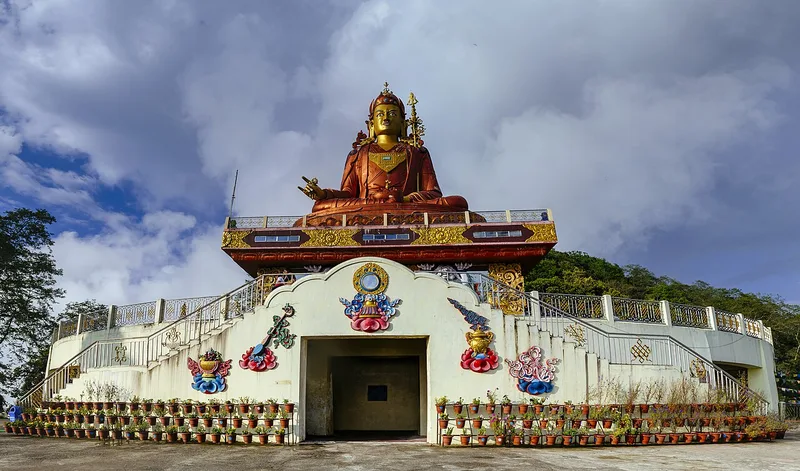
Guide content as of May 2026. Portions adapted from Wikivoyage, CC BY-SA 4.0.

Contact Us
Get in touch with us.
Get in touch
Contact Us
Tell us where you'd like to go and how you like to travel. A real Tripcuro planner — not a bot — will craft an itinerary around you.
- Personalised, hassle-free planning end-to-end
- Transparent pricing, no hidden costs
- 24/7 support for complete peace of mind