
Kishtwar National Park
Jammu and Kashmīr, India
Why visit Kishtwar National Park?
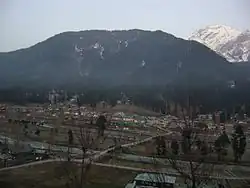
Kishtwar National Park, often called Kishtwar High Altitude National Park, is a remote mountain wilderness in the Kishtwar district of the Jammu region, in the eastern part of the Chenab valley. It protects a vast tract of high Himalaya — deep glacial valleys, alpine meadows, coniferous forest and snow-and-ice peaks rising well above 4,000 m, drained by the Marwah and Rinnay rivers. The park was established to safeguard this little-disturbed high country and its wildlife, and it remains one of the least-visited protected areas in the Himalaya.
The park's character is rugged and genuinely wild. It is not a place for casual sightseeing: there are no roads inside it, no facilities, and access is on foot through demanding terrain. Its appeal is to serious trekkers, mountaineers and naturalists drawn by solitude and big mountain scenery. Wildlife includes the Himalayan brown bear, Himalayan black bear, snow leopard, musk deer, ibex and markhor, along with high-altitude pheasants such as the monal — though sightings of the larger mammals are rare and require patience and luck.
The usable season is short: roughly June to September, when the high passes and meadows are clear of snow. Spring and autumn shoulders are colder and riskier; from late autumn through spring the park is locked under heavy snow and effectively inaccessible. There are no neighbourhoods or settlements inside — the gateway town of Kishtwar and villages along the Marwah valley are the staging points.
Planning Kishtwar National Park? Tell us your dates and we’ll tailor the trip.
Ask on WhatsAppHow do you get there?
By Plane
The nearest airport is Jammu Airport (IATA: IXJ), roughly 200 km from Kishtwar town by road, with the park lying well beyond that. Srinagar Airport (IATA: SXR) is an alternative for travellers approaching from the Kashmir Valley side. From either airport, reaching the park means a long road journey to Kishtwar town followed by travel up the Marwah valley and then trekking; there is no direct or quick transport.
By Car / Road
Access begins with the drive to Kishtwar town, which is connected by road to Jammu (around 200 km) and to Doda; mountain roads in this region are long, winding and slow, and can be affected by landslides and weather. From Kishtwar town, a further rough mountain road leads up the Marwah valley toward the villages near the park boundary. Beyond the roadhead, entry into the park itself is only on foot. State and private buses and shared jeeps serve Kishtwar town from Jammu and Doda; arrange transport up the Marwah valley locally.
Inside Kishtwar National Park there is no transport of any kind — movement is entirely on foot, on trekking routes through forest, meadow and glacial valley. Treks are multi-day, require camping, and should be undertaken with experienced local guides, porters and proper equipment. Pack animals (ponies or mules) can be hired in the gateway villages to carry loads. There is no mobile network, no shops and no rescue infrastructure inside the park, so self-sufficiency and careful planning are essential.
What are the things to do?
High-altitude glacial valleys — the park's defining landscape: the deep, ice-fed valleys of the Marwah and Rinnay rivers, flanked by towering ridges.
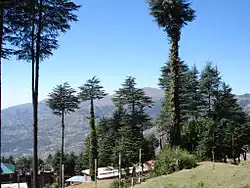
Alpine meadows and forest — summer pastures bright with wildflowers above belts of deodar, pine and fir, beautiful and almost untouched.
Himalayan brown bear — one of the park's flagship species, present in the high meadows; sightings are rare and a matter of patience.
Snow leopard and musk deer — elusive high-altitude residents; few visitors see them, but their presence defines the park's conservation importance.
Mountain pheasants — monal and other Himalayan pheasants inhabit the forests and meadows, a draw for dedicated birdwatchers.
Multi-day trekking — the principal activity: long treks through the Marwah and Rinnay valleys and over high passes, for fit, experienced walkers with a guide.
Wildlife and birdwatching — patient observation of brown bear, ibex, musk deer and high-altitude pheasants in remote meadows.
Camping in the high country — overnight camping is the only way to spend time inside the park; come fully equipped and self-sufficient.
Mountaineering — the surrounding peaks attract mountaineers; expeditions require proper permits, planning and experience.
Planning Kishtwar National Park? Want these on a customised itinerary?
Ask on WhatsAppWhere to eat?
In Kishtwar town, simple eateries and dhabas serve basic North Indian and local fare — rice, dal, vegetable curries and meat dishes, with vegetarian options widely available and meat generally halal. This is the place to eat a proper meal and arrange supplies before and after a trek.
Where to drink?
There are no shops or teahouses inside the park; trekkers should carry the means to treat or boil water, as glacial streams must be purified before drinking. In Kishtwar town, tea is the everyday drink — including Kashmiri kahwa and noon chai — available at dhabas and roadside stalls. Bottled water is sold in town. Alcohol is not part of local culture and should not be expected.
Planning Kishtwar National Park? We’ll book the stays and dining for you.
Ask on WhatsAppWhere to stay?
For a base before and after the trek, stay in Kishtwar town:
- Budget — basic guesthouses and lodges in Kishtwar town offer simple rooms at low rates, roughly ₹700–1,500 per night.
- Mid-range — a limited number of better-equipped hotels in the town, typically ₹2,000–4,000 per night.
- Upscale / heritage — upscale accommodation is essentially absent in this remote area.
Confirm named properties and current rates locally, as options are limited and standards modest.
What should you buy?
There is nothing to buy inside the national park. The gateway town of Kishtwar has basic markets for provisions, trekking supplies and daily-use goods, and is the place to stock up before heading into the mountains. Kishtwar district is historically known for saffron cultivation and for sapphire mining, so locally, saffron is a notable specialty to look for in the town's shops. Carry all food and gear for the trek itself, as villages up the Marwah valley have only limited supplies.
Where to go next?
- Kishtwar town (gateway, ~200 km from Jammu) — the staging town for the park, with markets, basic lodging and saffron fields.
- Sinthan Top (~50 km from Kishtwar, on the Kishtwar–Anantnag road) — a scenic high mountain pass linking the Chenab and Kashmir valleys.
- Doda (~70 km from Kishtwar) — district town on the Chenab, a road hub for the region.
- Pahalgam (reached via Sinthan Top, several hours) — the well-known riverside resort town in the Kashmir Valley.
- Bhaderwah (~120 km from Kishtwar) — a green valley known as "Mini Kashmir", good for gentler mountain holidays.
- Jammu (~200 km) — the regional gateway city, with the airport and onward connections.
Nearby in Jammu and Kashmīr
More places to explore around Kishtwar National Park.
Guide content as of May 2026. Portions adapted from Wikivoyage, CC BY-SA 4.0.

Contact Us
Get in touch with us.
Get in touch
Contact Us
Tell us where you'd like to go and how you like to travel. A real Tripcuro planner — not a bot — will craft an itinerary around you.
- Personalised, hassle-free planning end-to-end
- Transparent pricing, no hidden costs
- 24/7 support for complete peace of mind