
Sri Venkateswara National Park
Andhra Pradesh, India
Why visit Sri Venkateswara National Park?
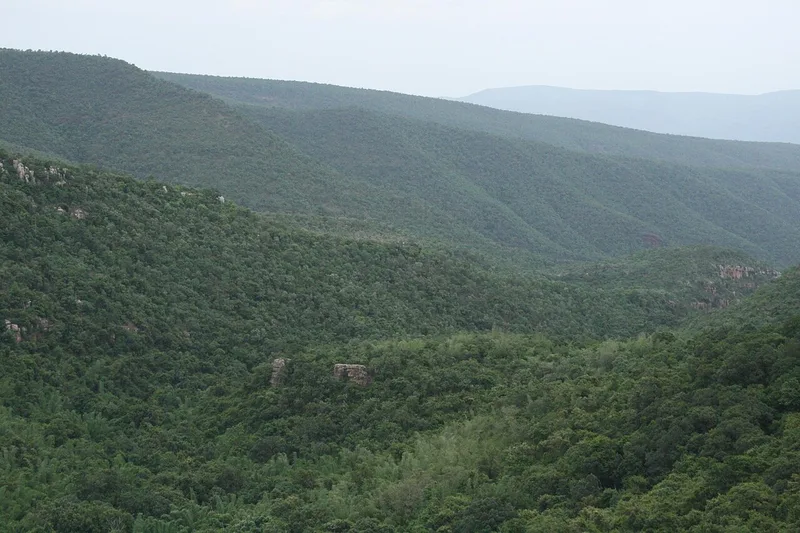
Sri Venkateswara National Park protects a swathe of the Seshachalam and Tirumala hill ranges in the Eastern Ghats of southern Andhra Pradesh, spread across the Tirupati and Annamayya districts. The park wraps around the famous pilgrimage hills of Tirumala, and the same forested ridges that draw millions of pilgrims to the Venkateswara temple also shelter a rich block of dry deciduous, moist deciduous and scrub forest. The wider Seshachalam landscape is recognised as a UNESCO biosphere reserve, underlining the area's ecological importance.
The park's distinctive feature is its blend of pilgrimage and wildlife. The Seshachalam hills are the natural home of red sandalwood (red sanders), a slow-growing, highly prized and heavily protected tree found in only a small part of the world. The forests hold leopards, sloth bears, sambar, chital, wild boar, mouse deer and a notable diversity of birds and reptiles, while waterfalls and rocky gorges cut through the ranges. For most visitors the park is experienced through its accessible viewpoints, waterfalls and trekking routes around Tirupati rather than as a classic safari destination — large-mammal sightings are uncommon, so come for the scenery, the forest walks and the birdlife.
The best time to visit is November to February, when the weather is cool and the trails are comfortable; the post-monsoon months also bring the waterfalls to life. March to May is hot and dry, and the southwest and northeast monsoons bring rain that can make hill trails slippery. Pilgrim crowds at Tirumala peak around festivals — chiefly Brahmotsavam — so plan around them if you want quiet on the forest side.
Planning Sri Venkateswara National Park? Tell us your dates and we’ll tailor the trip.
Ask on WhatsAppHow do you get there?
By Plane
The nearest airport is Tirupati Airport (TIR) at Renigunta, about 15 km from Tirupati city, with domestic flights to Hyderabad, Bengaluru, Chennai, Visakhapatnam, Delhi and other cities. Taxis and app cabs from the airport into Tirupati cost roughly ₹400–700; pre-paid counters operate at the airport. Tirupati is the natural base for the park.
By Train
Tirupati Main railway station is well connected, with trains to Chennai, Hyderabad, Bengaluru, Vijayawada, Mumbai and beyond; Renigunta Junction nearby adds further connections. Tirupati is one of India's busiest pilgrimage rail destinations, so book well ahead through IRCTC. From the station, autos, buses and taxis reach the park's access points and the Tirumala ghat road.
By Car / Road
Tirupati is well connected by road: Chennai is about 130–150 km (3–3.5 hours), Bengaluru roughly 250 km (5–6 hours) and Vellore around 110 km. Roads are generally good national and state highways, with the ghat road climbing to Tirumala being scenic but winding. APSRTC runs frequent buses to Tirupati from across Andhra Pradesh, Tamil Nadu and Karnataka, and dedicated ghat buses ferry pilgrims up to Tirumala.
Tirupati city has plentiful autorickshaws (short hops roughly ₹40–100), app-based cabs and APSRTC city and ghat buses. The Tirumala hill — within the national park's embrace — is reached by ghat road buses, taxis, or on foot via the traditional stepped pilgrim paths. The park's waterfalls and viewpoints around Tirumala and the Seshachalam foothills are best reached by hired car or auto, as public transport to them is sparse. Trekking inside the protected forest is regulated and in places restricted because of red sanders protection and wildlife concerns — use designated trails and arrange guided treks through the Forest Department or recognised operators.
What are the things to do?
- Talakona Waterfall — the tallest waterfall in Andhra Pradesh, set deep in the forest within the park; a popular spot reached on foot through the woods, best after the rains. Daylight access; modest local fees may apply.
- Tirumala Hills and the temple landscape — the sacred ridge at the heart of the park, with the Sri Venkateswara temple, viewpoints and forest backdrop; the natural setting and pilgrim paths are striking even for non-pilgrims.
- Sri Venkateswara Zoological Park (S.V. Zoo) — on the edge of Tirupati, a large zoo set in forested terrain showcasing regional wildlife, useful for families and a good orientation to the area's fauna.
- Forest trails and viewpoints of the Seshachalam hills — rocky gorges, deer-haunted scrub and birdrich slopes; some sections fall in restricted red-sanders zones, so stick to designated routes.
The park is best enjoyed through walking and nature outings. Trekking is the headline activity: guided forest treks and the well-known walks to Talakona Waterfall pass through good wildlife habitat, and the traditional stepped pilgrim trails up to Tirumala — Alipiri and Srivari Mettu — climb through the hills with forest on all sides. Birdwatching is rewarding in the cooler months. Families enjoy the S.V. Zoological Park and the deer parks. Some areas offer short nature-camp and eco-tourism experiences run by the Forest Department. Always carry water, sturdy footwear and sun protection, and respect the strict rules protecting red sanders — collecting or moving the wood is a serious offence.
Planning Sri Venkateswara National Park? Want these on a customised itinerary?
Ask on WhatsAppWhere to eat?
Food around Tirupati is overwhelmingly vegetarian and South Indian, shaped by the pilgrimage. Expect rice "meals", tiffin items, and the famous temple laddu. The temple trust and local eateries run large, inexpensive dining halls; the city also has plenty of standard restaurants.
- Tiffin centres and meals hotels (budget) — idli, dosa, vada, pongal and unlimited rice meals across Tirupati, roughly ₹50–180.
- Mid-range vegetarian restaurants (mid) — well-run pure-veg multi-cuisine restaurants serving South and North Indian food, around ₹200–450 per head.
- Hotel restaurants (mid–upper) — the better Tirupati hotels run reliable vegetarian restaurants, roughly ₹400–800 per head.
Pure vegetarian food is the norm and easy to find; non-vegetarian and halal options are limited near Tirumala and better sought in Tirupati city, while gluten-free diners can rely on the abundant rice dishes.
Where to drink?
Buttermilk, tender coconut water, fresh lime soda, lassi and strong South Indian filter coffee or tea are the everyday drinks, and very welcome in the hill heat. Carry bottled or filtered water for treks — do not drink stream or untreated tap water. Tirumala is a strictly religious zone where alcohol is not appropriate; in Tirupati city, licensed alcohol is available through outlets and some hotels, but the area's culture is firmly oriented around pilgrimage rather than nightlife.
Planning Sri Venkateswara National Park? We’ll book the stays and dining for you.
Ask on WhatsAppWhere to stay?
There is no general tourist accommodation inside the protected forest; visitors stay in Tirupati or on the Tirumala hill and travel in for walks and waterfalls.
- Budget: Tirupati has a vast supply of budget lodges and guesthouses near the railway station and bus stand, roughly ₹600–1,200 a night; the Tirumala temple trust (TTD) also provides very inexpensive pilgrim accommodation, best booked through official channels.
- Mid-range: Tirupati offers many business-class hotels with air-conditioned rooms and restaurants in the ₹1,800–4,000 range.
- Upscale / heritage: The city has several higher-end hotels with full facilities, roughly ₹4,500–10,000+ a night.
What should you buy?
Tirupati's bazaars are geared to pilgrims. The signature purchase is the Tirumala laddu, the temple's celebrated prasadam sweet, distributed through official counters. Shops around the temple precincts and in Tirupati sell devotional items, brass and bronze idols, framed prints and souvenirs. The city's markets also have textiles, everyday goods and fresh produce. Bargaining is normal in street markets but not at temple counters or fixed-price showrooms. Do not buy red sandalwood products from informal vendors — trade in it is heavily restricted and illegal sales are prosecuted.
Where to go next?
- Tirupati and Tirumala (gateway) — one of the world's most visited pilgrimage centres, with the Sri Venkateswara temple and a cluster of surrounding shrines.
- Talakona (~50–60 km from Tirupati, ~2 hours) — forest base for Andhra's tallest waterfall, within the same park landscape.
- Sri Kalahasti (~35–40 km, ~1 hour) — important Shiva temple town on the Swarnamukhi River, known for kalamkari art.
- Chandragiri Fort (~12–15 km, ~30 minutes) — historic hill fort and palaces from the Vijayanagara era.
- Horsley Hills (~150–160 km, ~3.5 hours) — a cool hill station retreat in the Eastern Ghats.
- Chennai (~130–150 km, 3–3.5 hours) — the nearest metropolis, with beaches, museums and the region's widest transport links.
Nearby in Andhra Pradesh
More places to explore around Sri Venkateswara National Park.




Guide content as of May 2026. Portions adapted from Wikivoyage, CC BY-SA 4.0.

Contact Us
Get in touch with us.
Get in touch
Contact Us
Tell us where you'd like to go and how you like to travel. A real Tripcuro planner — not a bot — will craft an itinerary around you.
- Personalised, hassle-free planning end-to-end
- Transparent pricing, no hidden costs
- 24/7 support for complete peace of mind