
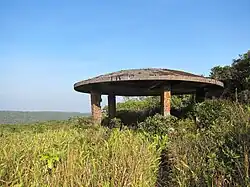
Bokor National Park
Kampot, Cambodia
Why visit Bokor National Park?
Preah Monivong Bokor National Park crowns a 1,080-metre plateau in the Elephant Mountains, a misty, boulder-strewn highland that has worn many identities over a single century. The French built Bokor Hill Station here in the 1920s as a cool-air retreat from the sweltering plains — a colonial pre-air-conditioning strategy common across Asia — and the resulting cluster of casino, church, palace and villas became one of Indochina's grandest hill stations. Abandoned during the Khmer Rouge era and slowly reclaimed by jungle, the plateau drifted into ghost-town fame, drawing travellers for its eerie, moss-streaked architecture and silent forests. Reconstruction since the 2010s has flipped the script again: the old casino is now Le Bokor Palace, new hotels and a smooth tarmac road have arrived, and the romantic decay sits awkwardly alongside resort development.
The park itself remains the headline attraction — roughly 1,580 km² of evergreen forest, granite outcrops, waterfalls and ridge-top viewpoints over the Gulf of Thailand. Wild elephants, leopards and a small tiger population persist in the deeper interior, though sightings on a standard visit are essentially nil; gibbons, hornbills and pitta birds are more realistic wildlife rewards. On a clear day the views down to Kampot, Kep and the coast are spectacular; on a cloudy day, which is often, you'll see white mist and not much else.
Climate is the deciding factor. The plateau runs noticeably cooler than the coast — pleasant by day, genuinely cold at night, with temperatures sometimes dipping into the low teens °C — so bring a layer even in hot season. November to February is the prime window: dry, clear, and best for those long-range views. March to May is hot and increasingly hazy. June to October brings monsoon rains; trails turn slick and views vanish into cloud, but Popokvil Waterfall actually flows and the forest is at its greenest. There are no neighbourhoods to speak of — the park is a single mountain road climbing 32 km from the highway entrance to the summit cluster of sights.
Planning Bokor National Park? Tell us your dates and we’ll tailor the trip.
Ask on WhatsAppHow do you get there?
By Plane
The nearest international airport is Sihanouk International Airport (KOS) in Sihanoukville, about 100 km west of the park entrance — roughly a 2-hour drive on Highway 3. Phnom Penh International Airport (PNH) is the larger and far better-connected option, about 150 km north (3.5–4 hours by road). A private taxi from PNH to Kampot typically costs US$60–80; from KOS, expect US$40–55. There is no airport bus or rail link to Kampot, so the standard pattern is: fly into Phnom Penh, transfer to Kampot, then ascend Bokor.
By Train
Cambodia's Royal Railway runs the southern line between Phnom Penh and Sihanoukville, stopping at Kampot station roughly 8 km from the Bokor turn-off. Services are limited (typically weekends and holidays) and slow — Phnom Penh to Kampot takes around 5–6 hours — but the journey is scenic and tickets are cheap (around US$7–8). Check current schedules at royal-railway.com or via the Royal Railway Cambodia ticket counters; bookings can be made on the day at the station for most services. There is no rail access from Kampot up into the park itself.
By Car / Road
Bokor is reached almost exclusively by road. The park turn-off sits on National Highway 3, 8 km west of central Kampot and 95 km east of Sihanoukville. From the turn-off it's about 1 km to the main entrance and ranger station, then a further 32 km of smooth, switchback tarmac to the summit — a climb of roughly 1½ hours from Kampot in a private vehicle. The road has been completely rebuilt for the new resort developments and is in good condition apart from one rough bridge transition.
- From Kampot: 8 km to the turn-off + 32 km up = roughly 1½ hours door-to-summit
- From Sihanoukville: ~95 km to the turn-off, ~3 hours total
- From Phnom Penh: ~150 km to Kampot, then the climb — plan a full day or overnight
Long-distance buses and minivans (Giant Ibis, Virak Buntham, Cambodia Post VIP Van) connect Phnom Penh and Sihanoukville with Kampot for US$7–12, but none ascend Bokor itself — you'll need to arrange onward transport from Kampot.
Once on the mountain, you'll use whatever vehicle brought you up — there is no shuttle and no public transport on the plateau. Most visitors arrive on one of three setups:
- Organised day tour from Kampot: roughly US$13–15 per person (haggling expected), including a simple lunch. Expect a 6-hour round trip with most of the time in transit. Sihanoukville-based tours run a little higher. A common scam involves the agent claiming a sunset boat tour is included, then the driver disclaiming responsibility — get a written receipt before paying if a boat tour is part of the deal.
- Car or scooter with a driver: best option for flexibility. Local drivers know the road well and often complete the climb in under 1½ hours. Rates are negotiable in Kampot.
- Self-drive: a 125cc scooter is doable but back-breaking on the long climb; larger dirt bikes rented in Kampot are the better self-drive choice for experienced riders. Cars can also be rented.
There is no entrance fee to the park — tours that say the fee is "included" are technically truthful, but it's a US$0 inclusion. Walking trails run between the major summit sights, but distances between sites (Black Palace, Lok Yeay Mao statue, the casino, the church) are too long to comfortably link on foot in a day; ride between them and walk the immediate surroundings of each.
Watch for: tour agents bundling phantom inclusions, drivers pressuring you to skip stops to finish early, and inflated "ranger fee" requests — official ranger-guided hikes are arranged at the ranger station, not roadside.
What are the things to do?
Lok Yeay Mao Statue — A striking 29-metre-tall statue of the Cambodian Buddhist folk heroine, perched near the summit and visible from far down the road. The viewpoint platform around her base is the standard first stop on most tours. Free; daylight hours.
Black Palace (Damnak Sla Khmao) — King Sihanouk's 1936 holiday residence, now an evocative complex of abandoned villas including a concubine house and a small swimming pool, slowly being reclaimed by moss and trees. Free; daylight hours.
Old Catholic Church — A tiny brick church from the early 1920s, now an empty shell with weathered red walls — one of the most photographed ruins in the park. The clifftop just behind it is an excellent picnic and sunset viewpoint. Free; daylight hours.
Bokor Hill Station & Le Bokor Palace — The famous old casino, once the centrepiece of the ghost-town aesthetic, has been restored as the Le Bokor Palace luxury hotel. Non-guests can still wander the surrounding hilltop for the views, and the hotel offers free, clean public restrooms — a small but welcome amenity on a long day. Free entry to grounds.
Colonial-era temple complex — A modest grouping of weathered colonial-era pagodas and shrines on the plateau, atmospheric in mist. Free; daylight hours.
Popokvil Waterfall — A two-tier cascade reached by a short walk from a small car park. Largely a trickle in the dry season but genuinely impressive after monsoon rains; best July–October. Free.
Sunset from the Old Catholic Church cliff — the classic Bokor evening, with the plateau falling away to the Gulf and the church silhouetted against pink sky. Best in dry season for clear horizons.
Ranger-guided hiking — several walking tracks of 2 to 8 hours thread the forests and ridge-lines. Trails are unmarked and unmaintained, so the park strongly recommends hiring a ranger from the headquarters; rates are negotiated on site, typically a few tens of US dollars per group depending on duration.
Photography at the ghost-town ruins — the Black Palace, the church, and the older villas around the casino are particularly atmospheric in early morning mist before tour buses arrive.
Birdwatching — hornbills, pittas, broadbills and gibbons can be heard if not always seen along the quieter forest tracks; dawn is best.
Casino visit (modern) — for a different mood, the Thansur Sokha Hotel & Casino complex on the plateau operates a working casino if you want to experience the resort-era reincarnation of Bokor's original 1920s pastime.
Overnight stay — a hugely under-used option. Day tours rush; staying the night lets you catch sunset and dawn, and the cool air is a pleasant break from coastal humidity.
Planning Bokor National Park? Want these on a customised itinerary?
Ask on WhatsAppWhere to eat?
There is no restaurant scene on Bokor in any meaningful sense — eating options range from roadside snacks to a single luxury hotel dining room. Most day-trippers either eat with their tour (a simple Khmer rice-based lunch is typically included) or pack a picnic from Kampot. The clifftop above the Old Catholic Church is a celebrated spot for a packed lunch.
- Tour-included lunch — most US$13–15 Kampot tours include a basic Khmer set meal (rice, vegetable, meat or fish, soup) at a roadside stop on the plateau. Edible rather than memorable.
- Lok Yeay Mao stalls — coconuts, steamed buns, sugar cane juice, fresh fruit, simple noodle dishes. US$1–3 per item. Cash only, riel or dollars.
- Bokor Palace snack stall — behind the Le Bokor Palace hotel, a small kiosk sells cold drinks, ice creams and packaged snacks during daylight hours.
- Ranger station meals — if you're staying overnight (US$5 dorm), you may cook simple meals at the station. Bring your own ingredients from Kampot — the ranger shop is small and pricey.
- Le Bokor Palace dining room — the upscale option on the mountain, with international and Khmer dishes; mains roughly US$15–35, plus service. Reservations advisable.
- Picnic from Kampot — for many travellers the best meal of the day. Stock up at Epic Arts Café, Espresso Kampot Roastery or the Old Market before driving up.
Vegetarian options are easy at the roadside stalls (rice, vegetables, fruit, noodles) and at Le Bokor Palace; halal-specific food is limited — vegetarian or fish dishes are the safer route. Gluten-free travellers will find rice-based Khmer food generally suitable, but cross-contamination is hard to verify at informal stalls.
Where to drink?
Drinking on Bokor is utilitarian rather than scene-driven. Roadside vendors sell fresh coconut (US$1–1.50), sugar cane juice (around US$0.50), bottled mineral water, soft drinks and Cambodia, Angkor and Anchor beers (US$1–2). The cooler temperatures make hot drinks more appealing here than on the coast — a cup of strong, sweet Cambodian iced or hot coffee at the Lok Yeay Mao stalls is a small pleasure.
For anything resembling a bar, you're looking at Le Bokor Palace or the Thansur Sokha Hotel & Casino complex, both of which run cocktail and wine service for guests and walk-ins; cocktails US$8–12, beer US$4–6. There are no independent bars, cafés or nightlife venues on the plateau.
Tap water is not safe to drink anywhere in the park — stick to sealed bottled water (widely available from US$0.50) or boiled/filtered water from your accommodation. Ice at proper hotels is fine; treat ice from informal stalls with mild caution.
Planning Bokor National Park? We’ll book the stays and dining for you.
Ask on WhatsAppWhere to stay?
Most travellers visit as a day trip from Kampot, but staying overnight transforms the experience — you get sunset, dawn, dramatically thinner crowds, and the plateau's cool nighttime air.
Budget
- Bokor Ranger Station Dormitory — Simple shared dorm rooms at the park headquarters, US$5 per person; one double room is sometimes available. Cold-water bathrooms, basic bedding, no frills, but a unique location and the option to cook your own meals. Cash on arrival; no advance booking.
Mid-range
- Bokor Mountain Lodge (in Kampot, not on the plateau) — A long-running, atmospheric riverside guesthouse in central Kampot from which day trips up Bokor are easy to organise; doubles roughly US$25–45.
Upscale / heritage
- Le Bokor Palace — The restored 1925 colonial casino, now a luxury hotel with art-deco-inflected interiors, a spa and high-altitude views; doubles typically from around US$180–300 depending on season. The marquee place to stay on the mountain.
- Thansur Sokha Hotel & Casino (Thansur Bokor Highland Resort) — A large modern resort-and-casino complex on the plateau with multiple restaurants, pool and gaming floor; doubles from around US$90–150. Less atmospheric than Le Bokor Palace but considerably better value if you want full hotel facilities up top.
What should you buy?
Bokor is not a shopping destination — there are no markets or craft villages on the plateau. Along the access road and at the major viewpoints, vendors sell fresh coconuts, soft drinks, bottled water, beer, and packaged snacks, generally at modest mark-ups over Kampot prices. Near the Lok Yeay Mao statue you'll find small stalls with steamed buns, sugar cane juice, fruit and basic souvenirs (statuettes, magnets, scarves). For real shopping — Kampot pepper, Kampot salt, palm sugar, krama scarves, locally-made rattan — head back down to Kampot's Old Market and riverside boutiques. Bargaining is expected at roadside stalls (a 20–30% trim is reasonable); fixed prices apply at hotel shops and the Le Bokor Palace.
Where to go next?
- Kampot (40 km / ~1½ hours back down) — Riverside town famed for its pepper plantations, salt flats and laid-back colonial old quarter; the obvious base before or after Bokor.
- Kep (65 km / ~1¾ hours) — Coastal village known for its fresh crab market, faded modernist villas and the offshore Koh Tonsay (Rabbit Island).
- Kampot pepper plantations (20–30 km from town / ~45 min) — Visit working farms (La Plantation, Sothy's, Bo Tree) growing the world-famous Kampot peppercorn; tastings, tours and shop on site.
- Sihanoukville & Otres Beach (~100 km / ~2 hours) — Cambodia's main beach city, gateway to the southern islands.
- Koh Rong & Koh Rong Sanloem (Sihanoukville + 45 min ferry) — White-sand beaches, jungle interiors and bioluminescent plankton; the country's most popular island escape.
- Phnom Penh (~150 km / ~3½ hours) — The capital, with the Royal Palace, National Museum and the sobering Tuol Sleng / Choeung Ek genocide sites — a natural next stop heading inland.
Nearby in Kampot
More places to explore around Bokor National Park.
Guide content as of May 2026. Portions adapted from Wikivoyage, CC BY-SA 4.0.

Contact Us
Get in touch with us.
Get in touch
Contact Us
Tell us where you'd like to go and how you like to travel. A real Tripcuro planner — not a bot — will craft an itinerary around you.
- Personalised, hassle-free planning end-to-end
- Transparent pricing, no hidden costs
- 24/7 support for complete peace of mind