
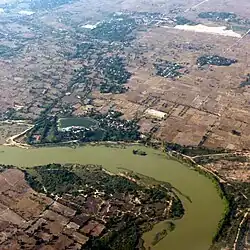
Kampong Speu
Kampong Spueu, Cambodia
Why visit Kampong Speu?
Kampong Speu — officially renamed Chbar Mon in 2013, though most people still call it Kampong Speu — is the provincial capital of Kampong Speu Province, sitting roughly 48 km west of Phnom Penh on National Highway 4, the main artery between the capital and the coast at Sihanoukville. The name means "port of the speu", a now-vanishing tree once common in the area, and the town has the workmanlike feel of a Cambodian provincial centre: a strip of shophouses and noodle stalls along the highway, a covered market, government offices, a few pagodas, and a dusty river. For most travellers it is not a destination in itself but a launchpad for the Cardamom and Elephant Mountains rising to the west, with the cool plateau of Kirirom National Park and the community-run Chambok eco-tourism site within easy striking distance.
The province is famous across Cambodia for two things: palm sugar (the brown, caramel-scented sugar pressed from sugar palm flowers grows nowhere better than here) and the Kampong Speu mango, a long, slender, intensely sweet variety that has earned a Geographical Indication. You'll see both for sale at every roadside stall along Highway 4. The town itself is flat and unremarkable, but a 20-minute drive in any direction takes you into rice fields, palm groves and, further west, dense forest.
Climate. Tropical monsoon, with three distinct seasons. November to February is the cool dry season — daytime highs around 28–30°C, low humidity, and the most pleasant time to visit, especially for hiking around Kirirom. March to May is brutally hot, regularly hitting 36–38°C. June to October is the wet season, when waterfalls run at full force (Chambok is at its best in September–October) but unsealed forest tracks turn to mud.
Planning Kampong Speu? Tell us your dates and we’ll tailor the trip.
Ask on WhatsAppHow do you get there?
By Plane
There is no airport in Kampong Speu. The nearest is Phnom Penh International Airport (PNH), about 35 km east of Chbar Mon — roughly a 50-minute drive in light traffic, longer in the daily rush. A metered PassApp or Grab car from the airport to Kampong Speu costs around US$15–22; a private taxi arranged through your hotel is typically US$25–35. Sihanoukville International Airport (KOS) is the other option, about 200 km southwest down NH4 (3.5–4 hours by road).
By Train
The Royal Railway Cambodia Southern Line between Phnom Penh and Sihanoukville passes through Kampong Speu, with a small station on the western edge of town. Service is limited — currently weekend departures only, with extra services on public holidays — and timetables change frequently, so check the Royal Railway website or Facebook page before relying on it. The Phnom Penh–Kampong Speu leg takes about 1 hour 15 minutes and costs around US$3–4. Tickets can be bought at the station or online.
By Car / Road
This is how almost everyone arrives. Kampong Speu sits directly on National Highway 4 (NH4), the well-paved, four-lane Phnom Penh–Sihanoukville expressway corridor.
- From Phnom Penh: 48 km, 1 hour to 1 hour 15 minutes by car. Frequent minibuses (Cambodia Post VIP Van, Larryta, Virak Buntham) run all day from Phnom Penh's Central Market and Olympic Stadium areas; fare around US$5–7, journey 1.5 hours including traffic.
- From Sihanoukville: 180 km, 3 hours along NH4. Any Phnom Penh–bound bus will drop you in Kampong Speu on request.
- From Kampot: 145 km via NH3 and NH4, about 3 hours.
The new Phnom Penh–Sihanoukville Expressway (toll road) bypasses Kampong Speu town to the south; useful if you're transiting, but you must exit at the Kampong Speu interchange to reach the centre.
The town is small and walkable end to end in 20 minutes, but the heat usually argues against it. Tuk-tuks (the motorised rickshaw type) and moto-dops (motorbike taxis) are the standard local transport — flag one down anywhere along the main road. Expect to pay 6,000–10,000 riel (US$1.50–2.50) for a ride within town; always agree the price before climbing in.
PassApp and Grab both work in Kampong Speu, though driver coverage is thin compared to Phnom Penh — at quiet times you may wait 10–15 minutes. Both apps lock in metered fares and remove the bargaining headache.
For trips out to Chambok or Kirirom, hire a tuk-tuk for the day (US$25–35) or a private car with driver (US$45–60). Your guesthouse can arrange both. Self-drive scooter rental is possible from a couple of small shops near the market for about US$7–10/day, but be aware that traffic on NH4 is fast and unforgiving and police occasionally stop foreign riders for licence checks.
What are the things to do?
Chambok Community-Based Eco-Tourism Site (Chambok commune, ~25 km west of Kampong Speu town, off NH4). The province's signature attraction: a community-run protected forest with a 40-metre waterfall reached by a 3 km forest walk (the often-quoted "20 m" figure refers only to the lowest tier). Run by the local commune in partnership with Mlup Baitong, with revenue funding village schools and forest patrols. Entrance fee 5,000 riel (US$1.25) for foreigners, plus small charges for guides and ox-cart rides. Open daily, roughly 07:00–17:00. Best in the wet and immediately post-wet seasons (July–November); a trickle in March–April.
Wat Kirisan (Wat Chbar Mon) (centre of town, off NH4). The main town pagoda — modest by Cambodian standards but the focal point of local festival days, particularly Khmer New Year and Pchum Ben. Free; respectful dress required.
Phnom Srouch / Oudong viewpoints (north of NH4). A cluster of low hills with small shrines and a panoramic view back toward Phnom Penh. Mostly visited by Khmer day-trippers.
Sugar palm groves and palm sugar workshops (roadside along NH4 west of town). Several family operations welcome visitors; you can watch the sap being boiled down in wide iron pans and buy fresh palm sugar in banana-leaf cups.
Hike to Chambok Waterfall — the standard half-day trip from town. The 3 km trail through dipterocarp forest is shaded and easy; allow 2–3 hours round trip including swimming time at the base of the falls.
Day trip to Kirirom National Park (see Go Next) — picnic spots, pine forest walks, and the Chambok Reservoir.
Mango-season tasting (March–May). The protected-origin Keo Romeat mango is at its peak; roadside stalls between Kampong Speu and Phnom Penh sell them by the kilo.
Cycle the back roads through the rice fields north and south of NH4. Bring your own bike or arrange one through your guesthouse — the area is flat and scenic, traffic light away from the highway.
Watch a Khmer boxing (Kun Khmer) bout at the local arena on weekend evenings during the cool season.
Planning Kampong Speu? Want these on a customised itinerary?
Ask on WhatsAppWhere to eat?
Kampong Speu's food scene is unpretentious provincial Cambodian: rice and noodle shops, grilled-meat stalls along the highway, and a handful of basic restaurants. Don't miss the palm-sugar-sweetened iced coffee and kralan — sticky rice with black beans and coconut milk roasted inside a length of bamboo, sold from baskets along NH4.
Signature things to try:
- Num banhchok — fresh rice noodles with a fish-based green curry sauce; the breakfast dish of choice.
- Bai sach chrouk — grilled marinated pork over broken rice with pickled cucumber; eaten for breakfast.
- Amok trei — coconut fish curry steamed in banana leaf, the national dish.
- Sankya l'peou — pumpkin custard sweetened with palm sugar, a regional dessert.
Recommended places (all fall into the budget-to-mid range; a meal rarely tops US$8 per person):
- Restaurants along NH4 in central Chbar Mon — a strip of open-fronted Khmer eateries serving stir-fries, soups and grills. Pick one that's busy with locals at lunchtime.
- Chbar Mon Market food court — best for breakfast num banhchok and bai sach chrouk; 5,000–8,000 riel (US$1.25–2) per dish.
- Palm-sugar roadside stalls between Kampong Speu and Trapaeng Kong — the place to try kralan and fresh palm fruit jelly (tnaot).
Where to drink?
Cambodian beer brands — Angkor, Cambodia, Anchor — are the everyday drink, served ice-cold in large bottles for US$1–1.50 at any local restaurant. Sugar palm wine (tuk thnaot chu), tapped fresh from the trees and lightly fermented, is a local specialty available at roadside stalls; ask for it fresh in the morning, before it turns sharply alcoholic by afternoon.
For non-alcoholic drinks, try:
- Iced palm-sugar coffee (kafe tuk dah ko thnaot) at any morning coffee stall.
- Sugarcane juice (tuk ampov), pressed to order from carts along the main road, 2,000 riel a glass.
- Fresh coconut water, sold from stacked piles at the market.
Tap water is not safe to drink — stick to sealed bottled water (widely available, 1,000–2,000 riel for a 1.5 L bottle) or filtered water from your guesthouse.
Planning Kampong Speu? We’ll book the stays and dining for you.
Ask on WhatsAppWhere to stay?
Accommodation in Kampong Speu town is functional rather than charming — most travellers stay only one night, or skip the town entirely in favour of Kirirom resorts. Rates below are approximate walk-in/online rates for a double room.
Budget
- Local guesthouses along NH4 — basic fan or A/C rooms with private bathroom, US$8–15/night. Standards vary; ask to see the room first.
Mid-range
- Hotels around the Chbar Mon central junction — modern Khmer-style business hotels with A/C, hot water, Wi-Fi and parking, typically US$20–35/night.
Upscale / heritage
For a more atmospheric overnight, drive 40 km west to the Kirirom plateau, where Kirirom Pine Resort and Vattanac Kirirom offer mid-range to upscale rooms (US$60–180/night) in a cool pine-forest setting — far more appealing than anything in Kampong Speu town.
What should you buy?
The Chbar Mon Market (Psar Chbar Mon, central town) is the main shopping point — a classic Cambodian covered market with fresh produce, dried fish, household goods and a small hot-food court. Worth knowing what to look for:
- Palm sugar (skor thnaot) — the local specialty, sold in soft cakes wrapped in dried palm leaf or in plastic tubs. Pure Kampong Speu palm sugar is darker, softer and more caramel-tasting than the industrial product sold in Phnom Penh supermarkets.
- Kampong Speu mangoes (Keo Romeat variety) — in season March–May; protected by Geographical Indication.
- Krama scarves — the chequered cotton scarf that is Cambodia's national accessory; small weaving cooperatives operate in surrounding villages.
- Forest honey and wild fruits from the Chambok community shop at the eco-site entrance.
Bargaining is expected at the market — knock 20–30% off the first asking price and settle politely. Prices at the Chambok community shop and palm sugar workshops are fixed.
Where to go next?
- Kirirom National Park (45 km west, ~1 hour) — Cambodia's first national park, a 600–700 m pine-forested plateau with hiking trails, waterfalls, a reservoir and noticeably cooler temperatures. Very popular with Phnom Penh weekenders; visit midweek if you can.
- Phnom Penh (48 km east, ~1 hour) — the Cambodian capital, with the Royal Palace, Tuol Sleng Genocide Museum, National Museum and a serious food and bar scene.
- Oudong (70 km north, ~1.5 hours) — the former royal capital before Phnom Penh, with hilltop stupas and active monasteries.
- Kampot (145 km south, ~3 hours) — riverside town famous for its eponymous pepper, French colonial architecture and easy access to Bokor National Park.
- Sihanoukville and the islands (180 km southwest, ~3 hours via NH4) — gateway to Koh Rong, Koh Rong Sanloem and Cambodia's beaches.
- Cardamom Mountains (Koh Kong side) (~250 km west, 4–5 hours) — for serious wilderness, jungle treks and river kayaking out of Chi Phat or Tatai.
Nearby in Kampong Spueu
More places to explore around Kampong Speu.
Guide content as of May 2026. Portions adapted from Wikivoyage, CC BY-SA 4.0.

Contact Us
Get in touch with us.
Get in touch
Contact Us
Tell us where you'd like to go and how you like to travel. A real Tripcuro planner — not a bot — will craft an itinerary around you.
- Personalised, hassle-free planning end-to-end
- Transparent pricing, no hidden costs
- 24/7 support for complete peace of mind