
Cambodia
South-eastern Asia · 210 destinations across 25 regions
Photography coming soonOverview
Cambodia is a small Southeast Asian kingdom that punches far above its weight for travellers willing to look beyond the headline ruins. The temples of Angkor — the largest religious monument on earth — are the obvious draw, but the country rewards slower travel: French-colonial riverside towns, Mekong river dolphins near Kratié, white-sand islands off the southern coast, sleepy hill stations, and a cuisine (think amok trey, Kampot pepper crab, num banh chok) that quietly outshines most of its neighbours.
What makes Cambodia distinctive is the texture of the country itself. The Khmer Empire's golden age and the Khmer Rouge's catastrophic four years sit side by side in the national memory, and confronting both — at Angkor and at Phnom Penh's Tuol Sleng and Choeung Ek — is part of why a visit here feels weightier than a standard temple-and-beach trip. Practical infrastructure has improved enormously over the last decade: Siem Reap has a new international airport, ATMs are everywhere, and US dollars are accepted in parallel with the riel.
Cambodia suits first-time Southeast Asia travellers who want headline sights without the crowds of Thailand, history-minded visitors, divers and beach hoppers heading to Koh Rong, and overlanders threading the Bangkok–Siem Reap–Phnom Penh–Saigon corridor. It is less suited to travellers seeking polished luxury infrastructure outside Siem Reap and Phnom Penh, or to those who need precise, reliable timetables.
Border advisory (as of December 2025): Skirmishes have resumed along the Cambodian–Thai border, with Thai air strikes reported in parts of Siem Reap province. Avoid travel within 50 km of the Cambodian–Thai border and check your government's travel advisory before departing.
Geography & Climate
Cambodia covers about 181,000 km² between Thailand, Laos and Vietnam, with a short coastline on the Gulf of Thailand. The country is dominated by the Tonlé Sap basin in the centre — a vast freshwater lake that reverses its flow with the seasons — and the Mekong River, which enters from Laos in the north-east and exits into Vietnam's delta in the south.
Four broad regions:
- Cardamom and Elephant Mountains in the south-west: forested ranges, the country's highest peaks (around 1,800 m at Phnom Aural), and the Gulf coast with its beaches and offshore islands.
- North-western Cambodia: the Tonlé Sap floodplain and the temple landscape around Angkor and Koh Ker, plus the northern frontier mountains around Preah Vihear.
- Mekong Lowlands and Central Plains: rice country, the Mekong corridor, and Phnom Penh.
- Eastern Cambodia: remote, hilly, and forested — the Mondulkiri and Ratanakiri plateaus, home to ethnic minorities and several national parks.
Cambodia has a tropical monsoon climate with two seasons. The dry season runs roughly November to April, with cool, comfortable weather from November to February (lows around 22 °C, highs around 30 °C in Phnom Penh) and intense heat in March and April (frequently above 35 °C). The wet season runs May to October, with afternoon downpours, lush green landscapes, and the Tonlé Sap at its fullest. Coastal areas are wettest from June to September; the north-east tends to be a few degrees cooler year-round.
Tell us your dates and we'll tailor your Cambodia trip around them.
WhatsAppWhen to Visit
- Peak season — November to February. Dry, cool, and clear; ideal for Angkor, Phnom Penh and the islands. Hotel prices are at their highest and Angkor's most famous temples are crowded at sunrise. Book accommodation in Siem Reap and Koh Rong well ahead of Christmas, New Year and Chinese New Year.
- Shoulder — March to early May, and October. March/April are dry but punishingly hot, especially inland; bearable if you start sightseeing early and retreat in the afternoon. October sees the rains tapering off and landscapes at their greenest.
- Off season — May to September. Lower prices, far fewer tourists, and dramatic skies; the Tonlé Sap floating villages are most impressive when the lake is full (August–October). Expect daily rain (usually short, heavy bursts), occasional flooding on rural roads, and rougher seas to the islands.
Festivals worth planning around:
- Khmer New Year (Choul Chnam Thmey) — mid-April; major nationwide holiday, water fights and pagoda visits, but many businesses close and transport is jammed.
- Bon Om Touk (Water Festival) — late October or November (full moon of the lunar month Kadeuk), marking the reversal of the Tonlé Sap; spectacular boat races on the riverfront in Phnom Penh.
- Pchum Ben — September/October; 15-day ancestral festival, very local and atmospheric at rural pagodas.
- Angkor Sankranta — Khmer New Year celebrations staged in Siem Reap with traditional games and performances.
Visa & Entry
Most foreign visitors require a visa. Cambodia offers three main routes; verify the latest rules with a Cambodian embassy or the official e-visa portal (evisa.gov.kh) before travelling.
- Visa-free entry (typically 14–30 days) is granted to citizens of most ASEAN countries, including Indonesia, Malaysia, Singapore, the Philippines, Thailand, Vietnam, Laos, Myanmar and Brunei.
- Visa on arrival is available at the main international airports (Phnom Penh, Siem Reap-Angkor, Sihanoukville) and major land borders for most other nationalities. The standard tourist visa (Type T) is US$30 for 30 days; bring a passport-sized photo and pay in cash US dollars to avoid hassle.
- e-Visa is available online for many nationalities at the official portal for around US$36 including service fee, valid for 30 days. The e-Visa is accepted at the main airports and a limited list of land borders (notably Poipet, Bavet, and Cham Yeam) — check the current list before relying on it.
- Passports must be valid for at least six months beyond the date of entry, with at least one blank page.
- Tourist visas can usually be extended once for 30 days through immigration in Phnom Penh; for longer stays, the Type E (ordinary) visa with multi-month extensions is the standard option.
This is general guidance only — visa rules change frequently. Always confirm with your nearest Cambodian embassy or the official e-visa site before booking.
Want us to time your trip around a festival? We'll handle it.
WhatsAppMoney & Costs
Cambodia is effectively a dual-currency economy. Prices in tourist areas are often quoted in US dollars (USD), while change under one dollar is given in Cambodian riel (KHR) at a working rate of roughly 4,000 KHR = US$1. Carry both: dollars for hotels, tours and most restaurants; riel for markets, tuk-tuks, street food and rural travel.
Indicative daily budgets per person (excluding international flights):
- Budget — US$25–45 / 100,000–180,000 KHR. Dorm or simple guesthouse, street food and local restaurants, shared tuk-tuks, public buses, one paid sight per day.
- Mid-range — US$60–120 / 240,000–480,000 KHR. Comfortable 3-star hotel with pool, mix of local and Western restaurants, private tuk-tuk for the day, Angkor 1-day pass amortised, occasional domestic flight.
- Luxury — US$200–500+ / 800,000–2,000,000+ KHR. Boutique or 5-star hotel, fine dining, private guide and car, premium tours (helicopter over Angkor, private boat charters).
Reference prices: a bowl of kuy teav noodle soup US$1.50–3; a beer in a local restaurant US$1–2; a 1-day Angkor pass US$37 (3-day US$62, 7-day US$72); a tuk-tuk across central Phnom Penh US$2–4 via PassApp or Grab.
Cards and ATMs. ATMs are widespread in Phnom Penh, Siem Reap, Sihanoukville, Battambang and provincial capitals; most dispense USD, some also KHR. Withdrawal fees of US$4–6 per transaction are typical. Credit cards are accepted at mid-range and upmarket hotels, restaurants and tour operators, but cash is essential everywhere else. Refuse torn or marked US dollar bills — they are routinely rejected by Cambodian businesses and banks.
Tipping. Not historically expected, but increasingly appreciated in tourism. A rough guide: round up tuk-tuk fares; US$1–2 per bag for porters; US$5–10 per day for guides and US$3–5 for drivers on multi-day tours; 5–10% in upmarket restaurants if no service charge is added.
Getting In
Major international airports:
- Phnom Penh International Airport (PNH) — the country's primary hub, with regional connections across Asia (Bangkok, Singapore, Kuala Lumpur, Hong Kong, Taipei, Seoul, Guangzhou, Ho Chi Minh City) and a handful of long-haul links via Doha and Istanbul.
- Siem Reap–Angkor International Airport (SAI) — the new airport (opened 2023), about 40 km east of town, replacing the old REP airport. Direct flights from across Southeast Asia and growing connections to mainland China.
- Sihanoukville International Airport (KOS) — limited international service, mostly regional Asian routes.
Key land borders. Cambodia shares borders with Thailand, Laos and Vietnam, with around a dozen international crossings open to foreigners.
- Poipet–Aranyaprathet (Thailand): the busiest crossing, used by most overland travellers between Bangkok and Siem Reap. Notorious for hassle and visa scams — only buy your e-visa or visa on arrival from official counters.
- Cham Yeam–Hat Lek (Thailand, near Koh Kong): the southern Thai crossing on the coastal route.
- Bavet–Moc Bai (Vietnam): the main Phnom Penh–Ho Chi Minh City crossing.
- Kaam Samnor–Vinh Xuong (Vietnam): a Mekong river crossing south-east of Phnom Penh, used by fast boats to Châu Đốc.
- Trapeang Kriel–Nong Nok Khiene (Laos): the only Cambodia–Laos crossing, on the Mekong route to Pakse and the 4,000 Islands.
Given the December 2025 border tensions with Thailand, confirm the operating status of Cambodian–Thai crossings (especially Poipet and Cham Yeam) before relying on them.
By boat. Fast boats run from Châu Đốc (Vietnam) up the Mekong to Phnom Penh, and seasonally between Sihanoukville and the southern islands. There are no significant scheduled international ferries beyond these.
We handle the bookings and budgeting — you just travel.
WhatsAppGetting Around
Domestic flights. Cambodia Angkor Air and a small number of regional carriers operate flights between Phnom Penh, Siem Reap and Sihanoukville. Useful for saving time on the Phnom Penh–Siem Reap leg, though the road has improved significantly.
Rail. The state operator Royal Railway runs limited passenger services on two lines: Phnom Penh–Sihanoukville (via Kampot, weekends and selected days) and Phnom Penh–Poipet (via Battambang). Trains are slow, scenic and inexpensive, but schedules are sparse — buses are usually faster.
Intercity buses and minivans. The backbone of domestic travel. Reliable operators include Giant Ibis, Mekong Express and Virak Buntham; book through the operator websites or the aggregator BookMeBus. Phnom Penh–Siem Reap is around 6 hours; Phnom Penh–Sihanoukville around 4 hours on the expressway. Minivans are quicker but cramped and driven aggressively.
Tuk-tuks and rideshare. In Phnom Penh and Siem Reap, Grab and the local app PassApp offer metered tuk-tuks, remorques (the larger trailer-style tuk-tuks) and cars at fair prices — the apps largely solve the bargaining problem. Outside the cities, expect to negotiate. A typical day-hire of a remorque with driver around Angkor is US$15–25.
Self-drive. Renting a car for self-drive is uncommon and not recommended for first-time visitors; hire a car with driver instead (around US$60–100/day). Motorbike rental (US$5–15/day) is common in tourist towns; an international driving permit and full insurance are strongly advised, and helmets are mandatory.
Common scams to watch for.
- Poipet visa scams: "consultants" and shuttle bus staff insisting you must pay extra (often in Thai baht) for visa processing. The official visa-on-arrival counter is inside the immigration building; pay there in USD.
- Tuk-tuk overcharging: at airports and bus stations, agree a price up front or use Grab/PassApp.
- Closed-temple / closed-attraction scams in Phnom Penh: a friendly local says the Royal Palace is shut and offers a "better" tour. Verify opening hours yourself.
- Fake Angkor passes: only buy passes at the official ticket centre east of Siem Reap, not from drivers or third parties.
- ATM card skimming: prefer ATMs attached to bank branches.
Culture & Etiquette
Cambodia is overwhelmingly Theravada Buddhist and the social codes around religion, hierarchy and the monarchy are taken seriously. A little effort goes a long way.
- Greetings. The traditional greeting is the sampeah — palms together at chest height with a slight bow. Respond in kind to anyone who greets you this way; the higher the hands (chest, mouth, nose, forehead), the greater the respect. Handshakes are common in business settings, especially among men.
- Dress at religious sites. Cover shoulders and knees at all temples, including Angkor. Many of the upper levels at Angkor Wat (Bakan) require long trousers/skirts and covered shoulders strictly enforced. Remove hats and shoes before entering temple interiors.
- Monks. Women should never touch a monk or hand anything directly to one — place objects on a cloth or surface for the monk to pick up. Don't sit higher than a monk if you can avoid it.
- Heads and feet. The head is sacred; never pat anyone (especially children) on the head. The feet are the lowest part of the body — never point them at people, statues of Buddha, or shrines, and don't step over someone seated on the floor.
- Photography. Generally welcomed at temples and markets, but ask before photographing monks, soldiers, or villagers in rural areas, and never photograph military installations or border posts. No photography is allowed inside Tuol Sleng's individual victim cells; photography of victim portraits is permitted but should be done respectfully.
- The Royal Family and Buddhism are protected by law and deep social custom — don't make jokes or critical comments in public.
- Public behaviour. Cambodians value calm and a smile. Raising your voice or losing your temper publicly is considered shameful and rarely productive. Public displays of affection beyond hand-holding are frowned upon outside the most cosmopolitan parts of Phnom Penh.
Prefer to talk it through? We're a WhatsApp message away.
WhatsAppSafety
Cambodia is, on the whole, a safe destination for tourists, with violent crime against foreigners rare. The most common issues are petty theft (bag-snatching by motorbike in Phnom Penh, especially around the riverside and BKK1) and scams rather than serious crime. Keep bags on the inside of footpaths, don't display phones loosely, and use hotel safes.
Regional cautions.
- Cambodian–Thai border (current advisory): ongoing skirmishes and reported Thai air strikes into Cambodian territory, including parts of Siem Reap province. Avoid all travel within 50 km of the border until the situation stabilises; check your government's travel advisory before departing.
- Unexploded ordnance (UXO) and landmines. Cambodia remains one of the world's most heavily mined countries, especially in the north-west (Battambang, Banteay Meanchey, Pailin, Preah Vihear). Stick to marked paths and roads, never wander into fields or forests off-trail, and respect any red MAG/CMAC marker signs.
- Border zones generally (especially with Thailand and along remote stretches of the Lao and Vietnamese borders) — keep documents in order and don't stray off marked crossings.
Road safety is the single biggest practical risk. Traffic is chaotic, lanes are advisory, and motorbike accidents are the most common cause of serious injury to tourists. Always wear a helmet, avoid riding at night, and consider hiring a driver rather than self-driving.
Health.
- Consult a travel-medicine clinic 6–8 weeks before departure. Routinely recommended vaccinations for Cambodia include hepatitis A and B, typhoid, tetanus, and Japanese encephalitis (for longer rural stays). Rabies pre-exposure is worth considering for extended trips.
- Malaria risk exists in forested rural areas, particularly along the Thai and Lao borders; not a concern in Phnom Penh, Siem Reap town or the main beaches. Dengue fever is present year-round and peaks in the wet season — use repellent day and night.
- Water and food. Drink only bottled or filtered water, including for brushing teeth in rural areas. Ice in tourist-area restaurants is generally safe (made from purified water) but use judgement. Stick to busy street-food stalls with high turnover.
- Medical care. Phnom Penh has the best facilities (Royal Phnom Penh Hospital, Sunrise Japan Hospital, Raffles Medical) and Siem Reap has reasonable private clinics; serious cases are usually evacuated to Bangkok or Singapore. Travel insurance with medical evacuation is essential.
Emergency numbers: 119 (medical), 117 (police), 118 (fire).
Top Regions
- North-western Cambodia — Angkor and Siem Reap, Tonlé Sap floating villages, Battambang's bamboo trains, and the cliff-top temple of Preah Vihear; the country's tourism heartland.
- Mekong Lowlands and Central Plains — Phnom Penh and the central rice country, with day trips along the Mekong to Kampong Cham and the silk island of Koh Dach.
- Cardamom and Elephant Mountains — the south-western highlands and Gulf coast, with Bokor's eerie hill station, Kampot's pepper plantations, Kep's seafood shacks, and the islands off Sihanoukville.
- Southern Islands — Koh Rong, Koh Rong Sanloem and smaller specks like Koh Ta Kiev: white sand, bioluminescent plankton and a transition from rustic backpacker scene to boutique resorts.
- Eastern Cambodia — Mondulkiri's elephant sanctuaries, Ratanakiri's volcanic crater lakes, and the Mekong dolphin pools near Kratié; Cambodia's adventure and ecotourism frontier.
- Tonlé Sap region — the great lake itself, with stilted and floating communities like Kampong Phluk, Kampong Khleang and Prek Toal, and Southeast Asia's premier bird sanctuary.
Tell us your dates and we'll tailor your Cambodia trip around them.
WhatsAppTop Destinations
- Siem Reap — gateway to Angkor, with a lively food and bar scene around Pub Street, sophisticated boutique hotels, and quick access to Tonlé Sap.
- Angkor Archaeological Park — the vast temple landscape of Angkor Wat, Bayon, Ta Prohm and dozens more; comfortably the country's premier sight and a UNESCO World Heritage Site.
- Phnom Penh — the riverside capital, home to the Royal Palace and Silver Pagoda, the National Museum, Tuol Sleng Genocide Museum and the Killing Fields of Choeung Ek.
- Battambang — Cambodia's second city, with French shophouse architecture, the bamboo train at O Dambong, and the haunting bat cave at Phnom Sampeau.
- Kampot — a relaxed riverside town famous for its pepper, the gateway to Bokor National Park, and increasingly a digital-nomad and boutique-hotel hub.
- Kep — small seaside town known for its Crab Market, French-era ruined villas and easy boat trips to Koh Tonsay (Rabbit Island).
- Sihanoukville (Kompong Som) — heavily transformed by Chinese-led casino development; primarily a transit point for the southern islands rather than a beach destination in its own right.
- Koh Rong & Koh Rong Sanloem — the country's most popular islands, with a spectrum from party beaches (Koh Touch) to quiet boutique bays (Saracen Bay, Lonely Beach) and bioluminescent night swims.
- Kratié — sleepy Mekong town and the best place in Southeast Asia to see the critically endangered Irrawaddy river dolphins, viewed from small boats at Kampi.
- Banlung (Ratanakiri) — remote provincial capital surrounded by waterfalls (Ka Tieng, Cha Ong), the volcanic crater lake of Yeak Laom, and ethnic minority villages.
- Sen Monorom (Mondulkiri) — cool, pine-clad hill town and base for ethical elephant sanctuaries (notably the Elephant Valley Project) and Bunong cultural visits.
- Preah Vihear — dramatic cliff-top Khmer temple on the Thai border, pre-dating Angkor, with sweeping views over the Cambodian plain (subject to current border-zone advisories).
- Koh Ker — remote 10th-century temple complex 120 km north-east of Siem Reap, briefly the Khmer Empire's capital, recently inscribed as a UNESCO World Heritage Site.
Regions & States
Cambodia has 25 regions with guides — pick one to drill into its destinations.
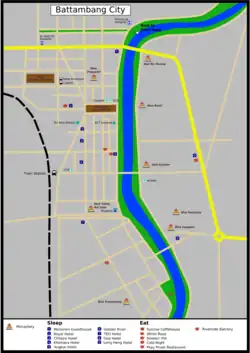
Baat Dambang
10 destinations
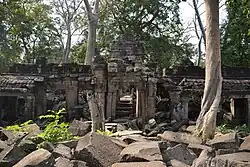
Banteay Mean Choay
11 destinations
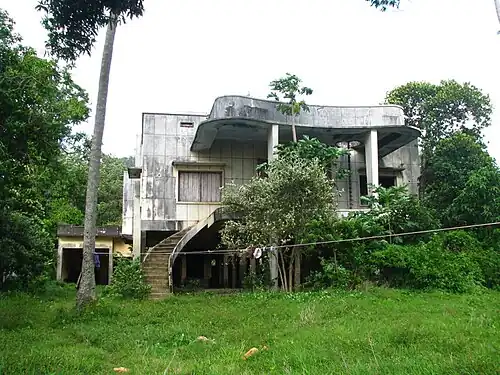
Kaeb
4 destinations
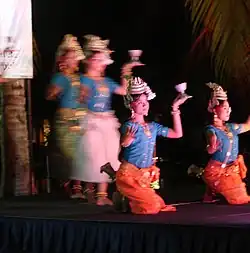
Kampong Chaam
10 destinations
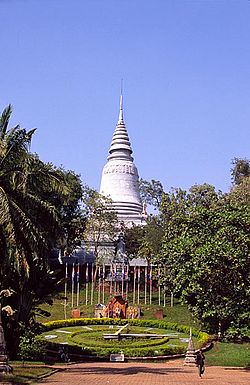
Kampong Chhnang
8 destinations
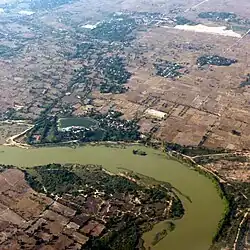
Kampong Spueu
9 destinations
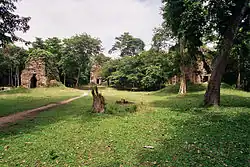
Kampong Thum
10 destinations
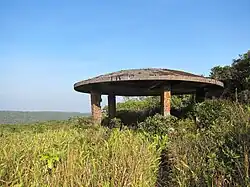
Kampot
10 destinations
Kandaal
12 destinations
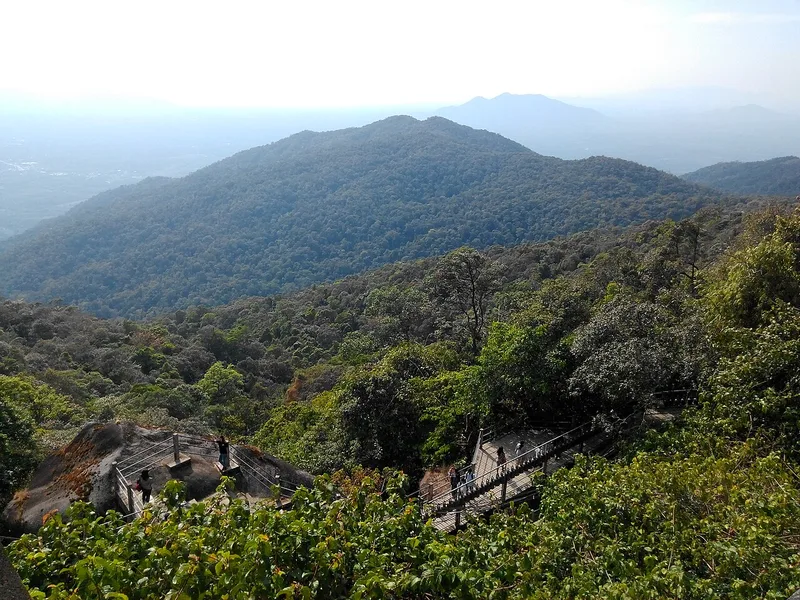
Kaoh Kong
9 destinations
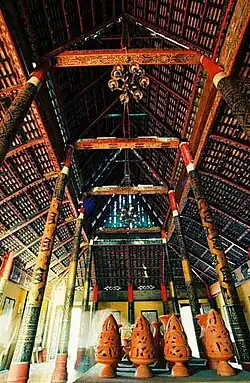
Kracheh
7 destinations
Mondol Kiri
8 destinations
Otdar Mean Chey
6 destinations
Pailin
2 destinations
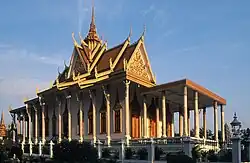
Phnom Penh
1 destination
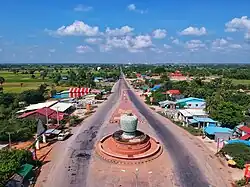
Pousaat
7 destinations
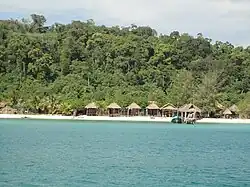
Preah Sihanouk
10 destinations
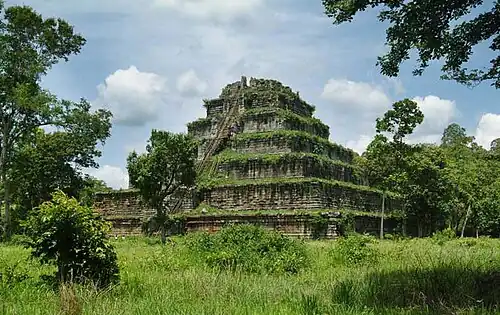
Preah Vihear
10 destinations
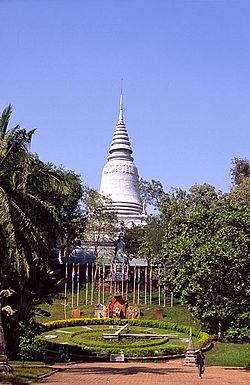
Prey Veaeng
12 destinations
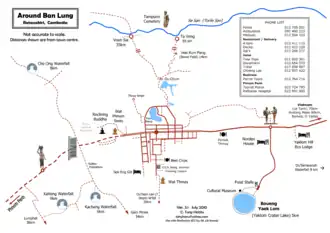
Rotanak Kiri
11 destinations
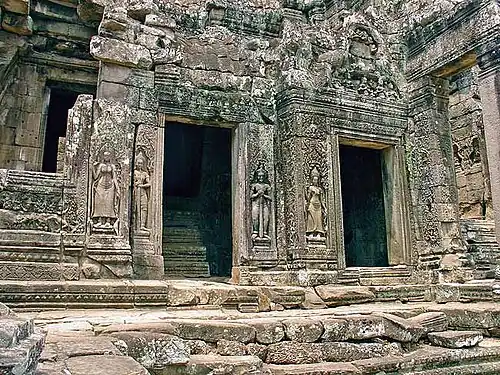
Siem Reab
12 destinations
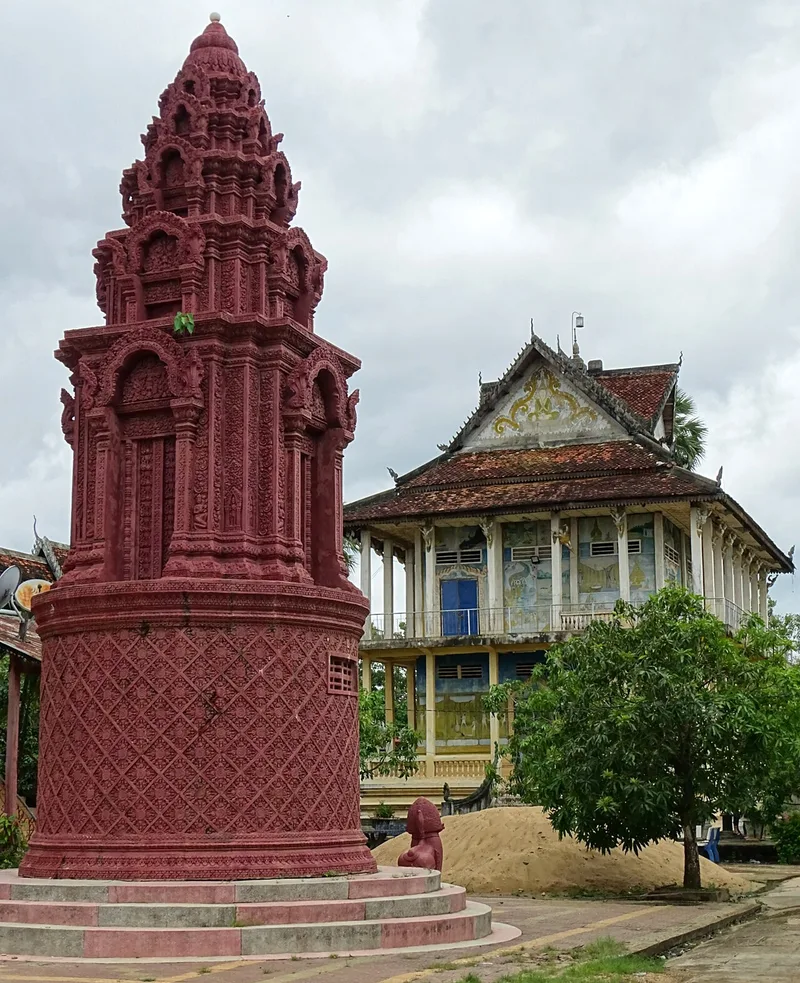
Stueng Traeng
6 destinations
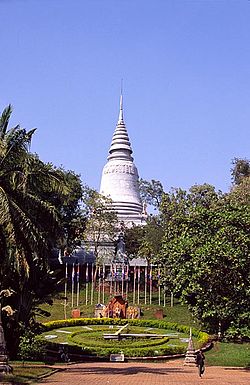
Svaay Rieng
8 destinations
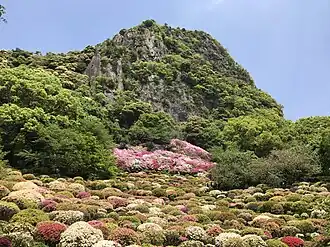
Taakaev
10 destinations
Tbong Khmum
7 destinations
Not sure where to start in Cambodia? Tell us how you like to travel and we'll shape the route.
WhatsAppTop Destinations
The places first-time and returning travellers ask for most.
Angkor Archaeological Park
Angkor Archaeological Park is the spiritual and cultural heart of Cam…
Banlung
Banlung (បានលុង) is the small but steadily growing capital of Ratanak…
Banteay Chhmar
Banteay Chhmar is a small village in the remote northwest of Cambodia…
Battambang
Battambang (Khmer: ក្រុងបាត់ដំបង), Cambodia's second-largest city wit…
Bokor National Park
Preah Monivong Bokor National Park crowns a 1,080-metre plateau in th…
Cardamom Mountains
The Cardamom Mountains (Phnom Krâvanh) sweep across southwest Cambodi…
Kampong Cham
Kampong Cham is Cambodia's seventh-largest city and the capital of Ka…
Kampong Chhnang
Kampong Chhnang, whose name literally means "Port of Pottery" in Khme…
Kampong Speu
Kampong Speu — officially renamed Chbar Mon in 2013, though most peop…
Kampong Thom
Kampong Thom is the modest provincial capital of Kampong Thum Provinc…
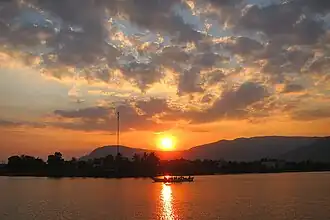
Kampot
Kampot is a relaxed riverside town in southeast Cambodia, set on the…
Kep
Kep (sometimes "Kep-sur-Mer") is a sleepy seaside town on Cambodia's…

Contact Us
Get in touch with us.
Get in touch
Contact Us
Tell us where you'd like to go and how you like to travel. A real Tripcuro planner — not a bot — will craft an itinerary around you.
- Personalised, hassle-free planning end-to-end
- Transparent pricing, no hidden costs
- 24/7 support for complete peace of mind