
Mungo National Park
New South Wales, Australia
Why visit Mungo National Park?
Mungo National Park is one of Australia's most quietly extraordinary places: a parched, lunette-fringed basin in far southwestern New South Wales where some of the oldest evidence of modern human ritual life outside Africa was uncovered. The remains known as Mungo Lady (cremated, the oldest known ritual cremation in the world) and Mungo Man (buried in ochre) were found here, dated to roughly 40,000 years ago, and prompted the Willandra Lakes Region to be inscribed as a UNESCO World Heritage Site on 9 September 1983 — one of only four mixed natural and cultural World Heritage properties in Australia. The park is jointly managed by the NSW National Parks and Wildlife Service and the traditional owners — the Paakantyi/Barkindji, Ngyiampaa and Mutthi Mutthi peoples.
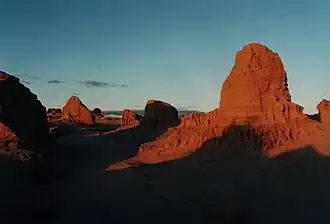
The headline landscape is the Walls of China, a 33 km arc of pale sand-and-clay lunettes on the eastern shore of the now-dry Lake Mungo, sculpted over tens of thousands of years and laid bare in the last two centuries by the overgrazing introduced by European pastoralism. Beyond the dunes the park is classic Outback: saltbush plains, mallee scrub, red soil, and a sky that goes vertical at sunset. Wildlife is mostly kangaroos and emus, with echidnas, goannas and around 137 recorded bird species. The park splits into two practical halves — the western side (visitor centre, the main Main Camp, Mungo Lodge and most facilities) and the eastern side, reached via the 70 km self-guided Mungo Track loop drive, where the best lookouts over the Walls of China sit.
Climate is semi-arid. Summers (December–February) are punishingly hot (often 35–40°C) with the risk of dust storms; winter nights drop near freezing. The sweet spots are autumn (March–May) and spring (August–November), when days are mild and nights tolerable. Rain is rare but consequential: even a light fall can close the unsealed access roads for days, so always check the NSW National Parks alerts page before driving in.
Planning Mungo National Park? Tell us your dates and we’ll tailor the trip.
Ask on WhatsAppHow do you get there?
By Plane
The nearest airport with scheduled service is Mildura Airport (MQL) in Victoria, about 110 km southwest of the park (roughly 2 hours by road, the last hour unsealed). Regional Express (Rex) flies to Mildura from Melbourne, Adelaide and Broken Hill; Qantas/QantasLink flies from Melbourne and Sydney. Avis, Hertz, Budget, Europcar and Thrifty all have desks at the airport — confirm in writing that your contract permits unsealed-road driving, as standard rental terms often exclude gravel and your insurance can be voided otherwise. There is no public transport between Mildura and the park; you either drive yourself or join a tour (see Get Around).
By Car / Road
Driving is effectively the only way in. Distances to the park:
- Mildura, VIC → Mungo: ~110 km, ~2 hours via Arumpo Road. This is the most-used route. The road is sealed out of Mildura but becomes unsealed/gravel for the bulk of the drive.
- Wentworth, NSW → Mungo: similar — ~2 hours via Arumpo Road.
- Balranald, NSW → Mungo: ~147 km, longer and rougher, with loose stones and poorer maintenance.
- Euston, NSW → Mungo: ~120 km, similar in surface to the Balranald road and even less travelled.
- Sydney → Mungo: ~1,000 km (driveable in two long days via the Hay Plains).
- Melbourne → Mungo: ~650 km (one long day via Mildura).
- Adelaide → Mungo: ~500 km via Renmark and Mildura.
A two-wheel-drive sedan can make it in dry conditions, but a high-clearance vehicle or AWD/4WD is more comfortable and a much better idea outside summer; after any rain the access roads can close on 24 hours' notice or less, occasionally trapping visitors inside for days. Fill the tank before leaving Mildura, Wentworth or Balranald — there is no fuel inside the park. Carry water (minimum 4 L per person), a spare tyre in known-good condition, and download offline maps; mobile coverage is patchy to non-existent.
No regular bus service runs to the park. Coach connections terminate at Mildura.
Once inside, you drive yourself. The park's signature route is the Mungo Track, a one-way 70 km self-drive loop that begins at the visitor centre, crosses the dry lakebed, follows the eastern lunettes (the Walls of China side) and returns via the bushland of the Mallee Stop area. Allow 3–4 hours minimum with stops; longer if you want to walk the boardwalks at the lookouts.
There is no public transport, no taxis, no ride-hailing (Uber, DiDi all simply do not operate here), and no shuttle between Main Camp, Mungo Lodge and the visitor centre — even though they're only a couple of kilometres apart. If you are without a car, you have two options:
- Discover Mildura day tour — around A$175 per person from Mildura. Covers most of the headline stops but does not include the full 70 km loop drive.
- Mungo Guided Tours — around A$129 per person from Mildura.
The most rewarding way to experience the Walls of China is on a Discovery Ranger-led guided sunset walk out onto the dunes — public access onto the lunettes themselves is restricted, and this is the only legal way to walk among them. Book through the visitor centre on arrival; A$50 per adult, A$25 per child is the typical rate. Walking elsewhere is easy and safe in cool weather; carry far more water than you think you need.
There are no scams to speak of — this is one of the most remote tourist destinations in Australia, and the visitor pressure is so low that opportunistic ripoffs simply don't exist. The real "scams" are unwary travellers paying tow-truck call-out fees from Mildura after taking a 2WD onto a wet gravel road.
What are the things to do?
Walls of China — the long, white-and-ochre lunette dune system on the eastern shore of Lake Mungo. Best viewed and photographed from Red Top Lookout and the Main Lookout on the eastern side, both reached via the Mungo Track. Sunset and the first hour after sunrise are unbeatable. Public access onto the dunes themselves is restricted to ranger-guided walks. Free; lookouts open 24 hours.
Mungo Visitor Centre — 3046 Turlee Leaghur Road, on the western side near Main Camp. Excellent interpretive displays on the geology, archaeology and three traditional-owner cultures; opening hours nominally 9 AM–4/5 PM but inconsistent and posted only on the centre's front door, not online. Free entry. This is also the meeting point for ranger-guided walks.
Mungo Woolshed — a short stroll from the visitor centre, this 1869 drop-log shearing shed, built of cypress pine by Chinese labourers, is one of the best-preserved colonial-era pastoral structures in the Outback and a tangible reminder of the sheep era that, ironically, exposed the archaeology. Free.
Zanci Pastoral Heritage Site — the ruins of the homestead, dugout and stockyards of the Zanci sheep station, reachable on a short signposted walk off the loop road. Free.
Lake Mungo lakebed crossing — the loop road traverses the dry lakebed itself; a flat, hallucinatory plain of cracked clay and saltbush. Pull over partway across and listen. There is nothing like the silence.
Mungo Lookout (western side) — the closest viewpoint to Main Camp and the visitor centre; convenient if you can't make the full loop, though the Walls of China are seen at greater distance than from the eastern lookouts.
Mallee Stop (Belah Camp area) — at the far side of the loop, a stand of mature mallee eucalypts and belah trees with a short interpretive walk; good chance of seeing kangaroos at dawn and dusk.
- Ranger-guided Discovery Walk on the Walls of China — the single experience that justifies the trip. Typically late afternoon, ending at sunset on the dunes. Book at the visitor centre; ~A$50 adult / A$25 child.
- Drive the 70 km Mungo Track self-guided loop — pick up the printed/audio guide at the visitor centre and allow at least half a day.
- Sunset and stargazing at Red Top Lookout — the eastern lookouts face roughly west across the lake, putting the Walls of China in golden hour light. After dark, the sky is genuinely Bortle 1–2 dark; the Milky Way, Magellanic Clouds and zodiacal light are all visible to the naked eye. No light pollution for 100+ km.
- Photography — the park is a destination in its own right for landscape and astro photographers; bring a tripod, a wide lens, and a head torch with a red mode so you don't disturb other shooters at dawn/dusk.
- Wildlife watching at dawn and dusk — kangaroos and emus are routine; goannas, echidnas, parrots and apostlebirds are likely; the bat species are abundant but cryptic.
- Cycling the loop road — permitted, but bring everything (water, repair kit, tubes), there's no shade and no help.
- Aboriginal cultural tours — when running, traditional-owner-led tours are the most meaningful interpretation of the site; ask at the visitor centre about current Paakantyi, Ngyiampaa and Mutthi Mutthi guide availability.
Planning Mungo National Park? Want these on a customised itinerary?
Ask on WhatsAppWhere to eat?
The park has effectively one place to eat — Mungo Lodge's restaurant — and otherwise it's self-catering at Main Camp or Belah Camp. Plan ahead; this is not a destination you improvise meals in.
- Mungo Lodge Restaurant ($$$) — on-site at Mungo Lodge, ~5 km from the visitor centre. Modern Australian menu using regional produce (Mallee lamb, Murray cod when available, local olive oil from the Sunraysia district). Mains roughly A$35–45. Bookings essential; non-residents must call ahead, as the kitchen sizes for the night's covers.
- Self-catering at Main Camp / Belah Camp ($) — gas/wood BBQs are provided at the campgrounds. Bring everything: food, drinking water, firewood (collecting wood in the park is prohibited), cooking gear. There is no shop and no fuel inside the park.
For more variety, eat in Mildura before or after the trip — it's a surprisingly strong food town for its size:
- Stefano's Restaurant ($$$), in the cellar of the Grand Hotel, Mildura — Stefano de Pieri's long-running set-menu Italian; a southern-Riverina institution. Book weeks ahead.
- Mildura Brewery Pub ($$), 20 Langtree Avenue, Mildura — pub-style mains A$25–35 with a strong local beer list.
- Pizza Cafe ($), Langtree Avenue, Mildura — solid, cheap pizzas and pasta; the workhorse pre-Mungo dinner option.
Vegetarian options exist at all of the above; strict vegan, halal and gluten-free travellers should self-cater at the camps to be safe.
Where to drink?
There are no bars, cafés or pubs inside the park. The only licensed venue is Mungo Lodge, which has a small bar attached to the restaurant and serves Australian wines (notably from the nearby Murray Darling and Riverland regions), a short cocktail list, and tap and bottled beer. The lodge is the natural after-sunset gathering point.
If you're camping, bring your own beer, wine or spirits — and bring plenty of water. Tap water at Main Camp and Belah Camp is bore water and not always reliably potable; the official advice is to bring all your drinking water with you, or treat what you find on site. Plan on at least 4 litres per person per day in summer, 2–3 L in cooler months.
For coffee snobs, the visitor centre occasionally has a basic machine running but don't count on it — caffeinate in Mildura on the way in.
Planning Mungo National Park? We’ll book the stays and dining for you.
Ask on WhatsAppWhere to stay?
Almost all accommodation is on the western side of the park, clustered near the visitor centre.
Budget
- Main Camp — the park's primary campground, ~2 km from the visitor centre. Unpowered sites, drop toilets, picnic tables, gas BBQs, bore water (not always drinkable). Bookable through the NSW National Parks website. Typical rate ~A$15–25 per adult per night, plus the A$8 daily park vehicle entry fee.
- Belah Camp — the only campground on the eastern side of the park, about halfway around the Mungo Track loop. More basic than Main Camp, very few sites, drop toilets, no water. ~A$15 per adult per night. Excellent for stargazing and for catching the Walls of China at first light.
- Shearers' Quarters — restored cottage accommodation near the old woolshed, run by NSW Parks. Shared kitchen and bathrooms, bunk-style rooms. Around A$45–60 per person per night; popular with school groups, book well ahead.
Mid-range
- Mungo Lodge — the only hotel-style accommodation in or adjacent to the park, ~5 km from the visitor centre. Self-contained cabins, on-site restaurant and bar (see Eat/Drink), a small pool. Cabins typically A$220–320 per night for a double; family cabins higher. The default choice if you don't want to camp.
Upscale / heritage
- Mildura Grand Hotel (Seventh Street, Mildura) — heritage hotel from 1891, home to Stefano's restaurant; rooms from around A$200 per night, suites considerably more. Best used as a luxurious bookend before or after a Mungo trip.
- Quality Hotel Mildura Grand suites and the Mildura Houseboats on the Murray River are also worth considering for travellers who want a comfortable base and don't mind a 2-hour daily commute to the park.
What should you buy?
There is no shopping in the park in any meaningful sense. The visitor centre has a small range of books on the park's archaeology and Aboriginal cultural history, postcards, and a few souvenir items; cash and card both accepted, but don't rely on EFTPOS — bring some cash. Indigenous art and craft from the traditional-owner groups can sometimes be purchased through the centre; availability is irregular.
For groceries, fuel, camping supplies, ice and anything else you forgot, your last stops in either direction are Mildura (large Coles, Woolworths, IGA and outdoor stores) and Balranald (smaller IGA, basic camping supplies). Buy before you leave the bitumen.
Bargaining is not a thing in Australia; prices are fixed.
Where to go next?
- Mildura, VIC (~110 km, ~2 hours via Arumpo Rd) — the regional service hub; Murray River paddle-steamers, Stefano's, the Grand Hotel, and the springboard for almost every Mungo trip.
- Wentworth, NSW (~150 km, ~2.5 hours) — at the junction of the Murray and Darling rivers; Perry Sandhills (a smaller, more accessible dune field), the old Wentworth Gaol, and locks on the Murray.
- Hattah-Kulkyne National Park, VIC (~180 km, ~3 hours from Mungo via Mildura) — a series of Murray-fed ephemeral lakes lined with river red gums; excellent birdlife and a strikingly different Outback landscape from Mungo's dry lunettes.
- Broken Hill, NSW (~300 km, ~4 hours northwest) — the legendary silver-mining city, Pro Hart's gallery, the Living Desert Sculptures, and a launchpad for Silverton and the Mundi Mundi plains (the Mad Max 2 location).
- Menindee Lakes, NSW (~340 km, ~4.5 hours via Pooncarie) — a chain of Darling River lakes on the road north to Broken Hill; Kinchega National Park and the river gums of Cawndilla and Menindee.
- Balranald, NSW (~150 km, ~3 hours east) — gateway to Yanga National Park and the Murrumbidgee floodplain, a complementary wetland counterpart to Mungo's dry lakebed.
Nearby in New South Wales
More places to explore around Mungo National Park.

Guide content as of May 2026. Portions adapted from Wikivoyage, CC BY-SA 4.0.

Contact Us
Get in touch with us.
Get in touch
Contact Us
Tell us where you'd like to go and how you like to travel. A real Tripcuro planner — not a bot — will craft an itinerary around you.
- Personalised, hassle-free planning end-to-end
- Transparent pricing, no hidden costs
- 24/7 support for complete peace of mind