
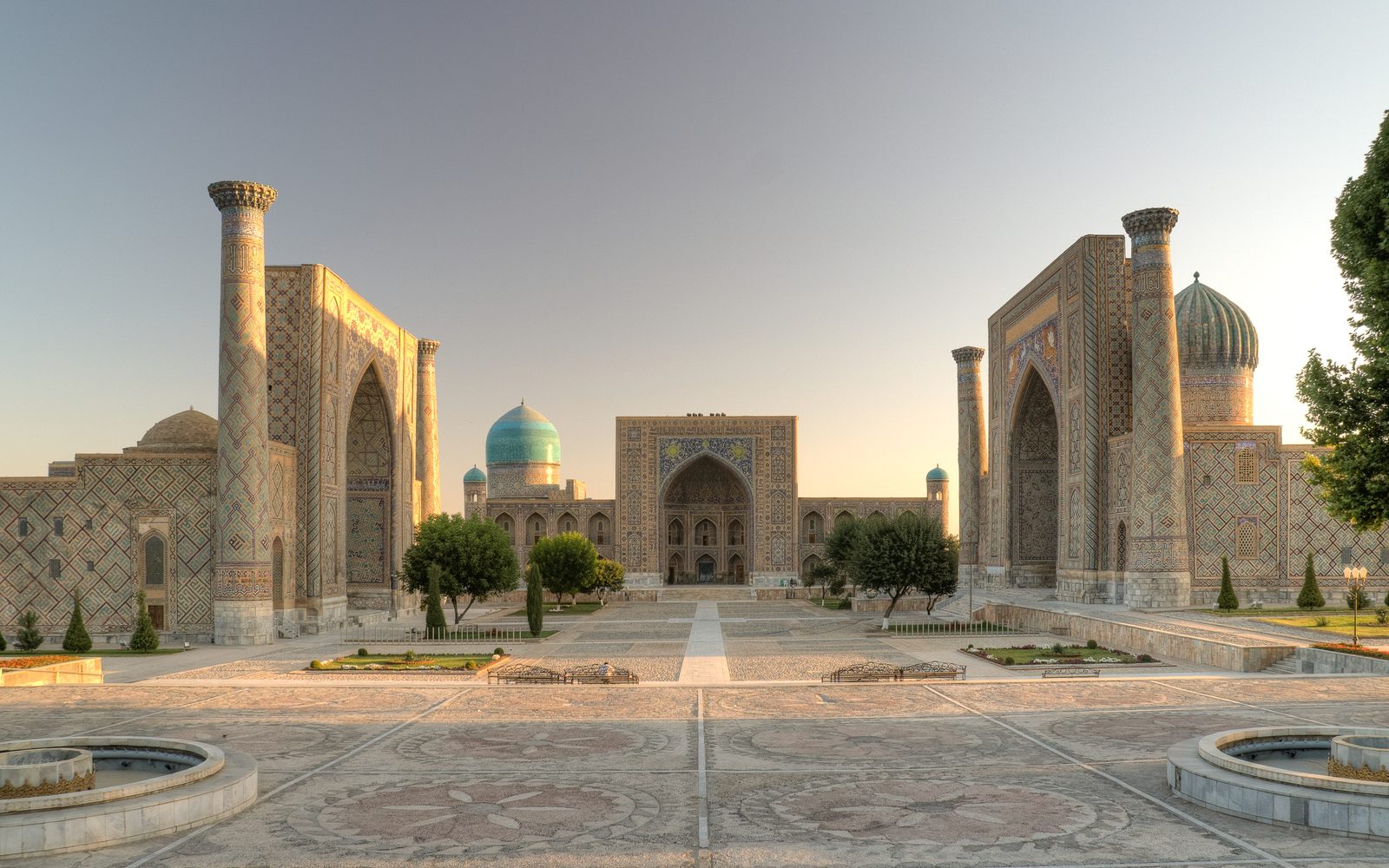
For centuries, Samarkand, Bukhara and Khiva were the great pause points on the Silk Road, where caravans from India, Persia and China unloaded silk, spice and story. In 2026, those same cities are having a loud, well-earned second act, and they are suddenly one of the easiest big adventures an Indian traveller can reach. Turquoise domes, desert light, high-speed trains and a genuine welcome await, all within a short hop of home.
Why Uzbekistan is having its moment in 2026
Uzbekistan has spent the last few years quietly opening up, and the numbers are now catching up with the ambition. The country is among the fastest-growing tourism destinations in the world, with international arrivals up sharply year on year and a national target of around 12 million visitors for 2026. India is one of its strongest and fastest-rising source markets.
What makes this the right time, rather than just a trending headline, is that the infrastructure has finally matured to match the monuments:
- Effortless entry. A simple online e-visa replaced the old paperwork-heavy process, and it is genuinely quick to obtain.
- Fast, comfortable rail. Spanish-built Afrosiyob trains link Tashkent and Samarkand in about 2.5 hours, and a brand-new high-speed service launched in May 2026 now connects Tashkent all the way to Khiva in around 7 hours, roughly half what it used to take.
- Better hotels and digital ticketing. Heritage cities are adding boutique stays inside restored caravanserais, and a unified national tourism platform and app is rolling out to smooth ticketing at the major sites.
In short, the romance of the Silk Road is intact, but the friction of travelling it has largely melted away.

The three cities that carry the legend
Most first trips orbit the historic “Golden Triangle” of Samarkand, Bukhara and Khiva, and each has a distinct personality.
Samarkand is the showpiece. Its Registan Square, an ensemble of three grand madrasahs facing one another across a plaza, is one of the most photographed sights in Central Asia, and it is even more theatrical at golden hour and after dark. Add the ribbed blue dome of the Gur-e-Amir mausoleum and the tiled avenue of tombs at Shah-i-Zinda, and Samarkand delivers the postcard in full.
Bukhara feels older and more lived-in, a UNESCO-listed warren of domed bazaars, minarets, madrasahs and centuries-old caravanserais where the medieval town still functions as a town. It is the place to slow down, get lost on foot, and drink tea beside the Lyab-i-Hauz pool.
Khiva is the walled desert jewel. Its old town, Ichan-Qala, is a compact fortress of sandy ramparts, minarets and palaces that you can circle in a day, best at sunrise before the light goes harsh.
Beyond the triangle, Uzbekistan is deliberately broadening its appeal, with growing interest in food-led travel, mountain escapes near Tashkent, and the stark ecological landscapes of Karakalpakstan and the Aral region for travellers who want something rawer.
A comfortable rhythm for the trip
You can see the headline cities in about a week without rushing, and the train network makes the logistics pleasant rather than punishing. A ~7-day flow that works well:
- Days 1-2, Tashkent. Arrive, adjust, and ease in with the leafy capital, its markets, museums and famously ornate metro stations.
- Days 3-4, Samarkand. Take the Afrosiyob from Tashkent, then give Registan two visits, one by day and one lit up at night.
- Days 5-6, Bukhara. Continue by train and switch pace, exploring the old quarter slowly on foot.
- Day 7, Khiva or return. Push on to Khiva for the walled-city finale, or loop back to Tashkent to fly home.
If you have ~10 days, add the mountains outside Tashkent, a deeper stop in Khiva, or a slower food-and-crafts angle in Bukhara. Overnight sleeper trains still connect the more distant legs and are part of the fun for travellers who like the old-school romance of waking up in a new desert city.

For travellers from India
Visa. Indian passport holders need an Uzbekistan e-visa, applied for online at the official portal (e-visa.gov.uz). The tourist e-visa is typically valid for 30 days with a stay of up to 30 days, and applications are usually processed within ~2 to 3 working days, so apply at least several days before you fly. Keep a scanned passport bio page and a plain white-background photo ready, and make sure your passport has at least six months of validity and a blank page.
Getting there. This is the quiet superpower of the trip. Direct flights link Delhi and Tashkent in only around ~3 hours, operated by carriers including Uzbekistan Airways and IndiGo, with several services a week. From other Indian cities you will usually connect via Delhi. For a destination this exotic, the journey is barely longer than a domestic hop.
When to go. Aim for spring (April to June) or autumn (September to early November), when days are warm and dry and the light on the tilework is at its best. Summer can push past the high 30s Celsius in the desert cities, and deep winter is cold, so the shoulder seasons are the sweet spot. Autumn has the bonus of harvest, when the markets overflow with fruit.
Food. Uzbek cuisine is hearty and deeply familiar to an Indian palate, built around plov (a fragrant rice-and-meat pilaf), grilled kebabs, samsa (baked stuffed pastries close to our samosa), fresh non bread and endless green tea. Vegetarians will find salads, breads, dairy and dumplings, though it helps to communicate needs clearly, and pure-veg and halal travellers will generally do well.
Connectivity and money. A local SIM or eSIM is cheap and easy to arrange, and the digital tourism rollout is steadily improving on-the-ground booking. Carry some cash for smaller vendors and bazaars, since card acceptance is good in cities but patchy in the markets.
Planning it so it actually feels seamless
Uzbekistan rewards a little choreography. The magic is in the sequencing, catching Registan at the right hour, timing train legs so you are not backtracking, choosing a restored heritage stay over a generic hotel, and pacing the days so the tilework does not blur into one long museum. Booking premium train classes ahead in peak season, and pairing the big monuments with quieter craft workshops, home-style meals and a market morning, is what turns a checklist into a genuine journey down the Silk Road.
Done well, this is one of those trips that feels far more distant and hard-won than it actually is, a week of turquoise domes and desert history that sits just a short flight from home.
Let Tripcuro Plan Your Uzbekistan Trip
Tripcuro designs your Uzbekistan journey end to end, from the e-visa and the right-season timing to the perfect string of high-speed train legs between Samarkand, Bukhara and Khiva. We match you with restored heritage stays, arrange private guides and food-led experiences, and time each city for its best light. Tell us your dates and travel style, and we will craft a seamless bespoke itinerary down the Silk Road.