
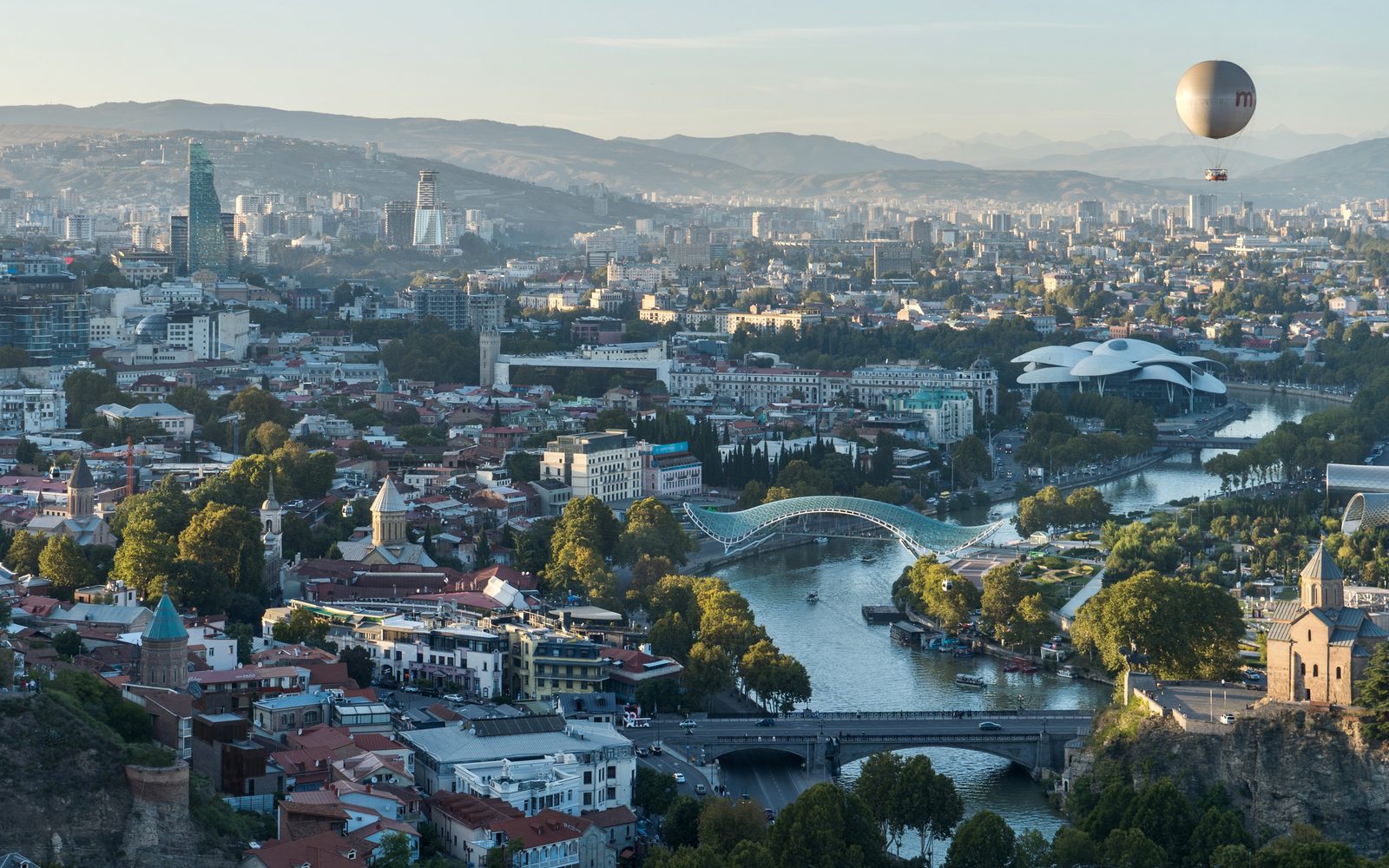
Ranked the world’s second-most trending destination for 2026 by Tripadvisor, Tbilisi has quietly become the name every well-travelled friend keeps repeating. It is a city where 4th-century citadels look down on glass footbridges, where sulphur springs steam in the middle of downtown, and where dinner comes with a jug of amber wine older than the concept of a wine glass. Here is how to read it well before you go.
Why Tbilisi is having its moment in 2026
Georgia’s capital sits at the exact meeting point of Europe and Asia, and that in-between quality is precisely what has pushed it onto every 2026 shortlist. Tripadvisor’s Travellers’ Choice Awards named it a top trending city for the year, and the numbers back the buzz: Georgia welcomed close to ~6 million visitors in 2025, with Tbilisi acting as the entry point for roughly three-quarters of them.
What makes it feel fresh rather than overrun is the mix. Cobbled Old Town lanes with carved wooden balconies sit a short walk from bold contemporary architecture, art galleries, design boutiques and one of the most talked-about nightlife and cafe scenes in the region. Add hospitality that treats a guest as a gift, prices that remain gentle by European standards, and a food-and-wine culture with an 8,000-year pedigree, and you have a capital that punches far above its size. A wave of civic upgrades for 2026 (restored museums and revamped city parks among them) is only sharpening the appeal.
One practical note that defines 2026 specifically: from 1 January 2026, all visitors to Georgia are required to hold health and accident insurance with minimum coverage of ~30,000 GEL (roughly 10,000 euros). Build this into your planning from the outset.
The signature experiences you actually came for
Tbilisi rewards slow wandering, but a handful of experiences are non-negotiable.
- Abanotubani sulphur baths. The name Tbilisi comes from the old Georgian word for “warm,” a nod to the natural hot springs bubbling up in the Abanotubani district. Booking a private brick-domed bathhouse for a soak and a scrub is the single most authentically local thing you can do here.
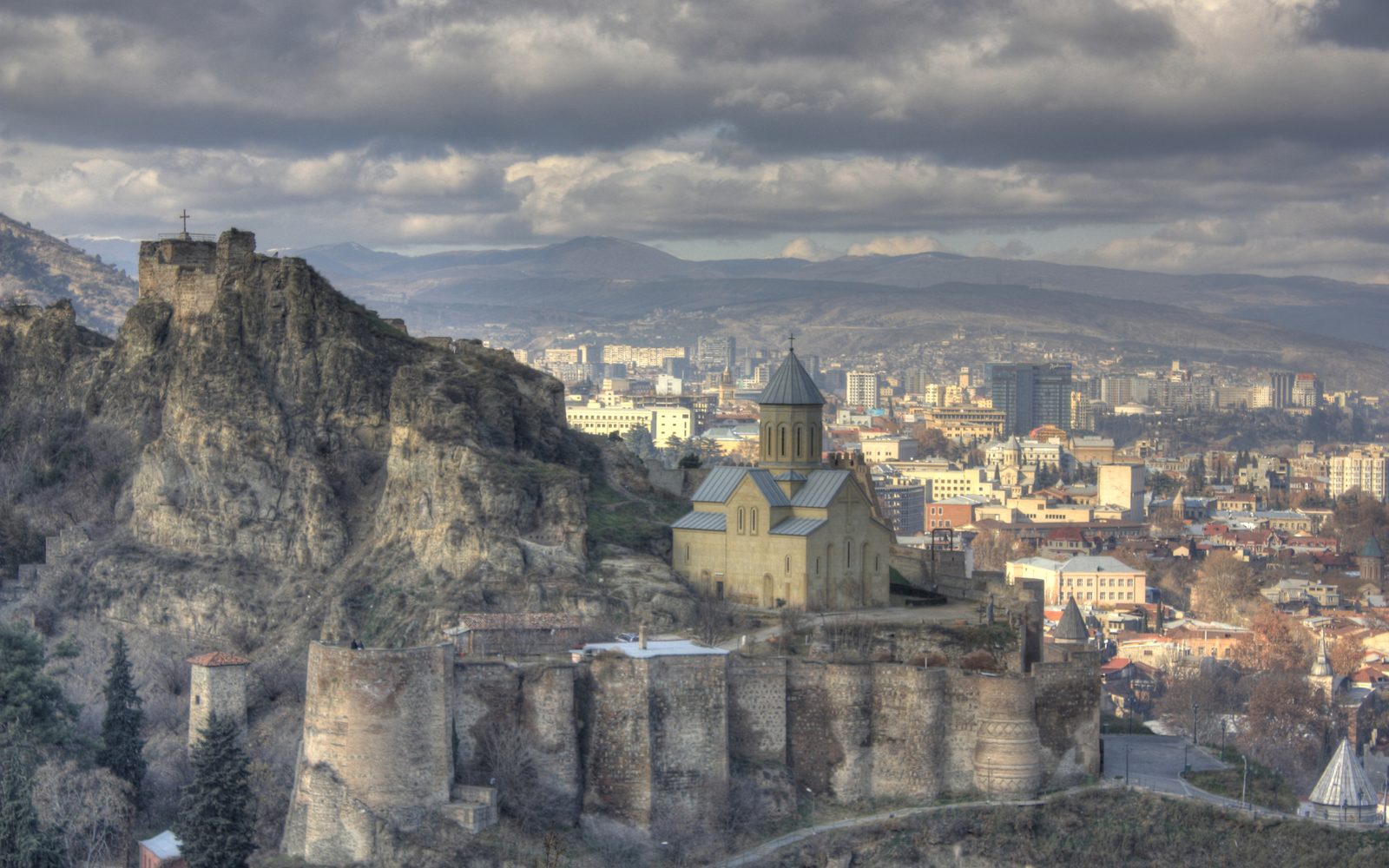
- Narikala Fortress and the cable car. The citadel above Old Town has roots in the 4th century. Ride the cable car from Rike Park; it floats you over the Mtkvari river for the finest rooftop-and-church-dome views in the city.
- Old Town (Kala) and Rustaveli Avenue. Lose an afternoon in the tumbling lanes below the fortress, then walk the grand Rustaveli Avenue lined with theatres, opera houses and museums.
- The food and the wine. Order khinkali (soup-filled dumplings you hold by the stem, sip, then eat) and khachapuri (molten cheese bread, at its most decadent in the boat-shaped Adjarian version with egg and butter). Pair everything with qvevri wine, fermented underground in clay vessels.
Beyond the city, Tbilisi is an ideal base. Kakheti, Georgia’s eastern wine country, is an easy day trip and turns magical around the autumn harvest. Mtskheta, the ancient former capital, sits just outside town. And for high drama, the road north to Kazbegi and Gudauri delivers Gergeti Trinity Church, a 14th-century chapel marooned at ~2,170 metres against the snow-streaked face of Mount Kazbek.
A suggested rhythm: roughly 5 to 7 days
You can taste Tbilisi in a long weekend, but a week lets the region breathe.
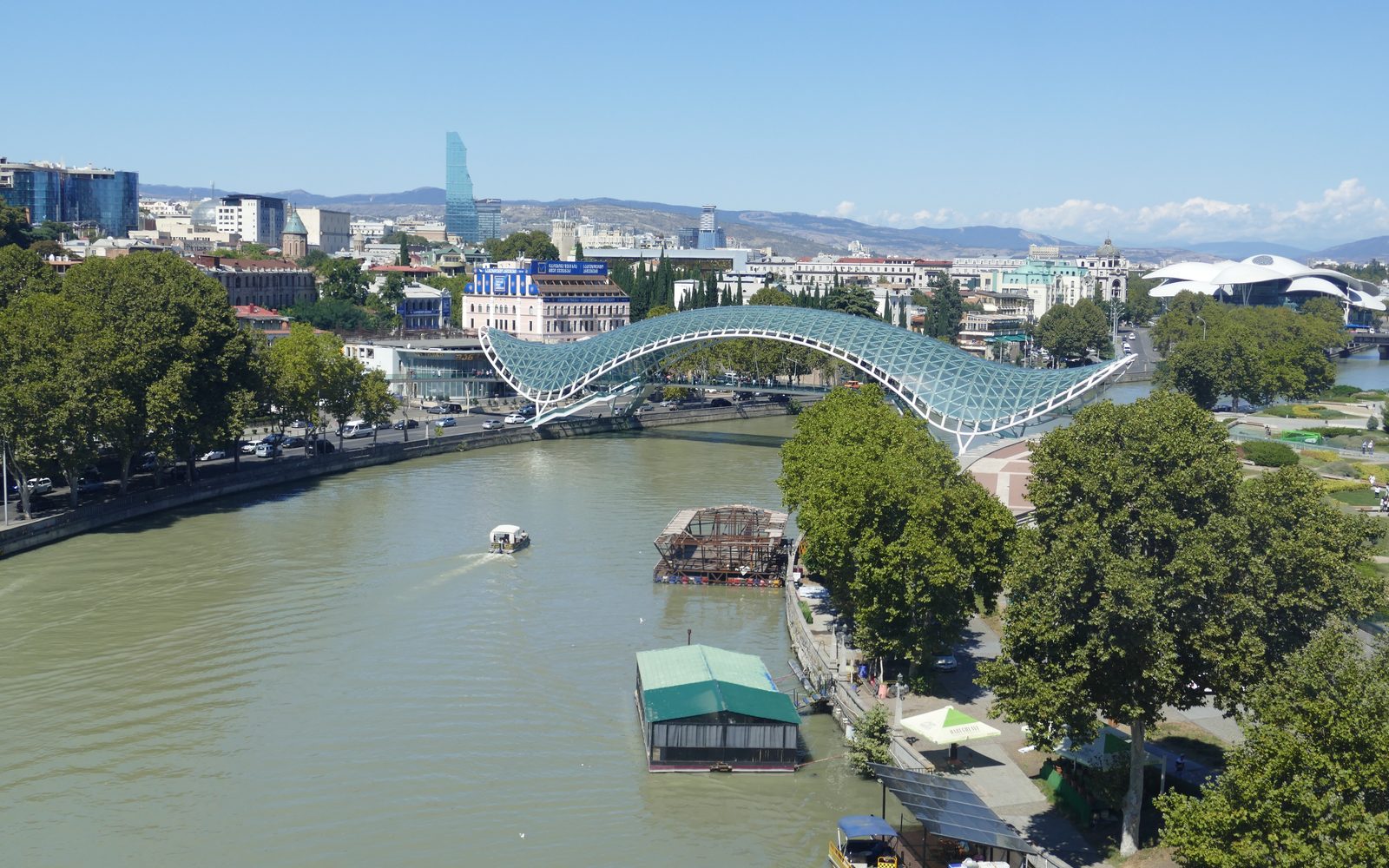
- Days 1 to 2: Settle into Old Town. Walk Abanotubani, ride the cable car to Narikala, cross the Bridge of Peace, and eat your way through a first proper Georgian supra (feast). Keep the pace loose and let jet lag ease off.
- Day 3: A day trip to Mtskheta and into Kakheti for cellar visits and long vineyard lunches.
- Day 4: The big mountain day north to Ananuri, Gudauri and Gergeti Trinity Church near Kazbegi, one of the most photographed vistas in the Caucasus.
- Days 5 onward: Return to the city for the modern side, contemporary galleries, design shops, wine bars and a leisurely sulphur bath to close the loop. With extra days, add Sighnaghi (the walled “city of love”) or a run west toward Kutaisi.
For travellers from India
Visa. Most Indian passport holders need a Georgian visa, but the process is refreshingly light. The standard e-visa costs ~USD 20 with roughly 5-day processing (an urgent ~3-day option runs ~USD 50), applied for entirely online. A Georgian tourist visa typically allows a stay of up to 90 days within a 180-day window. You may qualify for visa-free entry if you already hold a valid multiple-entry visa or residence permit from countries such as the US, UK, Schengen states, Canada, Australia, Japan, or the GCC, so check your existing visas before you apply. Carry a passport valid at least six months beyond entry, with two blank pages, and remember the mandatory 2026 travel-insurance rule above.
Getting there. IndiGo operates seasonal non-stop flights to Tbilisi from Mumbai and Delhi, which are the quickest option when running. Year-round, the reliable routes are one-stop connections via carriers like Azerbaijan Airlines and Turkish Airlines, with total journey times commonly in the ~7 to 10 hour range depending on layover. Fares from India often start in the ~20,000 to 25,000 INR band for returns, with the shoulder and winter months tending to be gentler on the wallet.
Best time to go. Aim for April to June or September to October. Spring and autumn bring mild days around 20 to 28 C, ideal for walking neighbourhoods and lingering in courtyard cafes. High summer (July to early September) can push into the mid-30s and occasionally near 40 C, while autumn has the bonus of the Kakheti wine harvest.
Food and dietary notes. Vegetarians travel comfortably here: khachapuri, lobio (bean stew), badrijani (walnut-stuffed aubergine), fresh salads and breads are everywhere. Flag “no meat” clearly, as khinkali are usually meat-filled.
Money and connectivity. The currency is the Georgian lari (GEL). Cards work widely in the city, but carry cash for rural cellars and mountain stops. For data, a local eSIM or SIM is cheap and simple; Magticom (Magti) has the strongest coverage, including remote valleys, so you stay connected on those long day-trip drives.
Planning it well is where the trip is won
Tbilisi is forgiving to wander but genuinely rewarding to plan. The difference between a good trip and an unforgettable one usually comes down to details: a bathhouse booked before the crowds, a Kakheti cellar that pours family vintages rather than the tour-bus stuff, the right driver for the Kazbegi road, and pacing that respects both the summer heat and the harvest calendar. Sort the 2026 insurance requirement and your visa early, lock in shoulder-season dates, and leave room for the unplanned supra, because in Georgia, the best evenings are almost never on the itinerary.
Let Tripcuro Plan Your Tbilisi, Georgia Trip
Tripcuro designs your Tbilisi journey end to end, from the e-visa and mandatory 2026 insurance to hand-picked bathhouses, Kakheti cellars and the Kazbegi mountain road. We match your dates to the best season, handle every connection and booking, and build a bespoke rhythm around how you actually like to travel. You simply arrive and let Georgia unfold.