
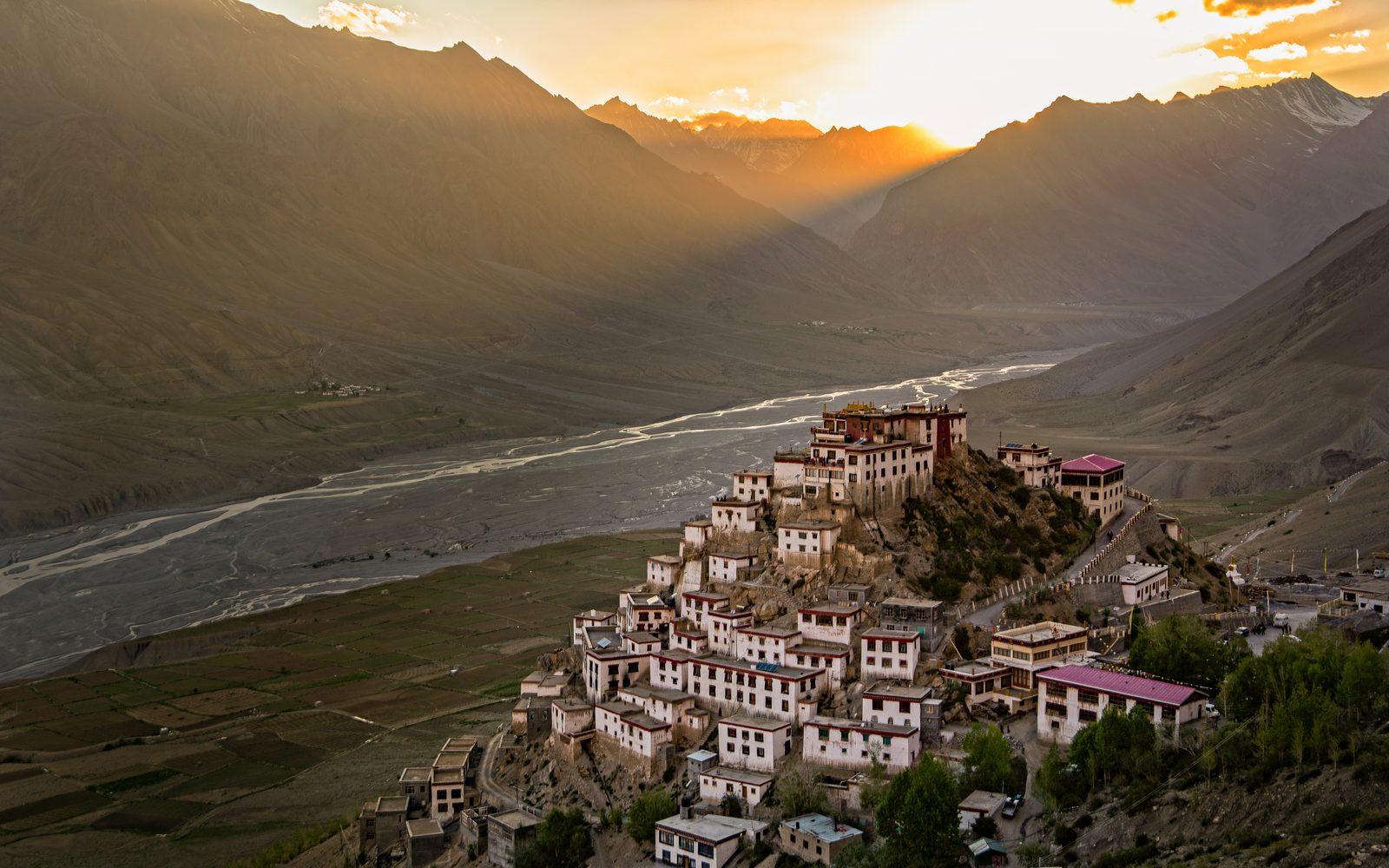
There is a corner of the Indian Himalaya where the mountains turn the colour of bone and ash, the air thins to a whisper, and a thousand-year-old monastery clings to a ridge above a river the shade of turquoise. This is Spiti Valley, a high-altitude cold desert in Himachal Pradesh, and in 2026 it has become the destination discerning Indian travellers keep coming back to. Part Ladakh, part something entirely its own, Spiti rewards those who slow down and go deep.
Why Spiti Is Having Its Moment in 2026
Spiti has always been beautiful. What has changed is access. In 2026, road connectivity across the circuit has improved noticeably, Kaza has gained new and better places to stay, and a fast-growing community of solo travellers, motorcyclists and small-group road-trippers has put the valley firmly on the map. It sits at the sweet intersection of everything trending in Indian travel right now: raw high-altitude adventure, living Buddhist culture, dark-sky stargazing, and a landscape that photographs like another planet.
Crucially, Spiti still feels earned rather than crowded. Compared with Ladakh, it draws fewer people and asks a little more of you, and that trade-off is exactly the appeal. Travellers who want the Himalaya without the tour-bus crush are choosing the cold desert, and 2026 is the year that choice went mainstream without the valley losing its edge.

The Signature Experiences and Regions
Spiti is a collection of villages, monasteries and impossibly high places, most of them radiating out from Kaza, the valley’s only real base town at roughly 3,800m. From here, a handful of experiences define a trip.
- Key Monastery is the postcard image of Spiti for good reason: a roughly thousand-year-old fortified gompa stacked on a hilltop above the river, home to red-robed monks and views that stop conversation.
- The world’s-highest cluster above Kaza is a single unforgettable loop. In one short circuit you can post a card from Hikkim, home to one of the world’s highest post offices at around 4,400m; stand in Komic, among the highest motorable villages anywhere; and comb the slopes of Langza for Tethys Sea fossils, roughly 200-million-year-old seashells left behind when this was an ocean floor.
- Tabo and Dhankar monasteries carry deep history, Tabo often called the “Ajanta of the Himalaya” for its ancient murals, Dhankar dramatically perched between valley and sky.
- Pin Valley National Park branches south into a wilder, greener pocket, prime terrain for trekkers and a haven for rare Himalayan wildlife.
- Chandratal Lake, the “moon lake” at around 4,300m, is the showstopper, a high alpine crescent of startling blue reached over the Kunzum La pass, and accessible only in the warmer months.
Between these anchors are the quieter pleasures: butter-tea in a village kitchen, prayer flags snapping in cold wind, and some of the clearest night skies in India.
A Suggested Rhythm: Roughly 8 to 10 Days
Spiti punishes rushing. The altitude is real, and the single most important planning rule is to gain height gradually. A comfortable flow runs something like this over ~8 to 10 days.
- Days 1 to 2: Ascend slowly via the Shimla and Kinnaur side, overnighting somewhere like Kalpa or Tabo to let your body adjust before you sleep at Kaza’s altitude.
- Days 3 to 4: Settle in Kaza. Visit Key Monastery, then dedicate a day to the Hikkim, Komic and Langza loop.
- Days 5 to 6: Explore Dhankar and Tabo, and branch into Pin Valley if you have the appetite for something rawer and quieter.
- Days 7 to 8: If travelling in high summer, cross toward Chandratal and camp near the lake, then continue over Kunzum La toward Manali.
- Days 9 to 10: Buffer days, because mountain weather and road conditions do not follow itineraries, and a spare day is the difference between calm and chaos.
Entering from the Kinnaur side and exiting toward Manali gives you the full circuit and eases acclimatisation, which is why so many seasoned travellers plan it that way.

For Travellers from India
Permits and ID. Here is the good news: Indian citizens need no Inner Line Permit to visit Spiti or Kinnaur. Carry a valid government photo ID, as you will register at routine police checkposts such as Jangi and Sumdo since the region sits near the India-China border. Foreign nationals do need permits for certain stretches, so mixed groups should plan ahead.
Getting there. The nearest airport is Bhuntar (Kullu-Manali), roughly 245km from Kaza, served by limited Alliance Air flights from Delhi at around ~1 hour 20 minutes, though schedules are sparse and weather-dependent. Most travellers instead fly into Chandigarh, far better connected from across India, and drive up from there. From Delhi, an overnight bus or car to Shimla or Manali is also common before the mountain leg begins.
Best time to go. The prime window is roughly mid-June to mid-October, when both access routes are open and the high passes are clear. June and September are the safest, most rewarding months for first-timers. Chandratal and the Kunzum La crossing are reliably open only from around July to mid-September. Winter Spiti, December to March, is a stark, snowbound adventure for the experienced, with the valley cut off from the Manali side.
Food and connectivity. Expect hearty Himalayan and Tibetan-influenced fare, thukpa, momos, thentuk, butter tea, and simple, warming home-style meals in the villages. On connectivity, set expectations low and enjoy the disconnection: Kaza has the most reliable signal, with BSNL and Jio generally working, while high villages like Langza, Komic and Hikkim, and especially Pin Valley, have patchy to non-existent coverage. Carry cash, as Kaza has the valley’s only dependable ATM.
Planning It Well Is the Whole Game
Spiti is not a destination you improvise your way through. Altitude, fragile roads, narrow seasonal windows and long distances between fuel and medical help all mean that the difference between a magical trip and a miserable one is planning. Build in acclimatisation days, respect the weather, keep your itinerary loose enough to absorb a closed pass, and travel with people who know the terrain. Do that, and the cold desert gives you something few places still can: genuine remoteness, living culture, and skies that make you feel very small in the best possible way.
Let Tripcuro Plan Your Spiti Valley Trip
Tripcuro designs your Spiti journey end to end, from the right acclimatisation rhythm to hand-picked stays in Kaza and the villages beyond. We handle the passes, the timing, the checkposts and the logistics so you can simply arrive and take in the valley. Tell us how you like to travel, and we will craft a bespoke cold-desert itinerary built entirely around you.