
Most people picture Mauritius as a single postcard: a hammock, a turquoise lagoon, a rum cocktail at sunset. That image is not wrong, but it is a fraction of the story. Turn inland and the island rears up into emerald gorges, waterfalls and a volcanic crater; turn a corner in Port Louis and you could be walking through a market in Bihar. For an Indian traveller in 2026, this is the rare long-haul-feeling escape that arrives without a single long-haul complication.
There is a reason Indians are suddenly everywhere on the island. Arrivals from India jumped roughly 35 per cent in 2025, the fastest growth of any market Mauritius counts. The pull is obvious once you land: no visa to queue for, a flight barely longer than Delhi to Bangkok, and a country where nearly seven in ten people trace their roots back to the subcontinent. In 2026, Mauritius is having its moment, and for once the moment is genuinely aimed at us.
Why Mauritius is having its moment in 2026
The numbers tell the first half of the story. Mauritius welcomed about 1.44 million visitors in 2025, up 3.9 per cent on the year before, with tourism earnings expected to cross MUR 100 billion. India was the standout: arrivals climbed around 35 per cent to roughly 75,808 travellers, the highest growth of any major source market, driven squarely by luxury and multi-generational family trips. India is now the island’s fifth-largest market and the tourism board has openly said it wants us in fourth place, courting travellers from tier-two and tier-three cities and pushing a “beyond beaches” message for 2026.
The second half is what the numbers cannot capture. Mauritius is one of the very few beach destinations where an Indian traveller feels an instant, uncanny familiarity. Around 70 per cent of the population is of Indian origin, descendants of indentured labourers brought largely from the Bhojpuri-speaking belt of Bihar and Uttar Pradesh, with Tamil, Telugu and Marathi communities among them. You will hear Bhojpuri words in the markets, see temples beside sugarcane fields, and eat dholl puri from a street cart that tastes like a cousin of home. It is a tropical island abroad that somehow also feels like family.
The signature experiences worth building a trip around
Mauritius rewards travellers who look past the pool. A handful of places consistently justify the effort:
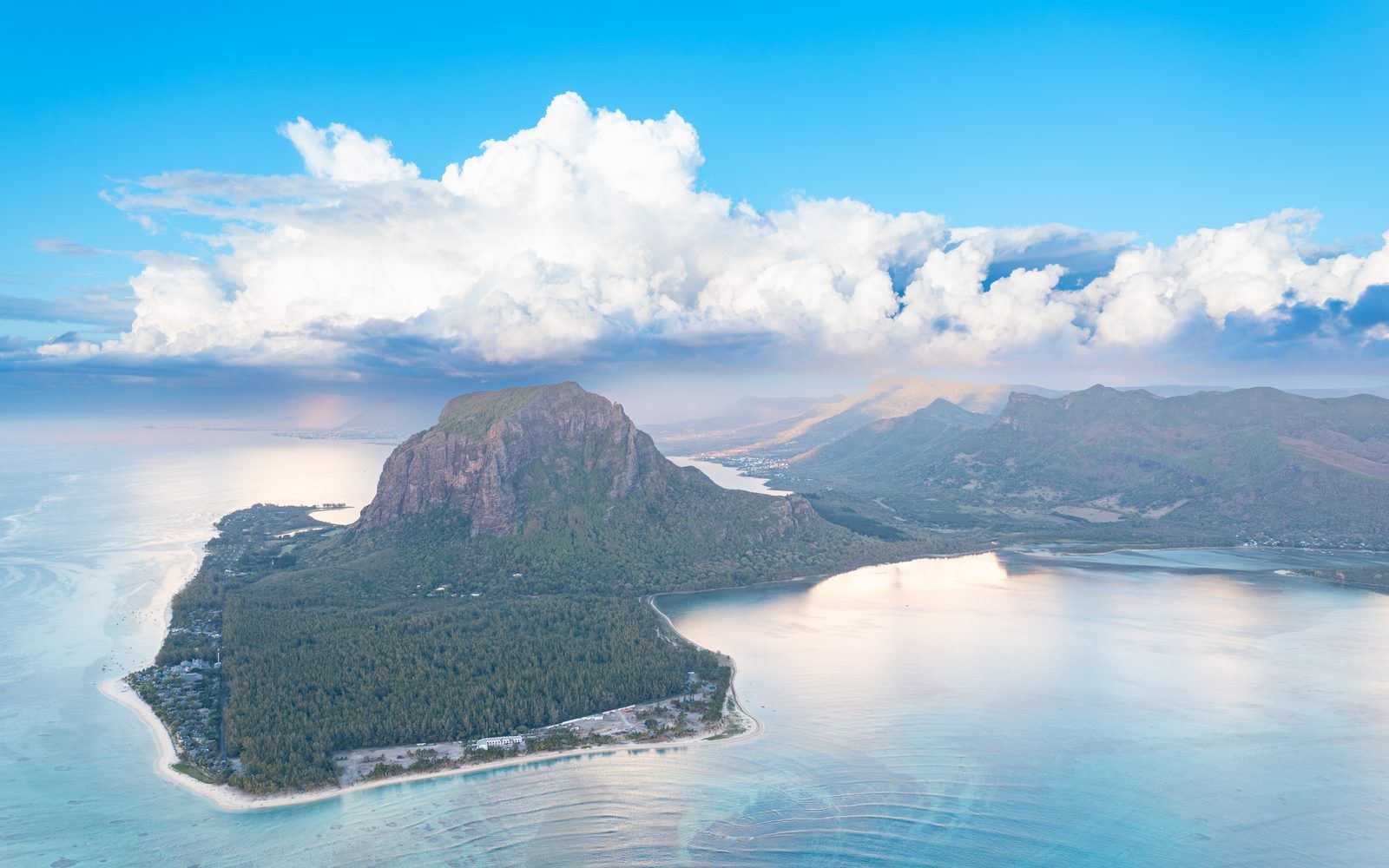
- Le Morne Brabant, the jagged basalt peak on the south-west tip, is the island’s soul. A UNESCO World Heritage site since 2008, it was a natural fortress where escaped slaves once took refuge, and the climb up its flank delivers one of the great Indian Ocean views. The shallow, flat lagoon at its foot is also a world-class kitesurfing spot, at its best on the strong south-easterly trade winds that blow from June to October.
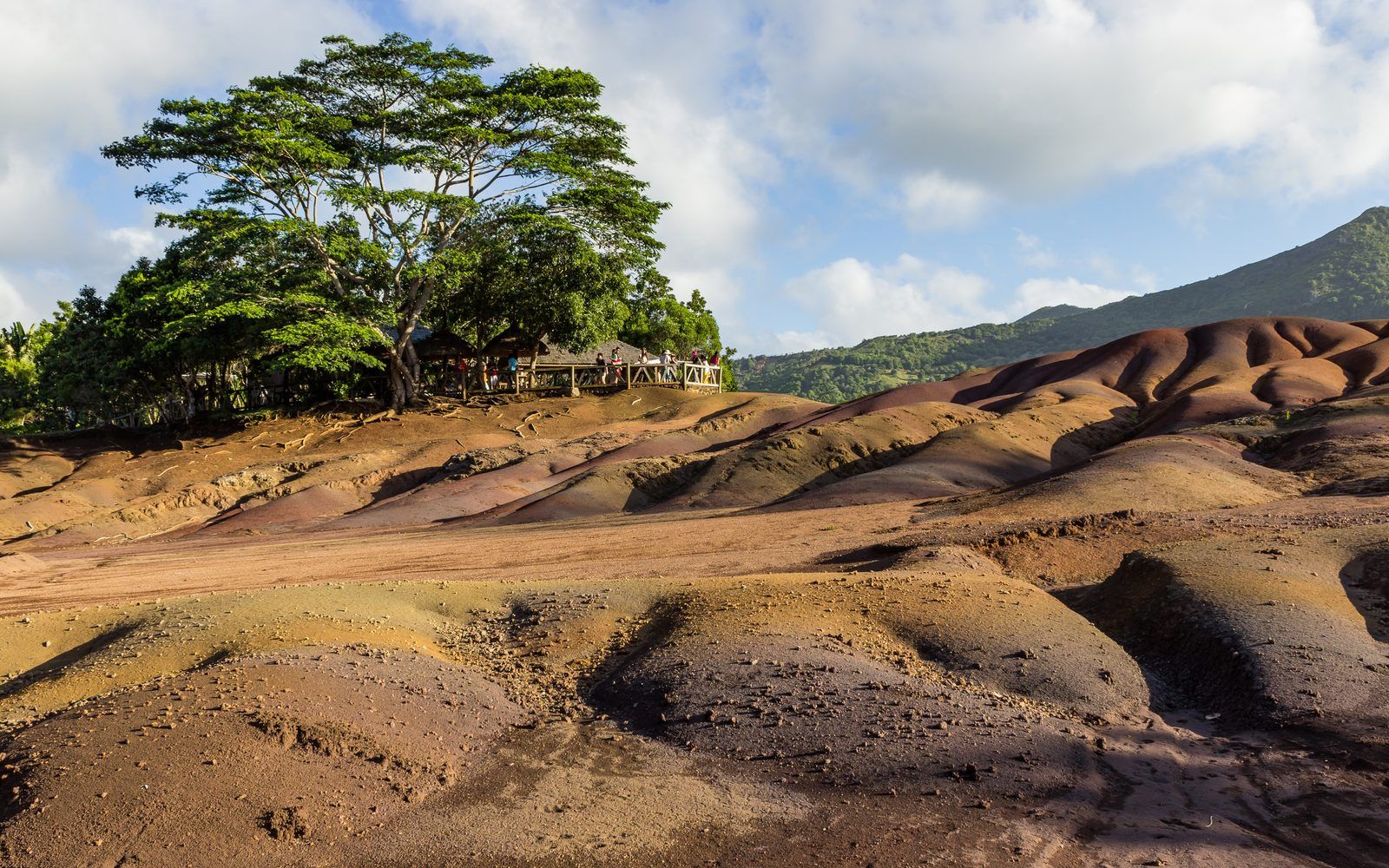
- Chamarel in the south-west packs two wonders into one stop: the Seven Coloured Earths, undulating dunes of red, violet, ochre and green created as volcanic basalt weathered into clay, and, minutes away, the Chamarel Waterfall dropping 95 metres into a jungle sinkhole, the tallest on the island.
- Black River Gorges National Park is the green heart most beach-goers never see: dense forest, hiking trails, endemic birds and viewpoints over deep ravines, best paired with a slow drive through the tea country around Bois Chéri.
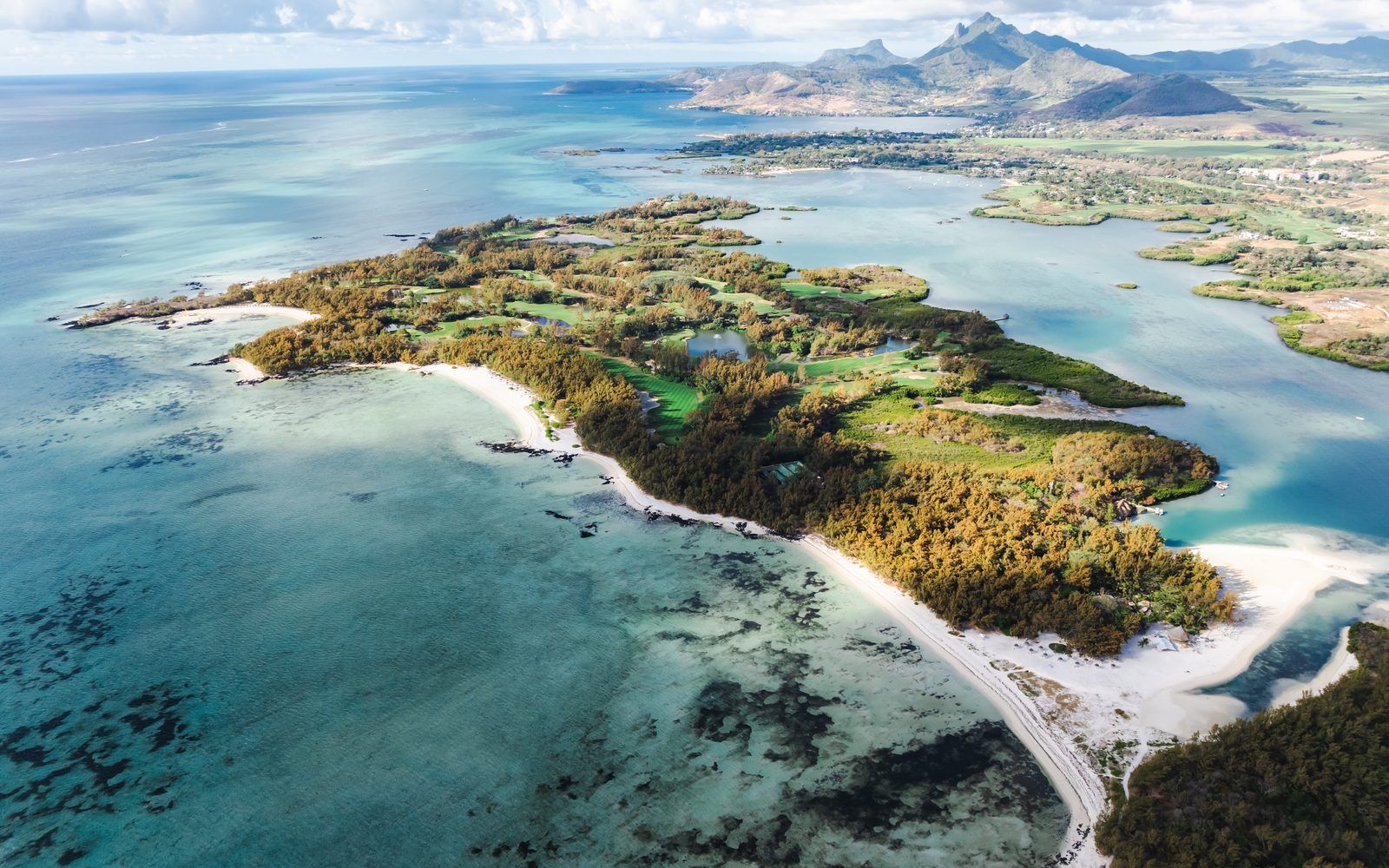
- Île aux Cerfs, off the east coast, is the classic lagoon day: powder sand, snorkelling and warm, shallow water, reached by boat across some of the most photogenic turquoise on the island.
- The northern coast around Grand Baie and Trou aux Biches is where the island unwinds after dark, a string of easy beaches, seafood tables and a livelier evening scene.
- Port Louis, the capital, is the cultural counterweight: the buzzing Central Market, the Aapravasi Ghat where indentured labourers first landed (another UNESCO site), colonial-era streets and some of the best casual eating anywhere on the island.
A rhythm for a first trip
The temptation in Mauritius is to never leave the resort. Resist it just enough. A first trip of about seven to nine nights strikes the right balance between doing nothing and seeing the island properly.
- Nights 1 to 3, the north, easing in. Base around Grand Baie or Trou aux Biches. Recover from the flight, find your beach, and dip into Port Louis for the market and the history.
- Nights 4 to 6, the wild south-west. Move down to the Le Morne peninsula. Climb or admire the mountain, take in Chamarel’s colours and waterfall, and let the drama of the coastline reset your idea of what Mauritius is.
- Nights 7 to 9, the east, slowly. End on the quieter east coast, with a lagoon day out to Île aux Cerfs and little else on the schedule but the view.
The joins matter more than the map. The island is small, but the interior roads are winding, and knowing which drives are worth doing yourself versus with a guide is what keeps a trip feeling effortless rather than fiddly.
For Travellers From India
Visa. This is the easiest part. Indian passport holders enter Mauritius visa-free for up to 60 days, granted on arrival with no application, no fee and no sticker. You simply present a passport with adequate validity (six months is the safe rule), a return or onward ticket and proof of accommodation, and immigration waves you through. Stays can be extended in-country at the Passport and Immigration Office in Port Louis, up to a maximum of six months in a calendar year.
Getting there. Sir Seewoosagur Ramgoolam International Airport is served nonstop from India by Air Mauritius and Air India, with the Delhi to Mauritius run taking roughly seven and a half hours. Direct frequencies are limited, so book early; IndiGo also flies the route, largely via a connection through Bengaluru. From metros without a nonstop, expect a one-stop routing. Return fares in 2026 have started from around ₹27,000 when booked well ahead.
When to go. The sweet spot is the dry season, roughly May to December, with September and October the pick for warm, sunny, low-rainfall days. April is a lovely, quieter shoulder month too. Avoid the cyclone window of 15 November to 15 May at its peak, January to March, when the weather is wettest and the storm risk highest. Kitesurfers are the exception: the winds are strongest from June to October.
Money, food and connectivity. The local currency is the Mauritian rupee (MUR), worth roughly ₹2 in mid-2026, so mental maths is refreshingly simple. Vegetarian and Jain travellers eat exceptionally well here thanks to the deep Indian heritage: dholl puri, gateaux piments, roti and a wealth of temple-adjacent food make the island one of the friendliest beach destinations for Indian palates. Pick up an eSIM before you fly for seamless data on arrival, and carry some cash for markets and smaller vendors.
Exclusive Hotel Deals
Through our partnerships with luxury hotel programs, we can offer exclusive perks at 10+ properties in Mauritius:
Sofitel Mauritius L’Imperial Resort & Spa (Accor, 5-star, Flic En Flac)
- Daily complimentary breakfast for 2, per room
- VIP Welcome
- $100 USD credit to be spent on property (conditions defined at check-in)
- Early check-in & late check-out (upon availability)
One&Only Le Saint Géran (Kerzner, 5-star, Poste de Flacq)
- Upgrade on arrival, subject to availability
- Daily breakfast for up to two guests per bedroom, served in the restaurant (already included in property rates)
- $100 USD equivalent Resort or Hotel credit to be utilized during stay (not combinable, not valid on room rate, no cash value if not redeemed in full)
- Early Check-In / Late Check-Out, subject to availability
LUX Grand Baie* (LUX*, 5-star, Grand Baie)
- Complimentary room upgrade upon arrival, subject to availability
- Daily buffet breakfast for up to two guests per bedroom, served in the restaurant
- $100 USD food & beverage credit to enjoy during your stay
- Early check-in and late check-out, subject to availability
LUX Belle Mare (LUX*, 5-star, Belle Mare)
- Upgrade on arrival, subject to availability
- Daily Buffet breakfast for up to two guests per bedroom, served in the restaurant
- Early check-in / Late check-out, subject to availability
Four Seasons Mauritius at Anahita (Four Seasons, 5-star, Beau Champ)
- Daily breakfast for 2
- 100USD hotel credit for rooms or 200USD for suites & private retreats
- Room upgrade to next category (subject to availability)
- Early check-in, late check-out (subject to availability)
Planning it well
Mauritius is deceptively easy to arrive in and surprisingly easy to get wrong. The gap between a good holiday and an unforgettable one lives in the choices: which coast to base on for your dates and the trade winds, which resort earns the splurge, when to venture inland and when to simply stop moving. Get the season right, sequence the north, south-west and east so the drives make sense rather than eat the day, and the island rewards you completely. In a year when Mauritius is courting Indian travellers harder than ever, the smart move is to let someone who knows the joins handle them, so all you have to do is arrive.
Let Tripcuro Plan Your Mauritius Trip
Tripcuro designs your Mauritius escape end to end, from the right flights out of your city to a route that pairs the lagoons with the volcanic interior and the culture of Port Louis. We match the season and the trade winds to your dates, secure the resort perks worth having, and stitch the coasts together so the whole trip simply flows. Tell us how you like to travel, and we will build a bespoke itinerary around it.