
Most travellers could not place Belarus on a map, and that is precisely what makes it interesting. Landlocked between Poland and Russia, it is one of the last corners of Europe where you can stand in a sixteenth-century castle courtyard, or under an oak older than the country itself, with almost nobody else around. In 2026, with a direct flight now linking Delhi to Minsk and the rupee stretching unusually far against the local currency, the practical barriers that once kept it off Indian itineraries have quietly fallen away.
It is also a destination that asks to be understood before it is booked. Several Western governments currently advise against travel here, largely because of the war in neighbouring Ukraine and the way local laws are enforced, so this is not a spontaneous stopover but a considered trip that rewards good planning and a clear head. For the curious traveller who does their homework, though, Belarus offers something increasingly rare: real depth, real history and genuine quiet, without the crowds or the queues.
Why Belarus is having its moment in 2026
The single biggest shift is access. As of 2026 there is once again a non-stop flight between the two countries: Belavia flies Delhi to Minsk in a little over seven hours, a routing that until recently meant two connections and the best part of a day in transit. That one change turns Belarus from a logistical puzzle into a straightforward long weekend or a relaxed week away.
The second shift is value. The Belarusian rouble has weakened steadily against the rupee, trading at roughly ₹26 to one rouble in mid-2026, down from around ₹35 a year earlier. In practice that means restaurant dinners, museum tickets, castle tours and comfortable hotels all cost noticeably less than an equivalent trip through Western or Central Europe. Belarus was already among the more affordable countries on the continent; the exchange rate has widened that gap further. For travellers who want the texture of old Europe without the Schengen price tag, the maths has rarely looked better.
The signature places worth building a trip around
Belarus rewards travellers who pick a handful of places and go deep rather than racing between them. A few consistently deliver:
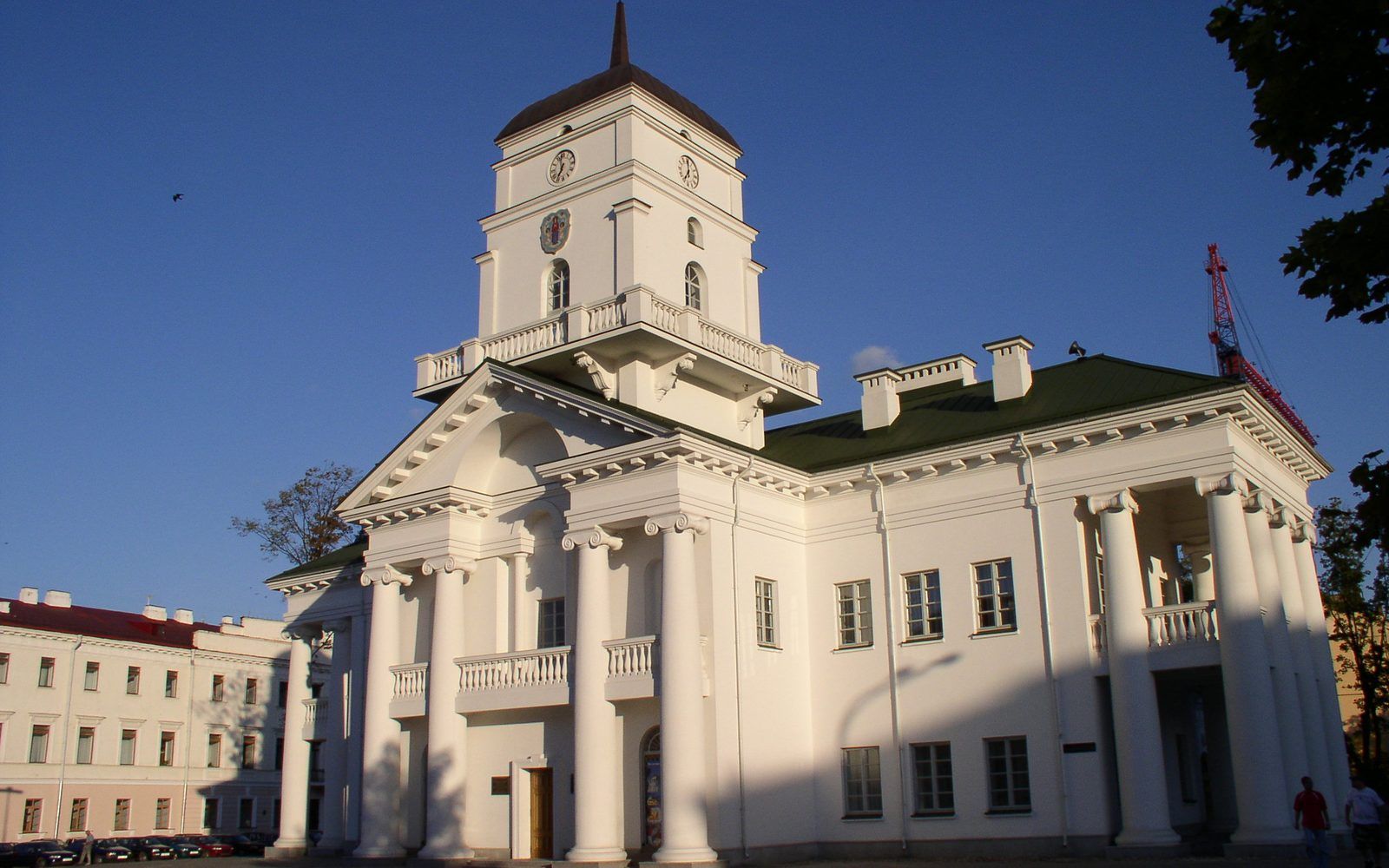
- Minsk, the capital, is unlike any other European city centre. Flattened in the Second World War and rebuilt as a showpiece of Soviet planning, it is a city of vast boulevards, monumental Stalinist facades and enormous, immaculately kept squares. Independence Avenue is the spine of it all, and walking its length is the best possible introduction to how the twentieth century shaped this country.
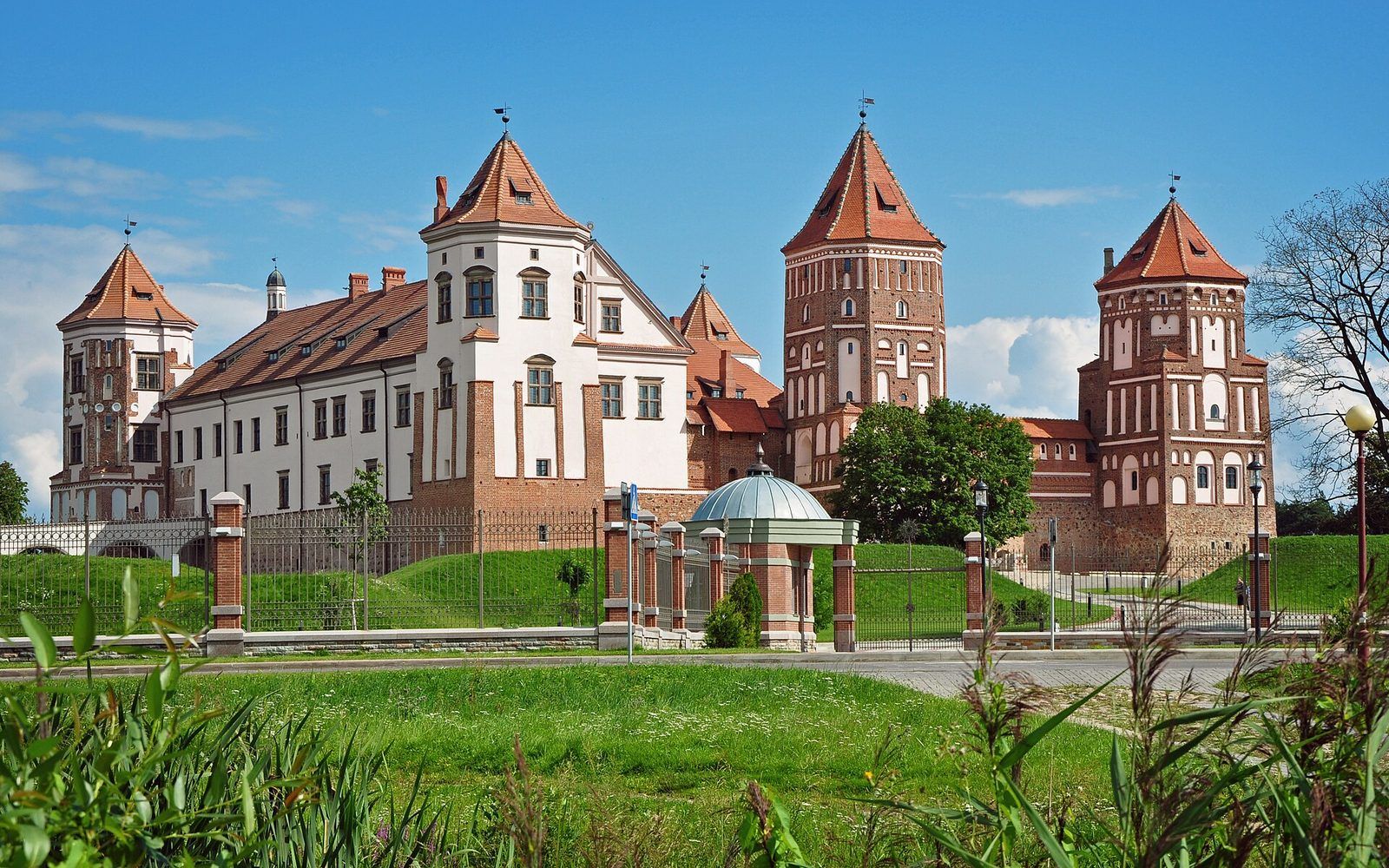
- Mir Castle, about two hours from Minsk, is a UNESCO World Heritage site and one of the most photogenic fortifications in Europe: a sixteenth-century complex that blends Gothic, Baroque and Renaissance elements, its red-brick towers mirrored in a still moat.
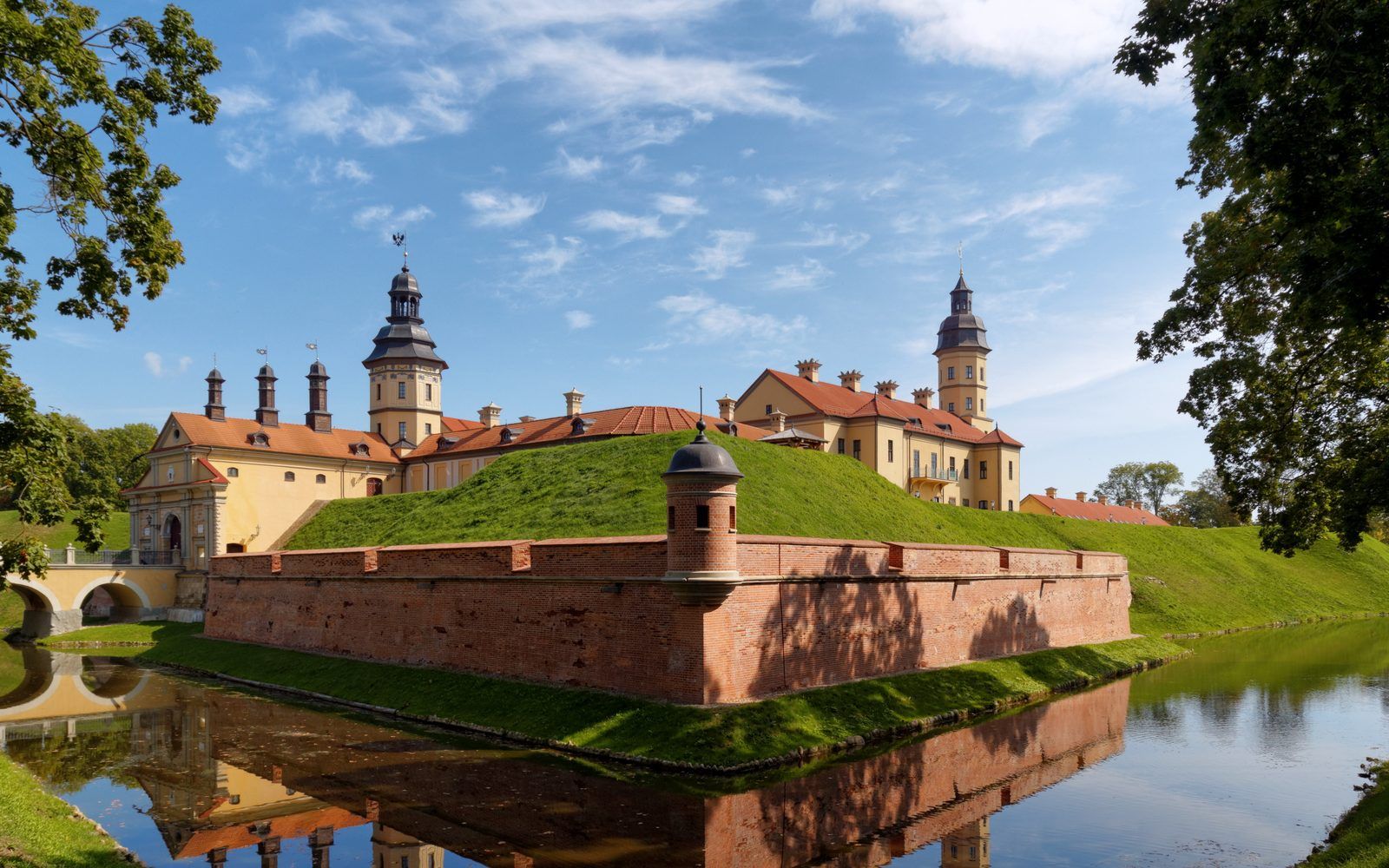
- Nesvizh, a short drive on from Mir and also UNESCO-listed, is the ancestral seat of the powerful Radziwill family. The palace, begun in the fifteenth century and beautifully preserved, is now a museum-reserve that opens a window onto the life of one of the region’s great aristocratic dynasties.
- Belovezhskaya Pushcha is the reason many naturalists come at all: one of the last surviving fragments of the primeval forest that once blanketed the European plain, now a UNESCO site straddling the Polish border. Here you can walk among oaks over six hundred years old and, with luck, see the European bison, the continent’s heaviest land animal, in the wild.
- Brest Fortress, in the country’s south-west, is among the most affecting war memorials anywhere in the former Soviet Union. Built around the ruins of a nineteenth-century fortress that held out against invasion in 1941, its scale and stillness leave a mark on almost everyone who visits.
A rhythm for a first trip
The classic error is trying to tick off every castle and museum in a rush. A better first trip runs about five to seven days and keeps the pace unhurried.
- Days 1 to 2, Minsk. Land, settle in, and give the capital its due. Walk Independence Avenue, sit in the grand squares, visit a museum or two, and eat well for very little.
- Days 3 to 4, the castle belt. Head west to Mir and Nesvizh, ideally with a night in the countryside between them rather than day-tripping both from Minsk. The two make a natural pair and reward a slower look.
- Days 5 to 7, forest and frontier. Continue south-west to Belovezhskaya Pushcha for the bison and the ancient woodland, then on to Brest and its fortress before circling back. If your time is tighter, choose the forest or the fortress rather than squeezing in both.
The distances are modest and the roads are good, but the joins matter: a private driver or a well-planned rail routing turns the transfers into part of the trip rather than dead time.
For Travellers From India
Visa. Indian passport holders have two routes in 2026. The simplest is the Belarus e-visa: you apply online through the official E-Pasluga portal, it is issued for a single entry of up to 30 days, it is considered within seven calendar days, and it is valid at all international checkpoints. The consular fee is 60 euros plus a 6-euro service charge. The second route is the visa-free entry via Minsk National Airport, but this is conditional: it applies only if you already hold a used, valid multiple-entry Schengen or EU visa, and it requires proof of funds of at least 25 euros a day, medical insurance covering at least 10,000 euros, and an onward ticket departing Minsk within 30 days. Importantly, neither arrangement applies to travellers arriving from, or departing to, Russia. Anyone staying more than five days must be registered, which any hotel handles for you on check-in. Given the current travel-advisory picture, read your own government’s guidance before you commit.
Getting there. The headline is the return of a direct link: Belavia flies non-stop between Delhi and Minsk, with the outbound leg taking a little over seven hours. It runs on limited days each week, so build your dates around it. From other Indian cities, or if the schedule does not suit, one-stop routings via Dubai on flydubai, or via Istanbul, are the reliable alternatives. Whichever way you fly, confirm that your routing does not touch Russian airports, since that voids the visa-free option and complicates the e-visa.
When to go. Aim for the long, mild stretch from May to September, when daytime temperatures sit comfortably in the high teens to mid-twenties Celsius and the northern summer delivers up to sixteen or seventeen hours of daylight, near-endless evenings for wandering Minsk or the forest. May and September are the sweet spot for smaller crowds and gentle weather; June and July are warmest. Winters are long, dark and genuinely cold, and best left to travellers who specifically want the snow.
Money, food and connectivity. The local currency is the Belarusian rouble, and with the rate near ₹35 to the rouble your budget goes a long way. Cash is still useful for smaller places, so carry some alongside a card. The food is hearty and Eastern European at heart, think potato pancakes, dumplings and rye bread, and while vegetarians will eat well in Minsk with a little planning, options thin out in the countryside, so flag your needs in advance. Pick up a local SIM or an eSIM on arrival for maps and translation, both of which you will lean on more than usual here.
Planning it well
Belarus is not a destination to improvise, and that is exactly why it pays to plan it properly. The rewards are unusually high, sixteenth-century castles without the crowds, a primeval forest with wild bison, a capital unlike anywhere else, but so is the need to get the details right: the correct visa route for your passport and Schengen status, a flight routing that avoids Russian airspace and airports, the registration and insurance rules, and a sequence that links Minsk, the castles and the forest without wasted days. Read the official advisories, weigh them honestly, and if the trip is right for you, let someone handle the moving parts so the experience stays effortless and the logistics stay watertight.
Let Tripcuro Plan Your Belarus Trip
Tripcuro designs your Belarus journey end to end, from the right visa route for your passport and a flight routing that avoids the wrong airports, to a considered loop through Minsk, Mir, Nesvizh and the ancient forest. We handle the registration, insurance and transfers, match the season to your dates, and keep you across the practicalities so the trip stays as smooth as it is rewarding. Tell us how you like to travel, and we will build a bespoke itinerary around it.