
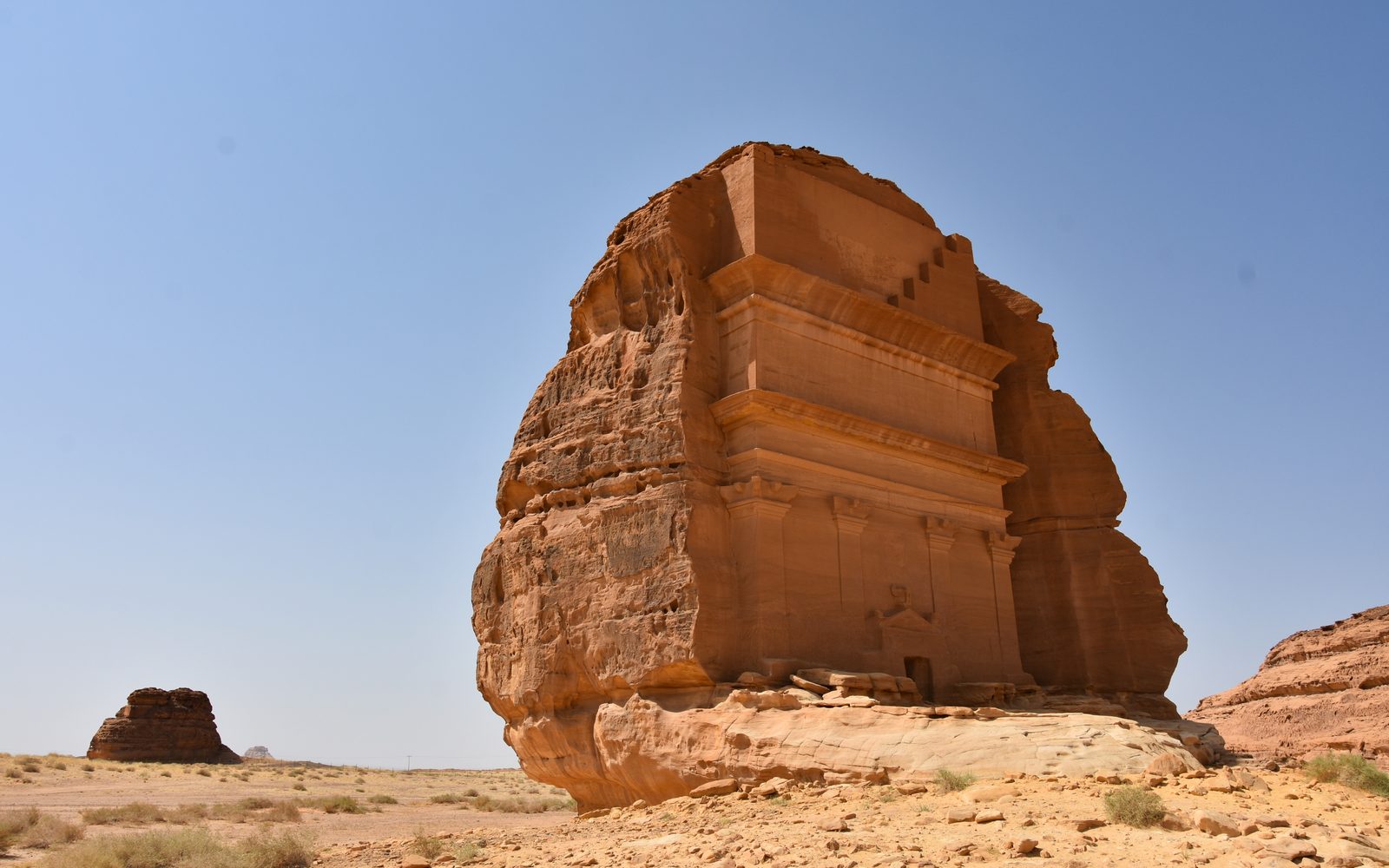
For decades, AlUla was one of the world’s great secrets: a valley of Nabataean tombs, oasis palms and wind-sculpted sandstone that almost nobody outside Saudi Arabia had ever seen. In 2026 the secret is well and truly out. The tombs that rival Petra now sit alongside cliff-carved hotels, a mirrored concert hall in the desert and a tourism strategy built deliberately around calm, not crowds.
Why AlUla is having its moment in 2026
AlUla is the star of Saudi Arabia’s Vision 2030 tourism push, and 2026 is shaping up to be its biggest year yet. An international marketing campaign has been aimed squarely at long-haul travellers, and the destination is openly expecting record visitor numbers this year.
What makes it interesting is the choice not to chase mass tourism. AlUla’s planners have leaned into highly curated, low-density experiences rather than tour-bus volume. The AlUla Development Company now runs a cluster of design-led hotels, including Habitas, Banyan Tree and Caravan, alongside the striking Maraya concert hall. The most anticipated arrival is Sharaan by Jean Nouvel, a resort carved directly into a cliff face in the Nabataean tradition, expected to complete in 2026. Add an expanded 2026 Arts Festival programme, and AlUla has quietly become a recurring stop on the global culture circuit rather than a one-time novelty.

The signature sights and regions
AlUla rewards travellers who understand it as a cluster of distinct areas rather than a single site.
- Hegra (Madain Salih) is the headline. Saudi Arabia’s first UNESCO World Heritage Site, it was the southern capital of the Nabataeans, the same civilisation that built Petra. More than 100 monumental tombs are carved into sandstone outcrops here, including Qasr Al Farid, the “Lonely Castle,” standing alone with its unfinished facade.
- Dadan and Jabal Ikmah carry an even older story. Dadan was capital of the Lihyanite and Dadanite kingdoms, and nearby Jabal Ikmah is an open-air “library” of more than a thousand inscriptions and petroglyphs left by ancient traders and pilgrims.
- AlUla Old Town is a labyrinth of mud-brick alleyways with over 900 identified properties, shadowed by a red sandstone fort, best explored as the light softens in the late afternoon.
- Elephant Rock (Jabal AlFil) is the natural showpiece, a roughly 52-metre sandstone monolith shaped by wind into an unmistakable elephant silhouette, and a favourite sunset gathering spot.
- Maraya, the largest mirrored building in the world, reflects the surrounding valley across thousands of glass panes and hosts concerts and events, an unforgettable modern counterpoint to the ancient stone.
A suggested rhythm: about 3 to 4 days
AlUla is not a place to rush, but it also does not need a fortnight. A relaxed flow of ~3 to 4 days covers it beautifully.
- Day 1: Arrive, settle into your resort, and ease in with sunset at Elephant Rock and a slow evening in the Old Town or the Ashar Valley.
- Day 2: Dedicate the morning to Hegra with a licensed guide, the only way to enter the tomb sites, then break for the midday heat before Dadan and Jabal Ikmah in the cooler late afternoon.
- Day 3: Trade history for landscape, with a desert walk, a stargazing session, or a hot-air balloon float over the valley, plus time for the arts district and Maraya.
- Day 4 (optional): Slow down entirely, or add a day trip toward the wider region before flying out.
Pairing AlUla with Riyadh or Jeddah on either side of the trip makes strong sense given how flights connect, turning it into a well-rounded week in Saudi Arabia.

For travellers from India
Visa. Indian passport holders can access Saudi Arabia’s tourist e-Visa, part of the Vision 2030 tourism opening. In practice there are two clean routes: eligible Indian travellers applying directly through the official portal, and Indian citizens who hold a valid and previously used US, UK or Schengen visa applying via the e-Visa system. The tourist visa is typically a one-year multiple-entry permit allowing stays of up to 90 days, and it bundles basic travel insurance. Always confirm current eligibility on the official visa.visitsaudi.com portal before booking, as rules shift seasonally and temporary restrictions can apply around the Hajj period.
Getting there. AlUla has its own airport (ULH) with domestic links to Jeddah and Riyadh on carriers including Saudia and flynas. From India, the usual pattern is a flight to Jeddah or Riyadh, then a short domestic hop of roughly ~1.5 to 2 hours into AlUla. Connectivity is improving fast: Riyadh Air is expected to launch India routes from major cities including Delhi, Mumbai, Bengaluru, Hyderabad and Chennai during 2026, which should make the Riyadh gateway even smoother. Total door-to-door time from most Indian metros lands around ~7 to 10 hours including the connection.
Best time to go. Aim for October to March, when daytime temperatures sit in a comfortable 12 to 25 degrees Celsius range. This window also overlaps with the Winter at Tantora festival, AlUla’s flagship cultural season of music, art and heritage programming. Summer, when temperatures push past 40 degrees Celsius, is best avoided for outdoor sites.
Food and connectivity. Vegetarians and those seeking familiar flavours are well served, as halal food is standard and South Asian cuisine is widely available across Saudi Arabia. AlUla’s dining leans toward relaxed cafes, date-and-oasis produce and resort restaurants. A local eSIM or a Saudi SIM keeps you connected, and mobile coverage is reliable around the main sites, though it thins out in the deeper desert.
Planning it well
AlUla is a destination where the details make the difference. Hegra and several heritage sites can only be visited with licensed guides and timed entry, resort inventory is deliberately limited, and the standout stays sell out fast in peak winter season. The reward for planning ahead is a trip that feels private and unhurried in a place engineered to stay that way.
The sweet spot is to lock in your winter dates early, sequence the ssite visits around the cool hours, and thread AlUla into a wider Saudi itinerary so the ancient tombs and desert luxury land with maximum effect rather than as a rushed stopover.
Let Tripcuro Plan Your AlUla, Saudi Arabia Trip
Tripcuro designs your AlUla journey end to end, from the e-Visa and the smartest connection through Jeddah or Riyadh to timed guided entry at Hegra and the right cliffside or oasis resort for your dates. We match the rhythm of your trip to the cool winter season and the Winter at Tantora calendar, then handle every detail so you simply arrive and explore. Tell us how you like to travel, and we will build a bespoke itinerary around it.